
Zoysia Lawn Care in Canberra: My Complete Guide
G'day, Nikolai here from The Lawn Firm.
Zoysia is the quiet achiever of Canberra lawns. It does not grow fast and it does not demand much feeding, but once established it forms one of the densest, most weed-resistant lawns you can have here. Sir Grange, Empire and Nara are the names you will see most often around Canberra.
The catch is patience. Zoysia establishes slowly, repairs slowly, and goes dormant harder over a Canberra winter than most people expect. Understand those three things and it is a genuinely low-input lawn. Miss them and it is easy to assume something has gone wrong when the lawn is simply behaving normally.
If your zoysia is thin, slow to come back, or you cannot tell dormancy from damage, Book a Free Assessment and I'll take a look at it.
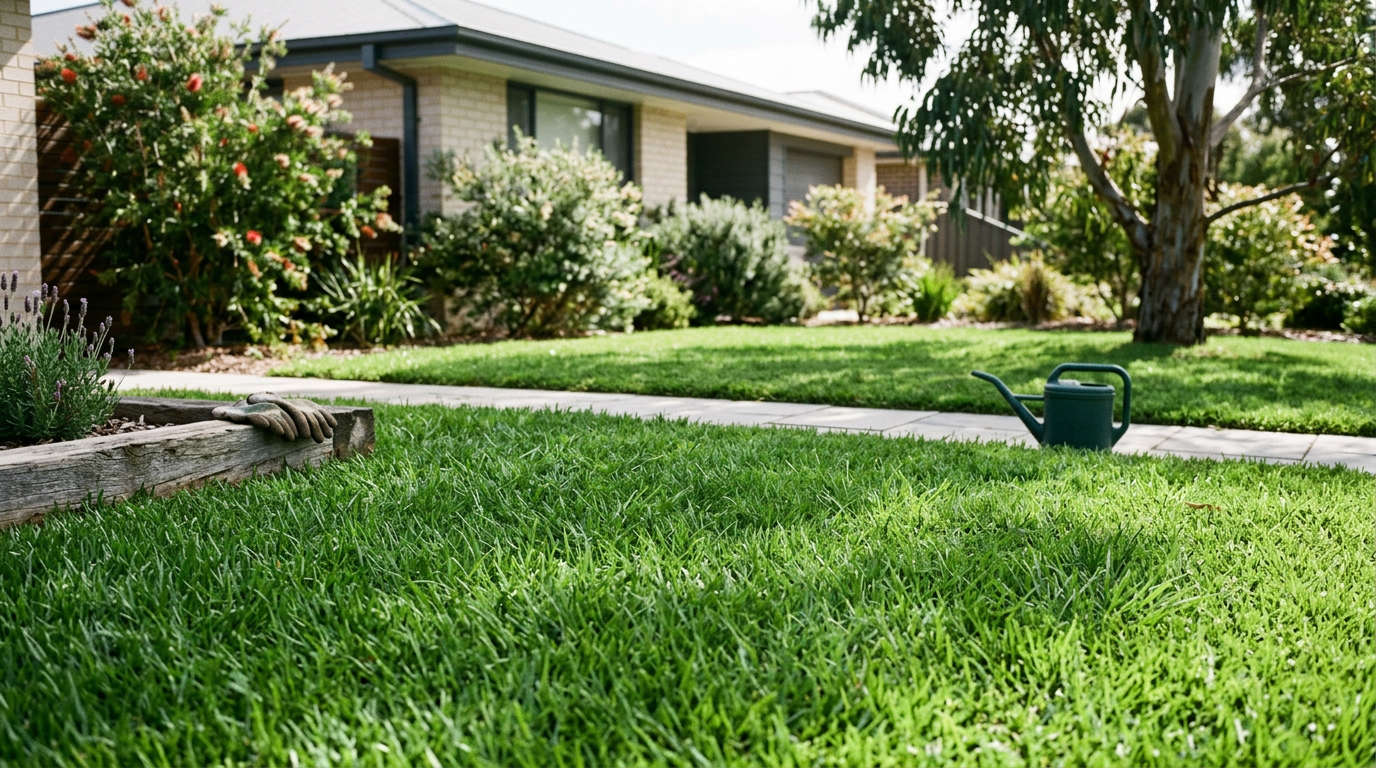
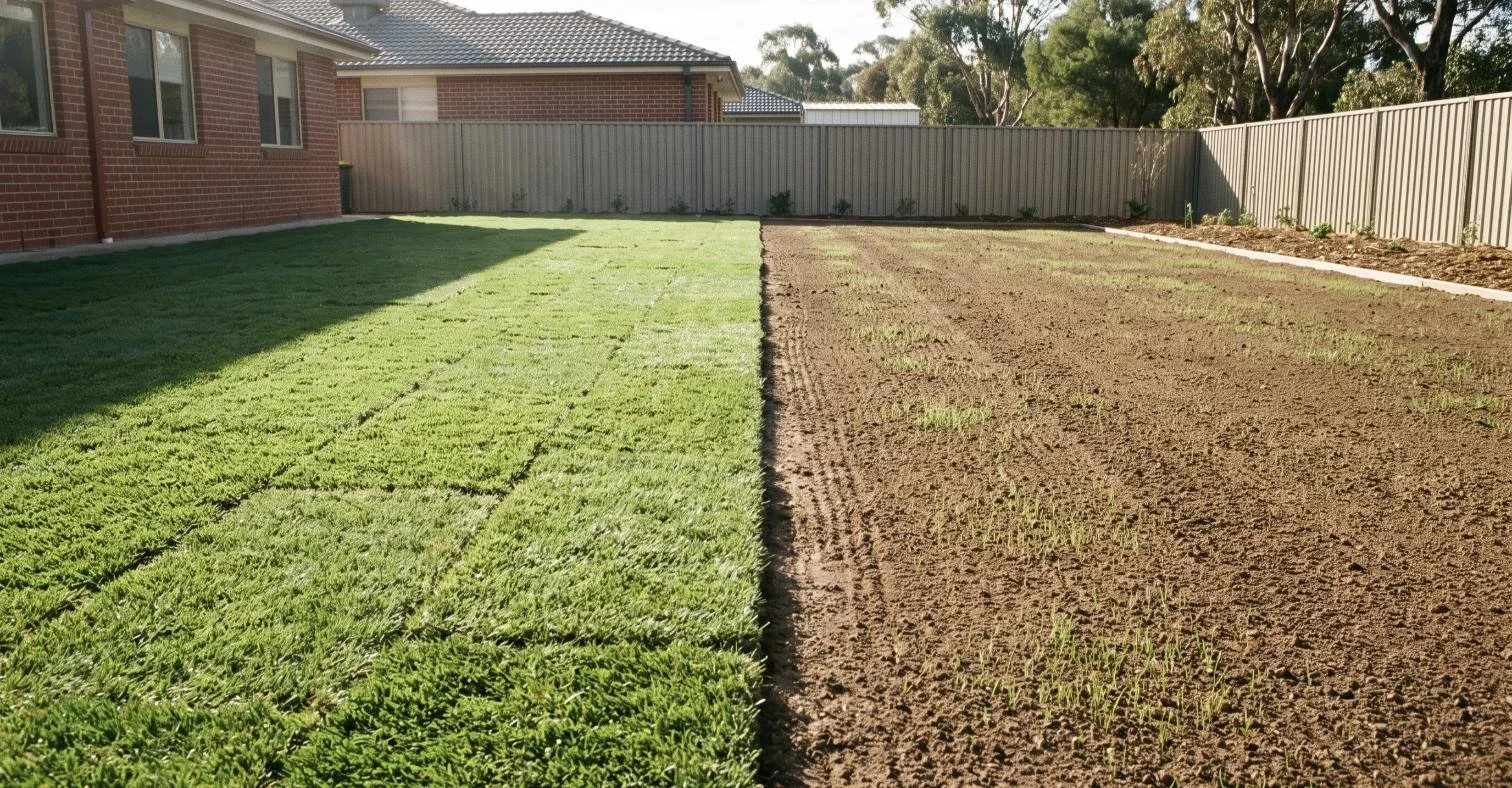
A dense, fine-bladed zoysia lawn in a sunny Canberra suburban backyard
The quick answer: how to care for a zoysia lawn in Canberra
Zoysia is a warm-season grass that grows from late spring to early autumn and goes fully dormant over a Canberra winter. Feed it lightly but consistently through the growing season, water deeply and infrequently, mow at a moderate height with a sharp blade, stay on top of thatch every couple of years, and accept that it will be straw-coloured from about May to September.
The single most important thing to remember is that zoysia repairs slowly. It spreads by runners and rhizomes rather than useful seed, so any bare patch you create takes a full growing season to close over. Prevention beats repair with this grass more than any other.
What makes zoysia different
Zoysia has fine to medium leaf blades and spreads by both above-ground runners and underground rhizomes. That dual habit is why an established zoysia lawn feels so solid underfoot: it knits into a dense mat with very little room left for anything else.
A few things set it apart from buffalo, couch and kikuyu:
Growth rate. Where kikuyu will invade a garden bed in a fortnight, zoysia takes its time. That means less mowing and far less edging, but also slow recovery from damage.
Weed resistance. Once established it is the best weed-suppressing lawn I work with, which counts for a lot in Canberra where summer weeds are relentless.
Low nutrient demand. Zoysia does not need the feeding schedule that couch or kikuyu do. Over-feeding is the more common mistake.
Winter dormancy. Zoysia browns off completely in the cold and stays that way for months, a longer and more thorough dormancy than buffalo shows.
Drought tolerance. Deep rhizomes and a dense canopy make mature zoysia one of the better lawns for a hot, dry Canberra summer.
How zoysia behaves through a Canberra year
From about November to March a healthy zoysia lawn is at its best. It grows steadily rather than explosively, fills gaps, and handles heat and foot traffic well once the roots have gone down. This is the window where everything you do actually takes effect.
From April growth slows sharply, and once the frosts arrive the lawn goes dormant and turns a straw or fawn colour it holds all winter. This worries new zoysia owners every year, and I understand why, because a dormant zoysia lawn looks convincingly dead. It is not. The crowns and rhizomes are alive underneath and it greens up as the soil warms, usually a little later in spring than buffalo.
What matters is what you do not do in that window. Do not feed heavily to force colour, because a dormant lawn is not taking nutrients up. Do not walk repeatedly across a frosted lawn, because frozen leaf blades fracture and the traffic pattern shows for weeks. And do not decide in July that the lawn has failed. My seasonal lawn care guide sets out the rhythm across the year.
Feeding a zoysia lawn
Zoysia has a modest appetite, and the most common problem I see is people feeding it as though it were couch.
I feed from late spring once the soil has warmed and the lawn has broken dormancy, again through summer, and once more in early autumn to build strength before winter. Light and steady beats heavy and occasional, and a slow-release fertiliser matches zoysia's own pace. Over-feeding with high-nitrogen products pushes soft, sappy growth and accelerates thatch, which is the one job zoysia genuinely does need. My complete guide to lawn fertilisation in Canberra covers the timing.
If your zoysia is pale in the growing season despite being fed, the answer is usually underneath the grass rather than in the leaf. Compacted clay or a pH outside the right range will lock up nutrients no matter how much fertiliser goes on. That is where soil testing earns its keep, because it tells us what the lawn is short of instead of us guessing.
Watering and the soil underneath
Zoysia's drought tolerance is real, but only in an established lawn with roots that have gone down. Water deeply and infrequently, because a long soak drives roots downwards while frequent light sprinkles keep them near the surface. New zoysia is the exception: it needs consistent moisture through establishment, and this is the stage where zoysia lawns are lost.
Canberra's clay is the complication. If the soil is compacted, water runs off or sits on the surface and the lawn stays thirsty no matter how long the sprinkler runs. If your zoysia feels hard underfoot or water pools, aeration and coring is usually the missing step. If water beads up and refuses to soak in at all, you are likely dealing with water-repellent soil, covered in my guide to fixing hydrophobic soil and dry patch.
Thatch: zoysia's one real maintenance job
Because zoysia produces dense runners and rhizomes and breaks them down slowly, it builds thatch, the spongy layer of living and dead stem material between the green leaf and the soil.
A thin layer is fine and even useful. Too much and the lawn feels like a mattress underfoot, water sits at the surface instead of reaching the roots, and you create a comfortable home for lawn diseases and fungus. Heavy thatch is also why a zoysia lawn can look thin at the base while appearing green on top.
Zoysia needs dethatching less often than kikuyu, but when it does, timing is everything. Do it when the grass is growing strongly in late spring or early summer, never in autumn or winter, because its slow recovery means an autumn dethatch leaves you with a damaged lawn until the following December. My guide to managing lawn thatch explains how I judge when it is due, and a light top dressing afterwards helps the runners knit down rather than climb.
Mowing height and why a sharp blade matters
Zoysia is happiest at a moderate height, lower than buffalo but never scalped, and consistency matters more than the exact number. Because it grows slowly it does not bounce back from being cut too short, so the rule about never removing more than about a third of the leaf in one cut is worth taking seriously.
The other thing is blade sharpness. Zoysia leaf is tough and fibrous, and a blunt blade tears rather than cuts. Torn tips go a ragged grey-white within a day or two and cast a dull look over the lawn that gets mistaken for disease or a nutrient problem. If your zoysia looks tired the day after mowing, sharpen the blade before you reach for the fertiliser.
Weeds and pests in zoysia
A dense zoysia lawn is the best weed prevention there is, because weeds need light and space at soil level and mature zoysia offers neither. The weak points are establishment and any thin or damaged area, since zoysia is slow to close a gap and weeds are not. That makes pre-emergent weed control especially valuable in a young lawn, and my guide to common lawn weeds in Canberra covers the usual suspects.
On herbicides, zoysia is more tolerant than buffalo, which is notoriously sensitive and can be thinned or killed outright by common weed and feed products. Zoysia is not bulletproof though, and a mistake on a slow-repairing lawn is one you live with for a season. If you are unsure what is safe on your lawn, I would rather diagnose it than have you experiment.
Curl grubs, African black beetle larvae and armyworm all feed on zoysia, and the damage shows for longer because repair is slow. But a brown patch is not automatically a grub problem. It could be dormancy, dry patch, thatch, disease or a pet. That is the difference between guessing and diagnosing, and my lawn pest control guide covers how I rule each cause out.
My year-round zoysia programme
Late winter and early spring. Leave it alone. Resist feeding or renovating a dormant lawn. Take a soil test if it struggled last season.
Mid to late spring. Wait for genuine green-up, then the first proper feed. Pre-emergent before summer weeds germinate, and aerate if the soil is compacted.
Early summer. The window for dethatching if it is due, and top dressing afterwards, with a full season ahead for recovery.
Summer. Steady light feeding, deep infrequent watering, consistent mowing with a sharp blade, and treat weeds while they are small.
Autumn. A final feed to build reserves before dormancy, and a last check on weeds. No renovation from here.
Winter. Expect full straw colour. Avoid heavy feeding and keep traffic off a frosted lawn.
If that rhythm is more than you want to take on, that is what a year-round programme is for, and you can see how I structure it in my lawn maintenance programme for Canberra.
Final word
Zoysia is an excellent Canberra lawn for the right owner. It is dense, it resists weeds better than anything else I work with, and it asks less of you than the alternatives.
What it asks for instead is patience and correct timing. Slow establishment, slow repair and a long winter dormancy are normal, not signs of failure. Almost every zoysia problem I get called to is either an impatient owner renovating at the wrong time of year, or a thatch layer left to build up unchecked.
If your zoysia is not where you want it, Book a Free Assessment and I'll check the lawn, the soil and the way it is being cared for, and build a plan around it.
Key points I get asked on a regular basis
Is zoysia a good lawn for Canberra?
Yes, for the right household. Zoysia handles our hot, dry summers well once established, forms a very dense lawn that suppresses weeds, and needs less feeding and mowing than couch or kikuyu. The trade-offs are slow establishment, slow repair, and a lawn that goes fully brown over winter. If you want green grass in July, zoysia is not for you. If you want a low-input lawn that looks superb from November to April, it is hard to beat.
Why has my zoysia lawn gone completely brown in winter?
That is normal dormancy, not death. Zoysia shuts down harder and for longer than buffalo, holding a straw or fawn colour from roughly May through to September in Canberra. The crowns and rhizomes are alive underneath and it greens up as the soil warms in spring, typically a little later than other warm-season lawns. Avoid feeding heavily to force colour, and keep foot traffic off it when it is frosted.
How often should I feed zoysia grass?
Less than you think. A light feed in late spring after green-up, one through summer and one in early autumn is usually enough, and a slow-release fertiliser suits its steady growth. Over-feeding with high-nitrogen products pushes soft growth and speeds up thatch build-up. If the lawn stays pale despite feeding, the cause is more likely compacted clay or a pH issue locking up nutrients, and a soil test will confirm it.
Does zoysia need dethatching?
Yes, though less often than kikuyu or couch. Its dense runners and rhizomes break down slowly, so thatch accumulates over a few seasons until the lawn feels spongy and water stops reaching the roots. Timing is critical. Dethatch only in late spring or early summer when the grass is growing strongly, never in autumn, because zoysia's slow recovery means an autumn dethatch leaves you with a damaged lawn right through to the following summer.
Why does my zoysia look grey or ragged after mowing?
Almost always a blunt mower blade. Zoysia leaf is tough and fibrous, so a dull blade tears the tips instead of cutting them. The torn ends dry out to a ragged grey-white within a day or two, casting a dull look over the lawn that gets mistaken for disease or a nutrient deficiency. Sharpen the blade, keep the height consistent, and never take off more than about a third of the leaf in one cut.
How do I book zoysia lawn care in Canberra?
Book a Free Assessment and I'll confirm what variety you have, check the soil, the thatch layer and the lawn's condition, and recommend the right feeding, weed control and renovation timing to get it dense and healthy.

Looking for the perfect gift for the lawn enthusiast in your life? The Lawn Firm Gift Cards are the ideal solution. Redeemable for any of our professional lawn care services, these gift cards make it easy to give the gift of a greener, healthier lawn. From fertilisation to weed control and pest management, there’s something for every lawn need.
Why Choose a Lawn Firm Gift Card?
Versatility: Can be used for any service offered by The Lawn Firm.
Thoughtful Giving: A practical gift for anyone who values a beautiful outdoor space.
Simple to Use: Purchase online and enjoy easy redemption.
Order your gift card today and let your loved ones experience the professional touch of The Lawn Firm. It’s the perfect way to show you care while helping someone achieve the lawn of their dreams.
This gift card never expires.