
Lawn Thatch in Canberra Lawns: How I Identify It, Remove It, and Stop It Returning
G’day, Nikolai here from The Lawn Firm. Thatch is one of the most misunderstood lawn problems I see in Canberra. Many people think it’s just “dead grass on top”, but when that layer gets too thick, it quietly causes watering issues, pests, disease, and poor root growth.
This guide explains what thatch is, why it builds up in Canberra lawns, how I determine when it needs to be removed, and how we prevent it from coming back.
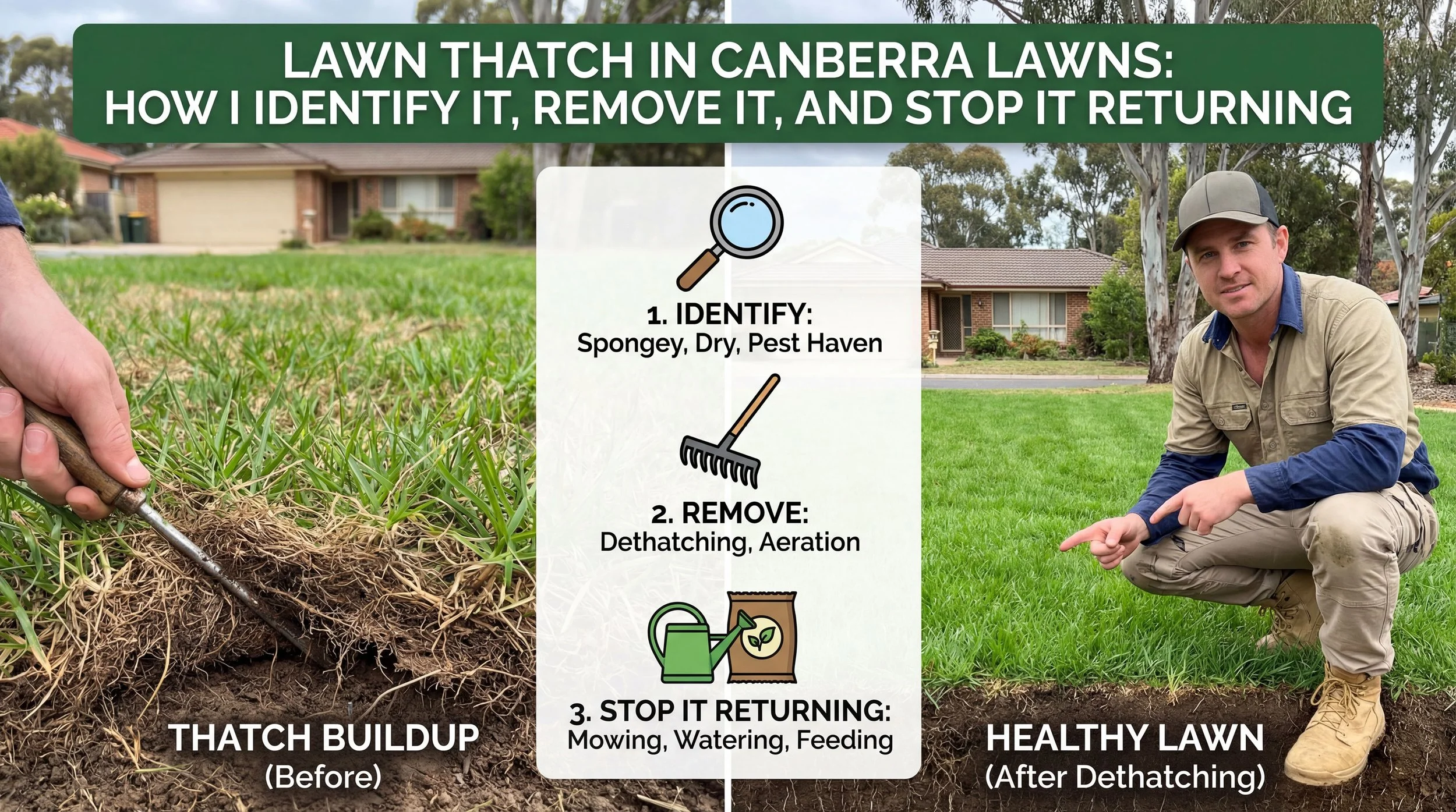
What lawn thatch actually is
Thatch is a layer of dead and living organic material that builds up between the green grass and the soil. It includes:
Old leaf stems
Runners and stolons
Roots that haven’t broken down
A small amount of thatch is normal. Problems start when it gets thicker than about 10–15 mm.
How I check for thatch
I don’t guess. I check it properly.
Cut a small wedge out of the lawn with a knife or spade
Look at the side profile
Measure the spongy layer between grass and soil
If the lawn feels soft, bouncy, or holds water on the surface, thatch is often involved.
Why thatch builds up in Canberra
Across Canberra and the ACT, I see thatch build-up caused by:
Clay-heavy soils slowing breakdown
Frequent, shallow watering
High nitrogen feeding without balance
Low mowing and scalping
Fast-growing turf types left unmanaged
Cold winters, which slow organic breakdown
Thatch is usually a management issue, not a single mistake.
Problems thick thatch causes
When thatch gets out of control, I often see:
Water running off instead of soaking in
Dry patch even after watering
Shallow roots
Lawn grubs and pests living in the layer
Fungal disease from trapped moisture
Fertiliser sitting on top instead of reaching roots
If these sound familiar, thatch is often the missing piece.
When thatch should be removed
I only remove thatch when the lawn can recover properly.
Best times in Canberra:
Spring - active growth, fast recovery
Early autumn - warm soil, cooler days
I avoid heavy thatch removal in:
Mid-winter
Extreme summer heat
Timing matters as much as the process.
How we remove thatch safely
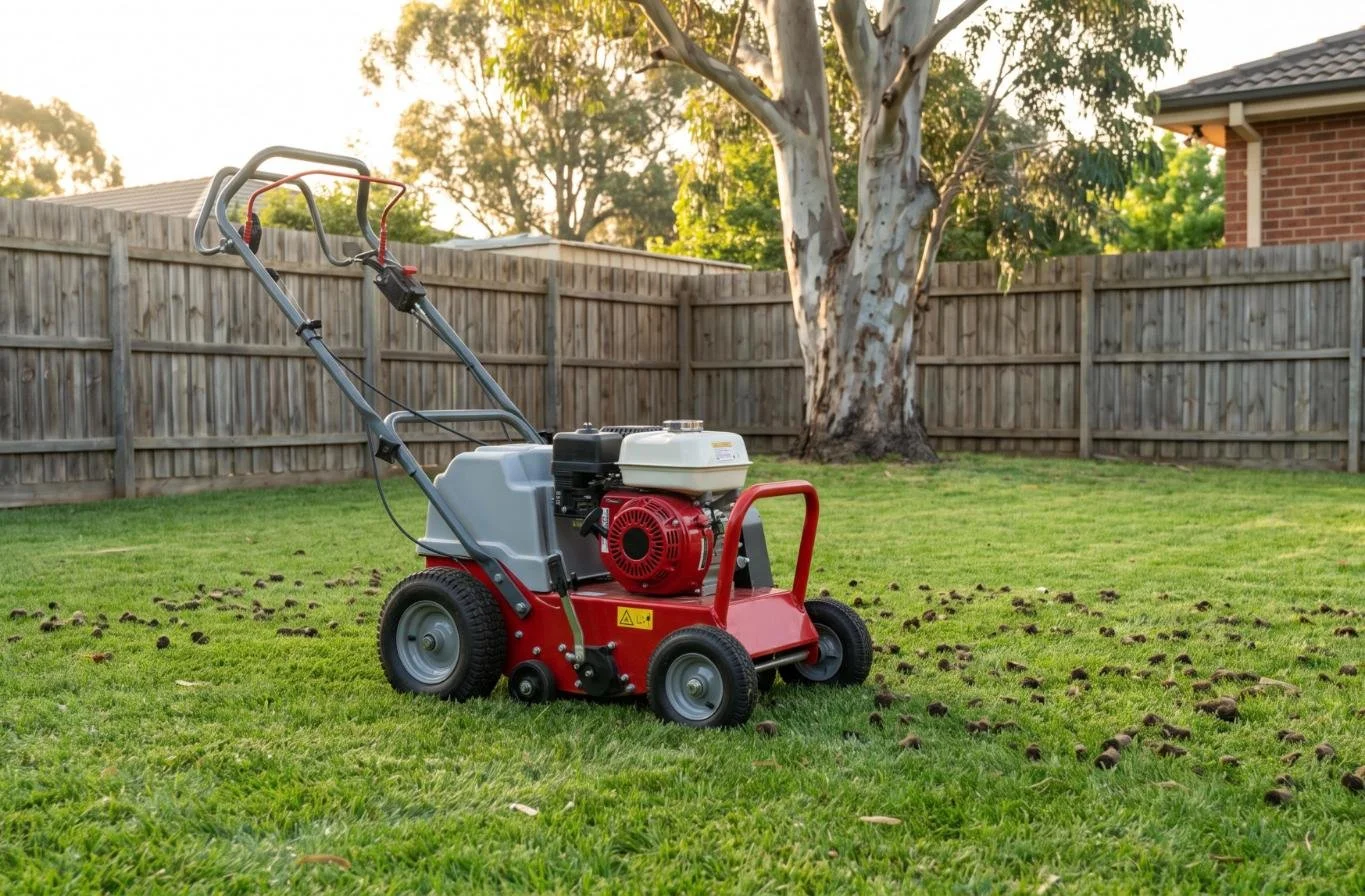
1. Mechanical dethatching
For thicker layers:
We use specialised equipment to lift and remove excess material
Depth is controlled to avoid root damage
Removed thatch is cleared completely
2. Follow-up aeration
After dethatching:
Core aeration relieves compaction
Oxygen reaches roots
Water and nutrients move properly again
3. Top dressing
A light 5–8 mm layer helps level the surface
Encourages organic breakdown
Protects exposed crowns
4. Recovery feeding
A gentle fertilising program supports regrowth
No heavy forcing while roots settle
How we stop thatch coming back
Once it’s under control, prevention is simple and consistent.
Correct mowing height (no scalping)
Deep, less-frequent watering
Balanced seasonal fertilising
Annual or biennial aeration
Wetting agents where water struggles to penetrate
Thatch usually returns when lawns are pushed hard without enough soil support.
Common mistakes we fix
Removing thatch without aeration or top dressing
Cutting too deep and damaging crowns
Dethatching stressed or dormant lawns
Ignoring watering habits that caused it
Trying to “wash it in” with more water
Done properly, thatch removal improves the lawn quickly. Done poorly, it sets it back.
DIY or call The Lawn Firm?
Light thatch can sometimes be managed with better mowing and watering. Once it’s thick and spongy, timing and technique matter.
We assess:
Thatch depth
Turf type
Soil condition
Season and weather
Then I line up dethatching, aeration, top dressing, fertilising, and watering so the lawn recovers cleanly and stays easy to maintain.

Looking for the perfect gift for the lawn enthusiast in your life? The Lawn Firm Gift Cards are the ideal solution. Redeemable for any of our professional lawn care services, these gift cards make it easy to give the gift of a greener, healthier lawn. From fertilisation to weed control and pest management, there’s something for every lawn need.
Why Choose a Lawn Firm Gift Card?
Versatility: Can be used for any service offered by The Lawn Firm.
Thoughtful Giving: A practical gift for anyone who values a beautiful outdoor space.
Simple to Use: Purchase online and enjoy easy redemption.
Order your gift card today and let your loved ones experience the professional touch of The Lawn Firm. It’s the perfect way to show you care while helping someone achieve the lawn of their dreams.
This gift card never expires.