
G’day, Nikolai here from The Lawn Firm. Canberra lawns sit on heavy clay soil, and poor drainage is one of the biggest reasons grass struggles. If water pools, grass yellows, or the lawn feels soft underfoot, drainage is usually the cause.
This guide explains how I identify drainage problems in Canberra lawns, why clay behaves the way it does, and the exact steps I use to improve drainage without ripping the whole lawn out.
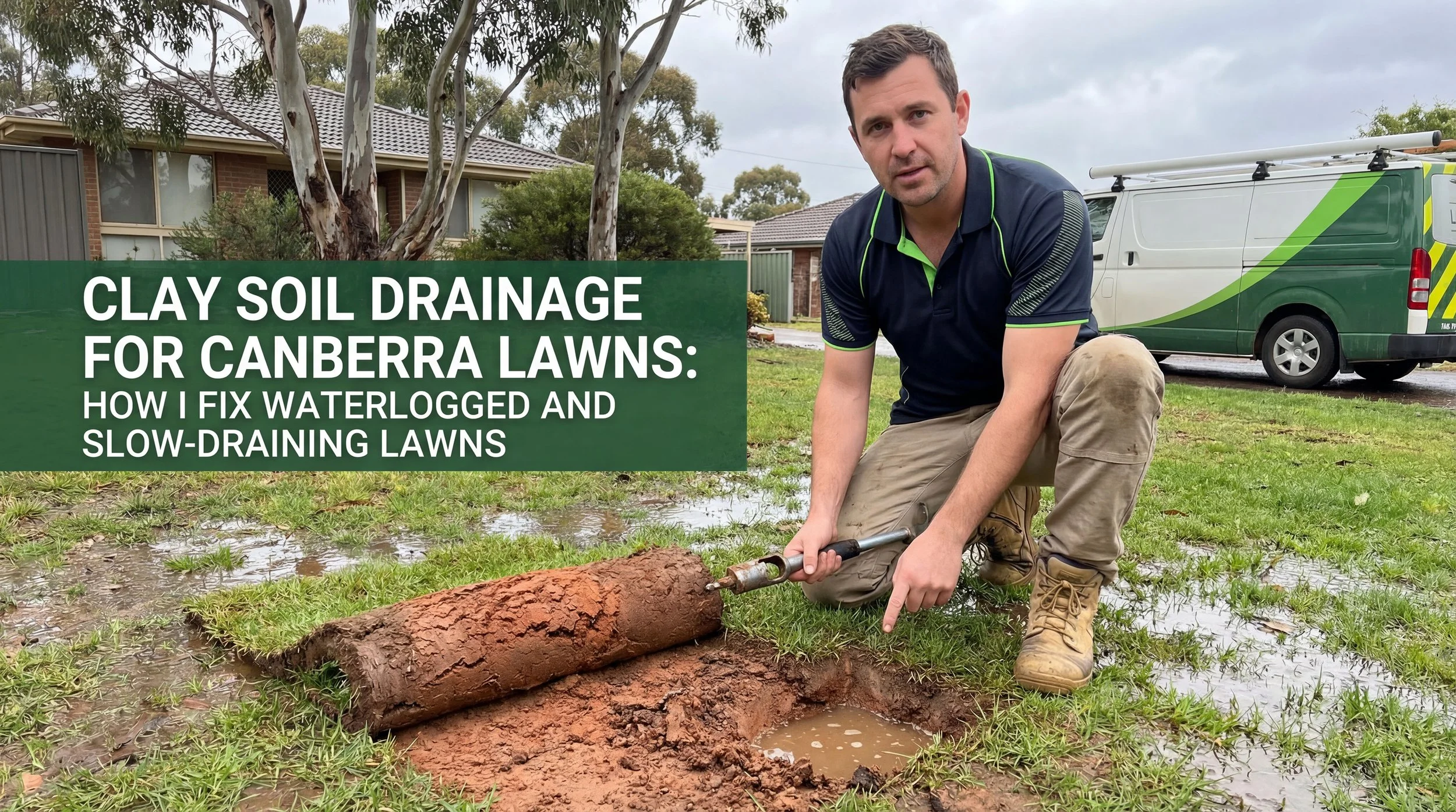
Why clay soil is common in Canberra
Across Canberra and the ACT, most residential lawns sit on:
Dense clay profiles
Compacted subsoil from construction
Low organic matter
Poor natural structure
Clay holds water tightly. That means:
Water enters the soil slowly
Oxygen struggles to reach roots
Roots stay shallow
Lawns become weak, patchy, and disease-prone
Clay is not bad soil, but it must be managed correctly.
Signs your lawn has drainage issues
I regularly see these warning signs:
Water pooling after rain or irrigation
Muddy or slippery areas that never fully dry
Yellowing grass despite regular watering
Soft or spongy feel underfoot
Moss or algae in shaded sections
Weeds thriving where grass fails
If your lawn looks worse after rain, drainage is almost always involved.
How I assess drainage on site
I don’t guess. I check it properly.
Screwdriver test
If it’s hard to push into the soil, compaction is present.Profile check
I cut a small section to inspect clay depth, layering, and root reach.Water movement
I watch where water flows, pools, or runs off paths and downpipes.Slope and levels
Even small low spots can hold water in Canberra clay.
This tells me whether the issue is surface, profile-based, or structural.
Why poor drainage damages lawns
When clay stays wet:
Roots suffocate from lack of oxygen
Nutrients are locked away
Disease pressure rises
Lawn pests move in
Grass thins, opening space for weeds
No amount of fertilising will fix a lawn that cannot breathe.
My proven drainage improvement process
1. Core aeration (non-negotiable)
This is the starting point for most Canberra lawns.
Removes soil plugs
Opens channels for air and water
Relieves compaction
Encourages deeper root growth
I time aeration for spring or autumn when lawns can recover.
2. Soil amendment where needed
Depending on the profile, I may incorporate:
Gypsum to improve clay structure
Organic matter to support soil life
Wetting agents where water beads on the surface
This helps clay absorb and release water more evenly.
3. Light top dressing
A 5–8 mm layer of suitable sandy loam:
Improves surface drainage
Smooths minor low spots
Protects crowns after aeration
Over time, repeated light dressings change how the soil behaves.
4. Fixing surface flow
I often adjust:
Lawn levels
Downpipe outlets
Irrigation overspray
Stopping water from concentrating in one area makes a huge difference.
Watering clay soil correctly
Clay soil fails when watered incorrectly.
What I do instead:
Deep, less-frequent watering
Short cycles with rest periods if needed
Early morning watering
No runoff or pooling
This trains roots down and keeps oxygen in the soil.
Seasonal drainage focus in Canberra
Spring
Aeration
Soil amendments
Start deeper watering patterns
Summer
Watch for dry patch on the surface
Use wetting agents carefully
Avoid overwatering
Autumn
Best time for major aeration and top dressing
Prepare soil for winter moisture
Winter
Reduce watering
Avoid traffic on wet lawns
Manage shade and leaf build-up
Common drainage mistakes we fix
Adding sand only to the surface
Overwatering clay soils
Skipping aeration year after year
Letting thatch block water movement
Treating symptoms instead of soil
Drainage problems rarely fix themselves.
DIY or call The Lawn Firm?
You can:
Reduce watering
Redirect downpipes
Avoid traffic on wet lawns
Where we add value is:
Identifying the real cause of poor drainage
Matching aeration, amendments, and top dressing correctly
Setting watering plans that work with Canberra clay
Preventing repeat issues year after year

Looking for the perfect gift for the lawn enthusiast in your life? The Lawn Firm Gift Cards are the ideal solution. Redeemable for any of our professional lawn care services, these gift cards make it easy to give the gift of a greener, healthier lawn. From fertilisation to weed control and pest management, there’s something for every lawn need.
Why Choose a Lawn Firm Gift Card?
Versatility: Can be used for any service offered by The Lawn Firm.
Thoughtful Giving: A practical gift for anyone who values a beautiful outdoor space.
Simple to Use: Purchase online and enjoy easy redemption.
Order your gift card today and let your loved ones experience the professional touch of The Lawn Firm. It’s the perfect way to show you care while helping someone achieve the lawn of their dreams.
This gift card never expires.