
Hydrophobic Soil in Canberra Lawns: How I Fix Dry Patch and Restore Even Growth
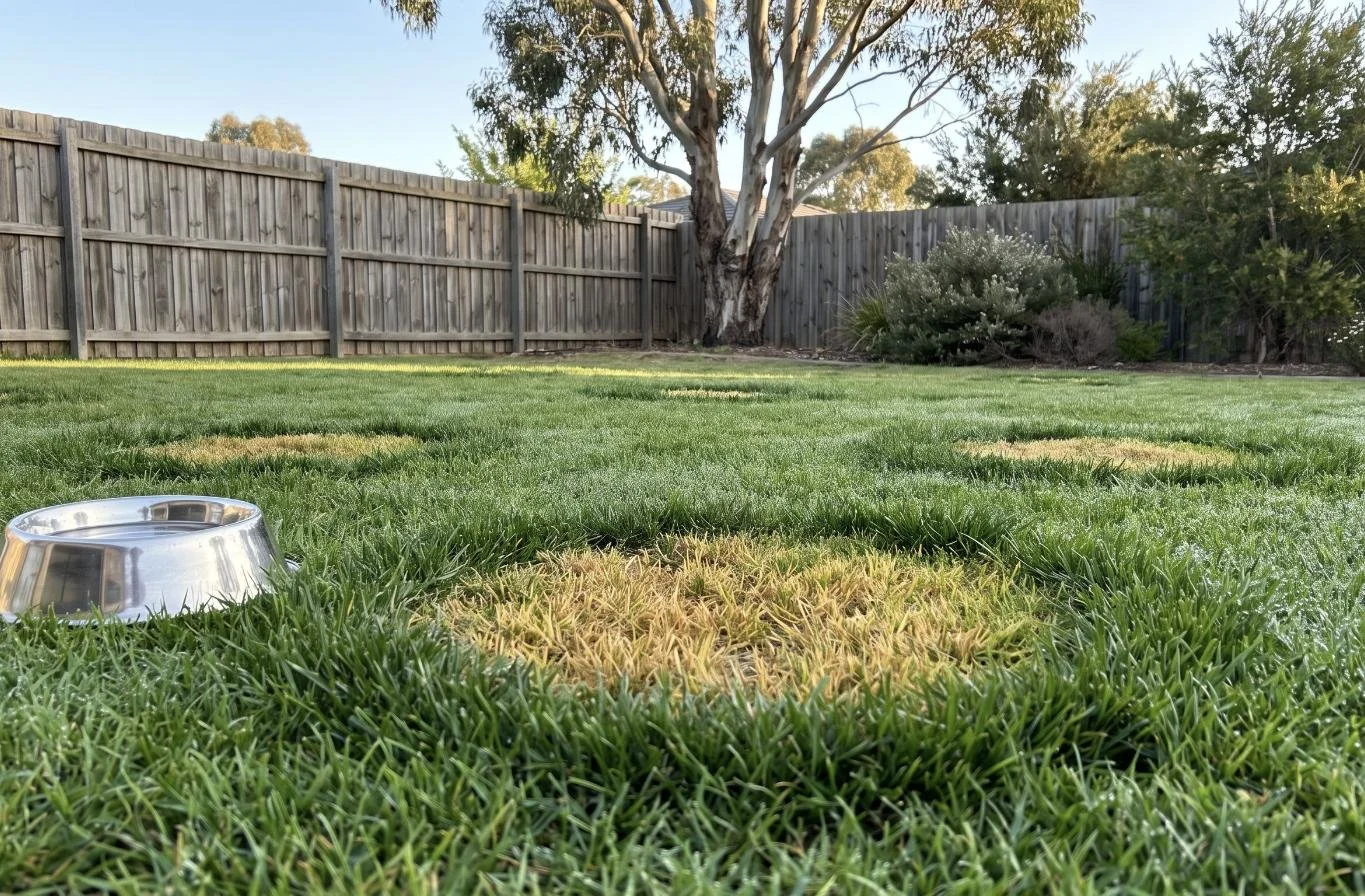
G’day, Nikolai here from The Lawn Firm. One of the most common problems I see in Canberra lawns is hydrophobic soil, often called dry patch. Homeowners water regularly, yet parts of the lawn stay dry, pale, or die back.
This guide explains why hydrophobic soil happens in Canberra, how to identify it quickly, and the exact process I use to restore even moisture and healthy growth.
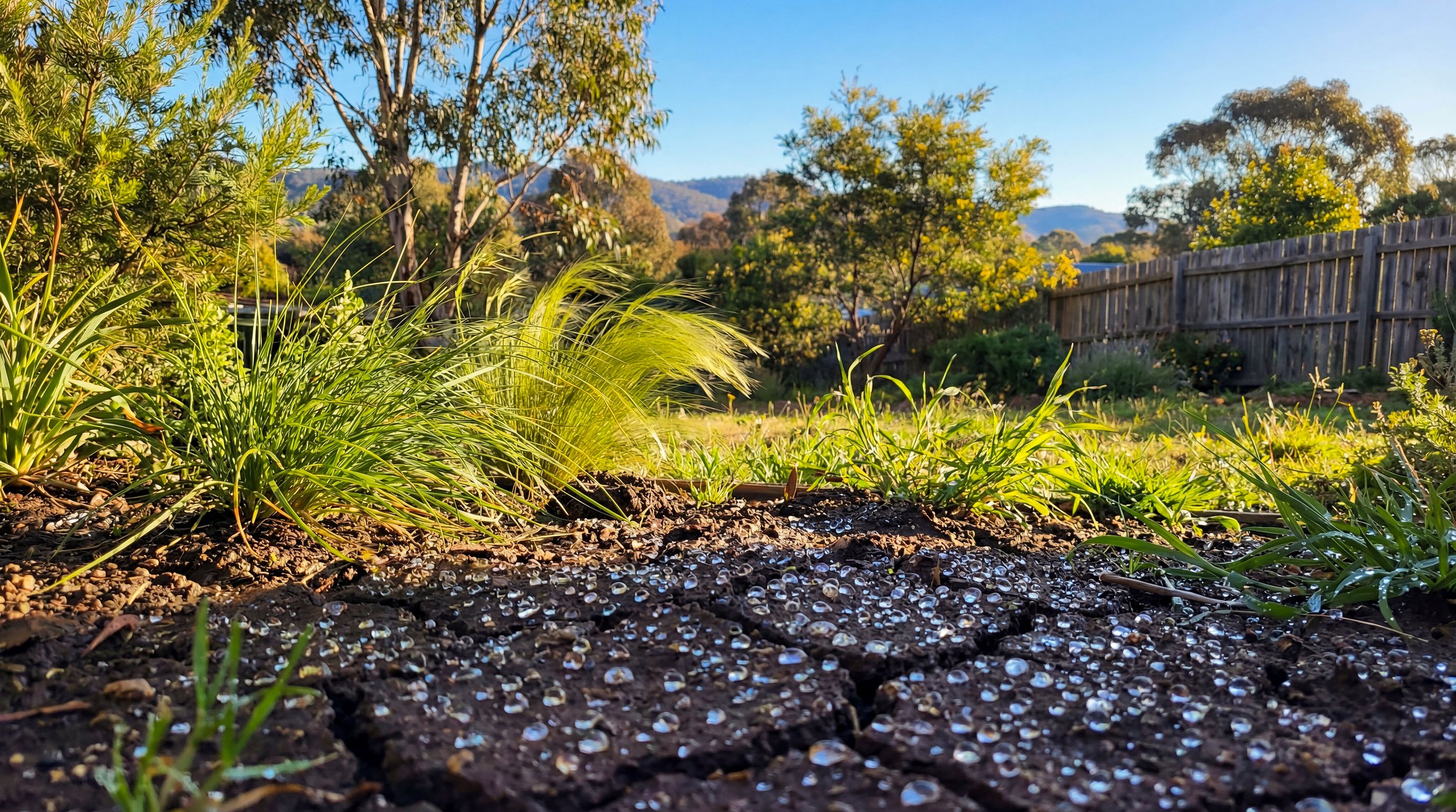
What hydrophobic soil actually is
Hydrophobic soil repels water instead of absorbing it. When this happens:
Water beads on the surface
Moisture runs off instead of soaking in
Roots dry out even though you are watering
Grass becomes weak, thin, and patchy
This issue is extremely common in Canberra’s clay soils, especially after hot summers or long dry periods.
Why dry patch is so common in Canberra
Across Canberra and the ACT, hydrophobic soil develops because of:
Clay-heavy soil profiles
Organic coatings forming on soil particles during dry spells
Repeated shallow watering
Thatch build-up blocking penetration
High summer temperatures drying the surface layer
Once soil becomes water-repellent, simply adding more water makes the problem worse.
Signs your lawn has hydrophobic soil
I look for these clear indicators:
Water runs off or pools instead of soaking in
Patchy colour after watering
Areas that go brown faster than the rest of the lawn
Dry soil just centimetres below the surface
Grass that wilts quickly on warm days
A quick test you can do: pour a small amount of water onto the soil. If it beads or runs sideways, hydrophobic soil is present.
Why hydrophobic soil damages lawns
When soil repels water:
Roots stay shallow
Nutrients cannot move into the root zone
Lawn pests and disease become more likely
Recovery after stress slows dramatically
Patchy growth opens space for weeds
This is why dry patch often appears alongside weeds, moss, and pest issues.
Our proven Canberra process to fix hydrophobic soil
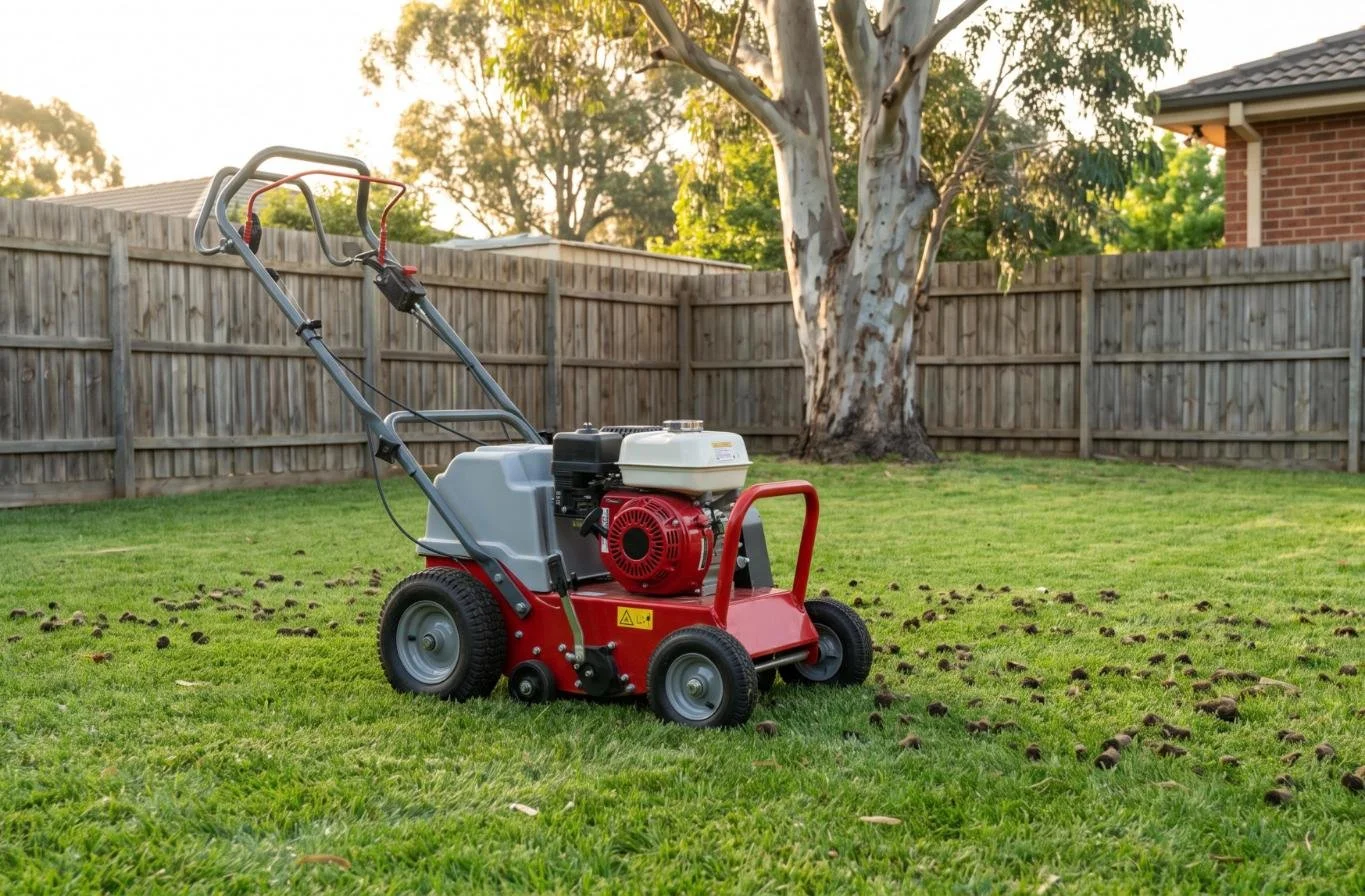
1) Core aeration
We start by opening the soil profile.
Relieves compaction
Creates channels for water and oxygen
Improves root depth
Aeration is best done in spring or autumn, when the lawn can recover quickly.
2) Apply a wetting agent
Wetting agents break the water-repelling barrier in the soil.
Water penetrates evenly
Moisture reaches the root zone
Dry patches begin to recover
This step is critical in Canberra summers and after extended dry periods.
3) Deep, correct watering
Once penetration improves, I reset the watering pattern.
Deep, less-frequent watering
Early morning timing
No runoff or pooling
This retrains roots to grow down instead of sitting near the surface.
4) Light top dressing where needed
A 5–8 mm layer of suitable sandy loam:
Improves surface structure
Protects exposed roots
Helps prevent dry patch returning
Over time, repeated light dressing improves how the soil behaves.
How long recovery takes
With the correct sequence:
Water penetration improves within days
Colour returns within 2–3 weeks
Root depth improves over 4–6 weeks
Skipping steps or doing them out of order slows recovery and leads to repeat problems.
How we stop dry patch coming back
Once fixed, prevention is simple:
Annual or biennial core aeration
Wetting agents during hot, dry periods
Avoid shallow daily watering
Keep thatch under control
Maintain steady seasonal fertilising
Hydrophobic soil is a management issue, not a one-off event.
Common mistakes we fix
Adding more water instead of improving penetration
Watering at night
Treating symptoms but ignoring soil structure
Skipping aeration
Allowing thatch to build up
These mistakes keep lawns stuck in a cycle of stress.
DIY or call The Lawn Firm?
You can test soil yourself and adjust watering. Where we add value is:
Confirming hydrophobic soil vs other issues
Correctly timing aeration and wetting agents
Selecting the right application rate and sequence
Integrating soil work with fertilising and seasonal care
That’s how dry patch stays fixed - not just masked.

Looking for the perfect gift for the lawn enthusiast in your life? The Lawn Firm Gift Cards are the ideal solution. Redeemable for any of our professional lawn care services, these gift cards make it easy to give the gift of a greener, healthier lawn. From fertilisation to weed control and pest management, there’s something for every lawn need.
Why Choose a Lawn Firm Gift Card?
Versatility: Can be used for any service offered by The Lawn Firm.
Thoughtful Giving: A practical gift for anyone who values a beautiful outdoor space.
Simple to Use: Purchase online and enjoy easy redemption.
Order your gift card today and let your loved ones experience the professional touch of The Lawn Firm. It’s the perfect way to show you care while helping someone achieve the lawn of their dreams.
This gift card never expires.