
Pre-Emergent Weed Control in Canberra Lawns: My Timing and Application Guide
G’day, Nikolai here from The Lawn Firm. If weeds keep reappearing every season, a pre-emergent program will save you time and hassle. I use pre-emergent herbicides to block weed seeds from sprouting before they become a problem. Here’s my Canberra-specific plan that works across clay soils, hot summers, and cold winters.
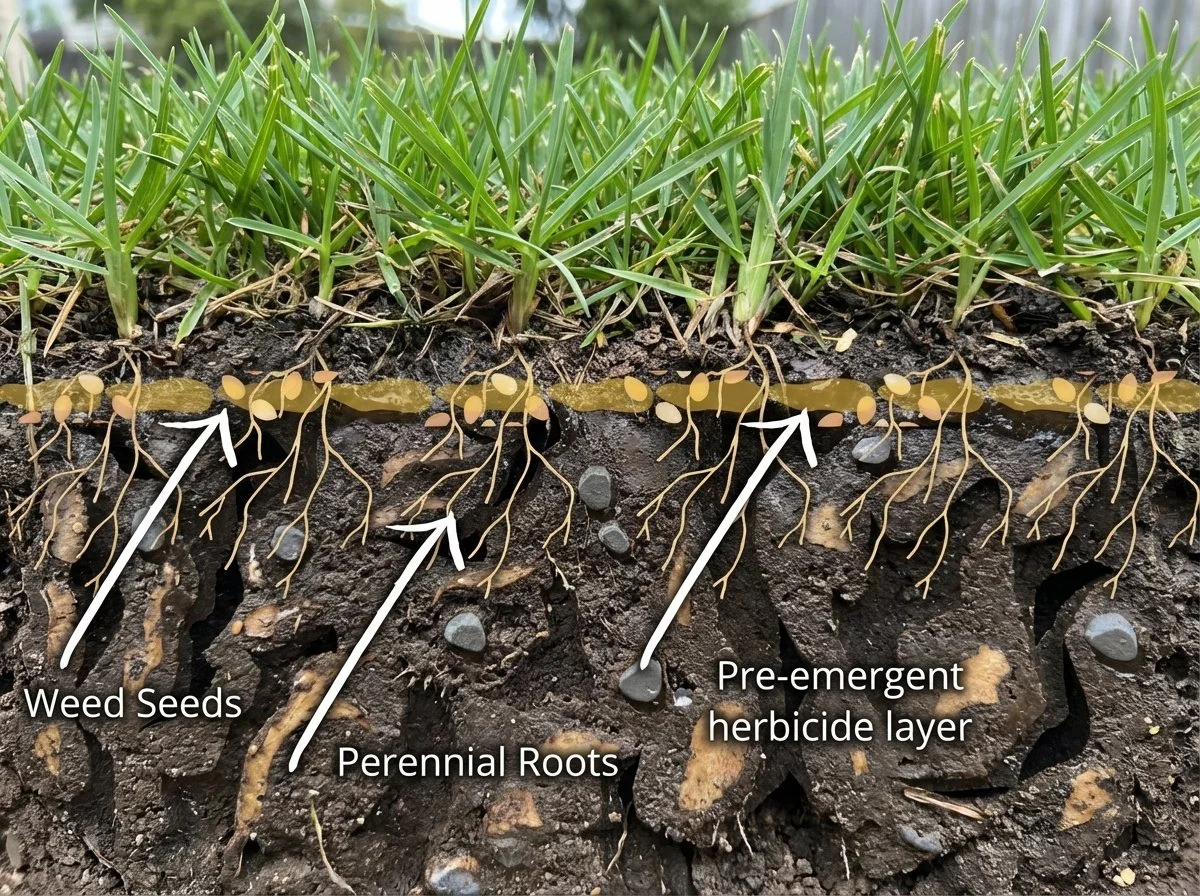
What pre-emergent does
Pre-emergent creates a thin barrier in the topsoil. It stops germinating weed seeds from forming roots. It does not remove mature weeds. I pair it with hand removal or targeted post-emergent work where plants are already up.
The Canberra calendar we follow
Different weeds germinate at different times. I time the barrier to them:
Late autumn (April–May): Block winter weeds (e.g., winter grass) as soils cool.
Early spring (September): Block summer annual grassy weeds (e.g., summer grass, crowsfoot) as soil warms.
Optional late spring top-up (October–November): Extend summer protection on high-pressure sites.
I always check soil moisture and recent weather before I lock dates. Good placement and watering-in make all the difference.
Where we use pre-emergent (and where we don’t)
Best use cases
Lawns with repeat seasonal weeds
Edges, paths, and hot spots that always break first
Newly renovated areas after top dressing/overseeding has established
Avoid / take care
Areas you plan to seed soon – the barrier will block lawn seed as well
Thin, stressed turf – I fix water, thatch, and nutrition first for a clean result
My on-site method (step by step)
Identify pressure
I note which weeds you had last season and where they started. This sets timing and coverage.Prepare the surface
I mow at normal height, clear leaf litter, and fix hydrophobic zones with a wetting agent so the product can sit evenly.Apply evenly
I use a calibrated spreader or sprayer for consistent coverage. Edges get careful attention.Water-in correctly
I water-in to set the barrier at the seed zone. The aim is enough moisture to activate, without runoff.Follow-up check
I revisit at the expected germination window. If I see escapes, I spot-treat and adjust the plan.
Common mistakes we fix
Applying after weeds are already up – pre-emergent won’t remove established plants.
Uneven coverage – gaps let weeds through and make stripes later.
Wrong timing – a month late means a season lost.
Watering to runoff – you wash the barrier out of the zone.
Seeding straight after – lawn seed won’t establish through an active barrier.
Pair pre-emergent with these habits
Steady fertilising to keep density high.
Core aeration in spring or autumn so roots run deeper in Canberra clay.
Wetting agents in warm months to fix dry-patch areas.
Consistent mowing height to protect crowns and shade the soil.
These steps lower weed pressure so the barrier does less work and lasts longer.
DIY or call The Lawn Firm?
You can lay a barrier yourself on a small area. For a whole-yard program, timing, even coverage, and water-in decide the result. I assess your weed history, set the dates, apply accurately, and handle follow-ups so you enjoy a cleaner, easier lawn through the season.
Make seasonal weeds a non-issue. Let The Lawn Firm represent your lawn.
FAQs
Will pre-emergent stop my lawn seed?
Yes. Keep a clear gap between application and any overseeding plan.
How long does protection last?
Typically 8–12+ weeks, depending on product, dose, weather, and mowing. I set reminders for follow-ups on high-pressure sites.
Do I still need post-emergent?
Sometimes. I spot-treat any escapes and remove mature weeds by hand where practical.

Looking for the perfect gift for the lawn enthusiast in your life? The Lawn Firm Gift Cards are the ideal solution. Redeemable for any of our professional lawn care services, these gift cards make it easy to give the gift of a greener, healthier lawn. From fertilisation to weed control and pest management, there’s something for every lawn need.
Why Choose a Lawn Firm Gift Card?
Versatility: Can be used for any service offered by The Lawn Firm.
Thoughtful Giving: A practical gift for anyone who values a beautiful outdoor space.
Simple to Use: Purchase online and enjoy easy redemption.
Order your gift card today and let your loved ones experience the professional touch of The Lawn Firm. It’s the perfect way to show you care while helping someone achieve the lawn of their dreams.
This gift card never expires.