
G'day, Nikolai here from The Lawn Firm.
If you have been feeding, watering and mowing your lawn and it still looks tired, thin or patchy, there is a good chance the problem is not on top of the soil. It is in it.
A lot of Canberra lawns sit on heavy clay, and over time that soil gets compacted. When soil is compacted, air, water and nutrients cannot move down to the roots, no matter how much fertiliser you put on top. The grass roots stay shallow, the lawn struggles in the heat, water runs off instead of soaking in, and the whole lawn feels hard underfoot.
That is exactly the problem lawn aeration and coring is built to fix. Done at the right time of year, it is one of the most transformative things you can do for a struggling Canberra lawn, and one of the most under-used.
If your lawn feels hard, thin or just stuck despite your best efforts, Book a Free Assessment and I'll check whether compaction is holding it back.
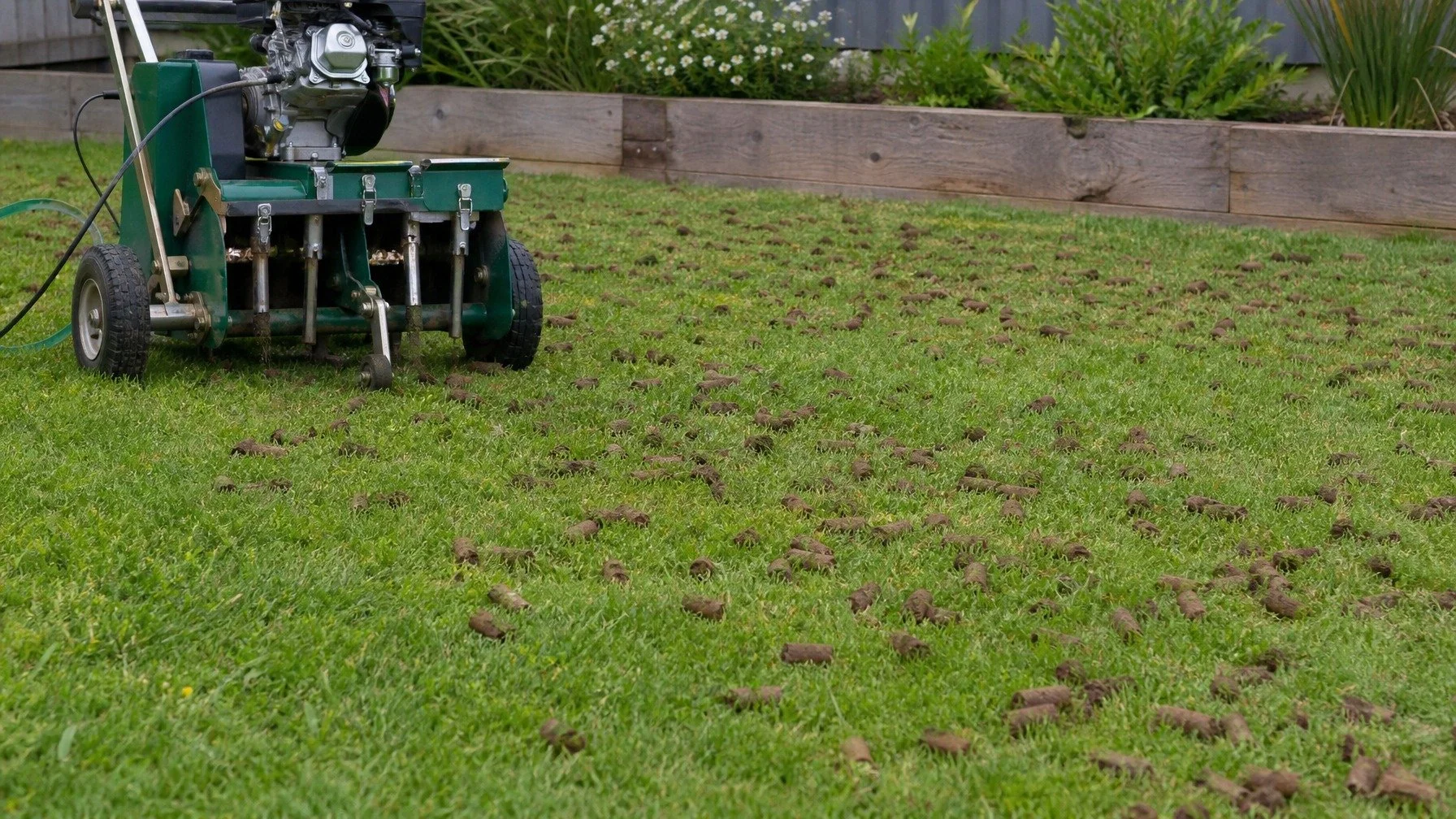
A coring machine lifting plugs of soil from a Canberra lawn during aeration
The quick answer: what aeration does for your lawn
Aeration relieves soil compaction so air, water and nutrients can finally reach the roots.
Coring, the type of aeration I rate most highly, physically removes small plugs of soil from the lawn, creating channels that let the ground breathe, drain and absorb. The grass responds by rooting deeper, growing thicker and becoming far more resilient through Canberra's hot summers and cold winters.
If your lawn has stopped responding to feeding and watering, compacted soil is very often the reason, and aeration is usually the missing step.
What is lawn aeration and coring?
Aeration is the process of creating openings in the soil so it can take in air, water and nutrients again. There are a couple of common methods, and the difference matters.
Core aeration (coring) uses a machine with hollow tines to pull out small plugs of soil, roughly finger-sized, and leave them on the surface. This physically removes material, which genuinely relieves compaction and opens up real channels in the soil. This is the method I recommend for most Canberra lawns.
Spike or solid-tine aeration pushes a solid spike into the ground to make holes without removing anything. It is gentler and can help in a small way, but because it does not remove soil, it can actually press the surrounding soil tighter over time. It is not a real fix for properly compacted clay.
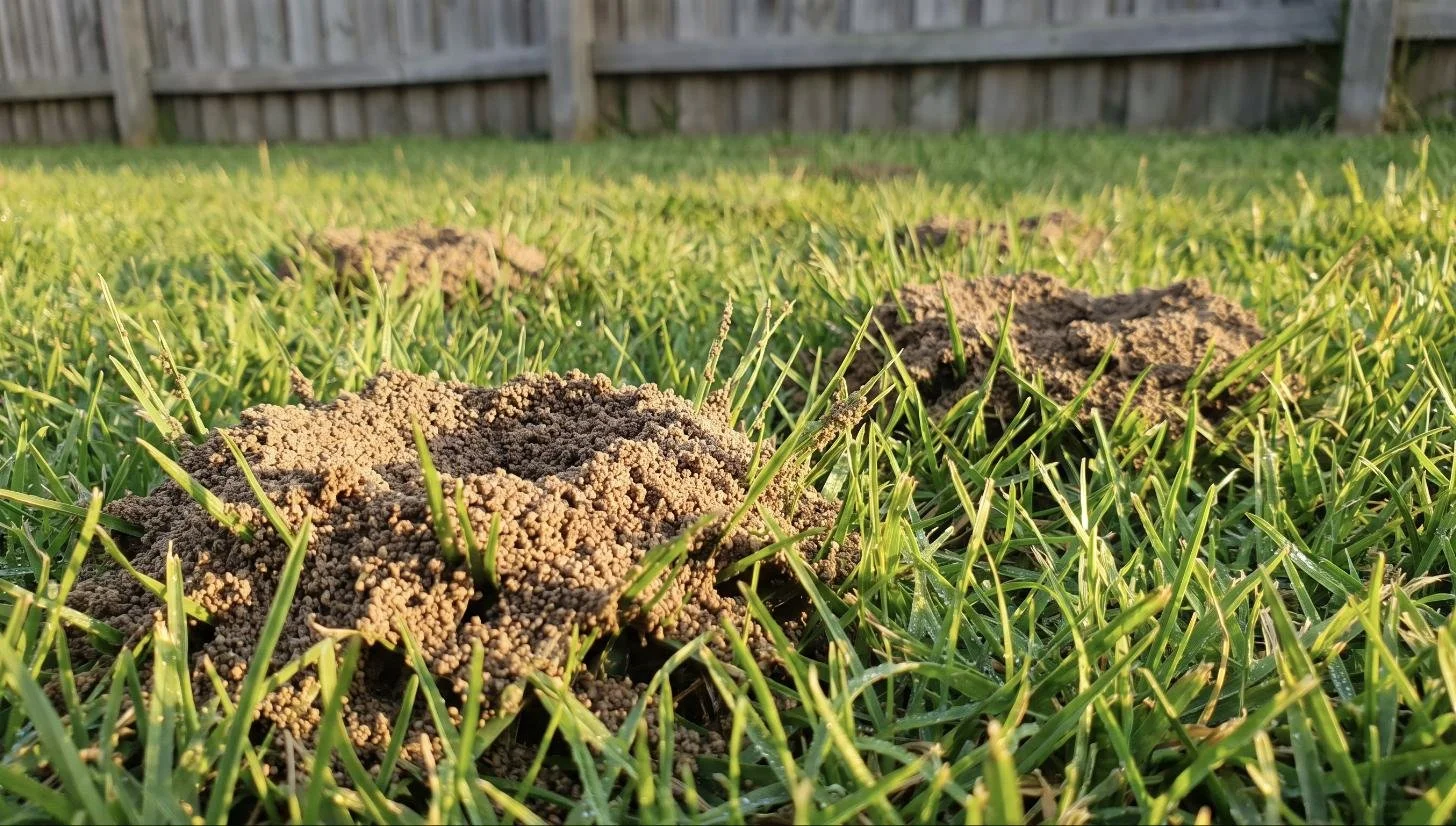
When people talk about "aerification" of a lawn, coring is the version that does the heavy lifting. The plugs left on top look untidy for a few days, then break down and return to the soil. That is completely normal and part of the process.
Why Canberra lawns especially benefit from aeration
Canberra sits on a lot of heavy clay soil, and clay is exactly the kind of soil that compacts hardest.
Clay particles are tiny and pack together tightly, so when the surface gets compressed by foot traffic, kids, pets, mowers, parked trailers, or simply settling over years, the soil seals up. Add Canberra's climate to that and you have a perfect storm: baking, drying summers that set the clay hard, and cold, wet winters that compact it further and hold water on the surface.
The result is a lawn where:
water pools or runs off instead of soaking in
fertiliser sits on top and never reaches the roots
roots stay shallow and the lawn fries the moment summer hits
the surface feels rock-hard underfoot
thatch and moss build up and weeds move into the weak patches
You can feed and water a compacted clay lawn all year and see very little change, because the soil is the bottleneck. Relieving that compaction with coring is what finally lets everything else work. For ACT clay soils in particular, I see aeration as a foundation, not an extra. If the lawn still struggles after aeration and feeding, soil testing can reveal what else is holding it back.
Key benefits of lawn aeration and coring
The core aeration benefits stack up quickly once the soil can breathe again:
Deeper, stronger roots. Roots follow the new channels down, which makes the lawn far more drought-tolerant through summer.
Better water absorption. Rain and irrigation soak in instead of running off or pooling, so you get more out of every watering.
Fertiliser that actually works. Nutrients reach the root zone, so feeding finally delivers the colour and growth you are paying for.
Reduced compaction and thatch. Coring opens heavy soil and helps break down built-up thatch.
Thicker, healthier turf. A lawn that roots deeply and feeds properly fills in, which naturally crowds out weeds.
A better surface for everything else. Aeration sets the lawn up for overseeding, top dressing and recovery work, because seed and soil have somewhere to go.
In short, aeration does not just help the lawn. It makes everything else you do to the lawn work better.
When is the best time to aerate your lawn in Canberra?
Timing matters, because you want to aerate when the grass is actively growing and can recover quickly and take advantage of the open soil.
The right window depends on your grass type, and Canberra has a mix of both:
Warm-season lawns (such as couch and kikuyu) grow hardest through the warmer months, so late spring through summer is the ideal time to aerate them. They bounce back fast in the heat.
Cool-season lawns (such as tall fescue and ryegrass, which are very common in Canberra) do best with aeration in autumn, or early spring, when they are actively growing but not under summer heat stress.
What I generally avoid is aerating in the depths of winter, when growth has stalled and the lawn cannot recover, or in the middle of a brutal summer dry spell when a cool-season lawn is already stressed.
If you are not sure which grass you have or when to aerate it, that is one of the first things I sort out on an assessment. Getting the timing right is half the result. Book a Free Assessment and I'll match it to your lawn.
DIY lawn aeration vs professional coring services
You can aerate a lawn yourself, and for a small lawn it can be a reasonable job.
The DIY options are usually manual, such as a garden fork, a step-on coring tool, or aerator sandals. These can help on small areas, but they are slow, hard work, and on heavy Canberra clay it is genuinely difficult to get enough depth and coverage to make a real difference. A garden fork pushed into clay also tends to compress the soil around each hole rather than removing it.
A professional lawn coring service uses a proper machine that pulls thousands of consistent, deep plugs across the whole lawn quickly and evenly. That depth and consistency is what actually relieves compaction across the whole root zone, not just the top inch.
Just as importantly, professional coring usually comes as part of a year-round lawn care plan. There is no point opening the soil up and then doing nothing. The real value comes from following aeration with the right feeding, top dressing, overseeding or repair while the soil is open and receptive.
For a small, lightly compacted lawn, DIY can tide you over. For heavy clay, a large lawn, or a lawn that is genuinely struggling, a professional coring service gives you far better results for the effort.
What to do after aerating your lawn
Aeration opens the door. What you do next is what transforms the lawn. After coring, I usually look at:
Leaving the plugs to break down. They look messy for a few days, then return to the soil naturally. There is no need to rake them up.
Feeding the lawn. With the soil open, this is the perfect moment to fertilise, because nutrients now reach the roots.
Top dressing. A thin layer of quality soil or sand worked into the holes improves the soil profile and smooths the surface.
Overseeding. If the lawn is thin, the open holes are ideal seedbeds, so aeration and overseeding work brilliantly together.
Watering well. Keep the lawn watered through recovery so the grass can take full advantage of the open soil.
Aeration on its own helps. Aeration as part of a recovery plan is where you see a tired Canberra lawn genuinely come back to life.
If you want the whole sequence done properly, with coring, feeding, top dressing and repair timed to your lawn, Book a Free Assessment.
Final word
If your Canberra lawn is hard underfoot, thin on top, or simply not responding to everything you are doing, the answer is often under the surface.
Compacted clay soil quietly undoes good feeding and watering, because nothing can reach the roots. Aeration and coring break that bottleneck open, and once the soil can breathe, drain and absorb again, the whole lawn responds.
If you think compaction is holding your lawn back, Book a Free Assessment and I'll check the soil, recommend the right type and timing of aeration, and build a recovery plan around it.
Key points I get asked on a regular basis
What is the difference between aeration and coring?
Aeration is any method of opening up the soil. Coring is a specific type that uses hollow tines to remove small plugs of soil, which genuinely relieves compaction. Coring is the method I recommend for Canberra's heavy clay because it physically removes material rather than just making holes.
Why is my Canberra lawn so hard and compacted?
Canberra has a lot of heavy clay soil, which packs together tightly under foot traffic, mowers and pets, and is set even harder by hot, dry summers. Compacted clay stops water and nutrients reaching the roots, which is why the lawn feels hard and stops responding to care.
When should I aerate my lawn in Canberra?
Aerate when the grass is actively growing. Warm-season lawns like couch and kikuyu are best aerated in late spring and summer, while cool-season lawns like tall fescue and ryegrass do best in autumn or early spring. Avoid deep winter and peak summer stress.
Should I pick up the soil plugs after coring?
No. Leave the plugs on the surface to break down naturally over a few days. They return valuable soil and organic matter to the lawn, and raking them up just removes the benefit.
What are the benefits of core aeration?
The main core aeration benefits are deeper roots, better water absorption, fertiliser that actually reaches the root zone, reduced compaction and thatch, and thicker turf that resists weeds. It also creates the ideal conditions for overseeding and top dressing.
Can I aerate my lawn myself?
You can, using a garden fork or step-on coring tool, and it can help on small lawns. On heavy Canberra clay it is hard, slow work and difficult to get enough depth and coverage. A professional coring service does it deeper, evenly and as part of a recovery plan.
How do I book lawn aeration in Canberra?
Book a Free Assessment and I'll check your soil and grass type, confirm whether compaction is the issue, and recommend the right aeration and follow-up plan.
Looking for the perfect gift for the lawn enthusiast in your life? The Lawn Firm Gift Cards are the ideal solution. Redeemable for any of our professional lawn care services, these gift cards make it easy to give the gift of a greener, healthier lawn. From fertilisation to weed control and pest management, there’s something for every lawn need.
Why Choose a Lawn Firm Gift Card?
Versatility: Can be used for any service offered by The Lawn Firm.
Thoughtful Giving: A practical gift for anyone who values a beautiful outdoor space.
Simple to Use: Purchase online and enjoy easy redemption.
Order your gift card today and let your loved ones experience the professional touch of The Lawn Firm. It’s the perfect way to show you care while helping someone achieve the lawn of their dreams.
This gift card never expires.