
Winter Grass: How to Identify and Remove It from Your Canberra Lawn
G'day, Nikolai here from The Lawn Firm.
If patches of pale, lighter-green grass with little white seed heads start appearing through your lawn as the weather cools, there is a good chance you are looking at winter grass. It is one of the most common cool-season weeds I deal with across Canberra, and it can take over a lawn surprisingly quickly.
Winter grass, or Poa annua, thrives in exactly the conditions our Canberra winters serve up: cool, damp soil and a lawn that has slowed down for the season. It grows in clumps, sets seed prolifically, and then dies off as the weather warms, leaving bare patches behind right when you want the lawn looking its best.
The good news is that winter grass is very manageable once you know what you are looking at and treat it at the right time. The trick is getting in early, because once it sets seed it is sowing next year's problem.
If pale clumps are spreading through your lawn and you want them gone for good, Book a Free Assessment and I'll confirm what it is and how to deal with it.
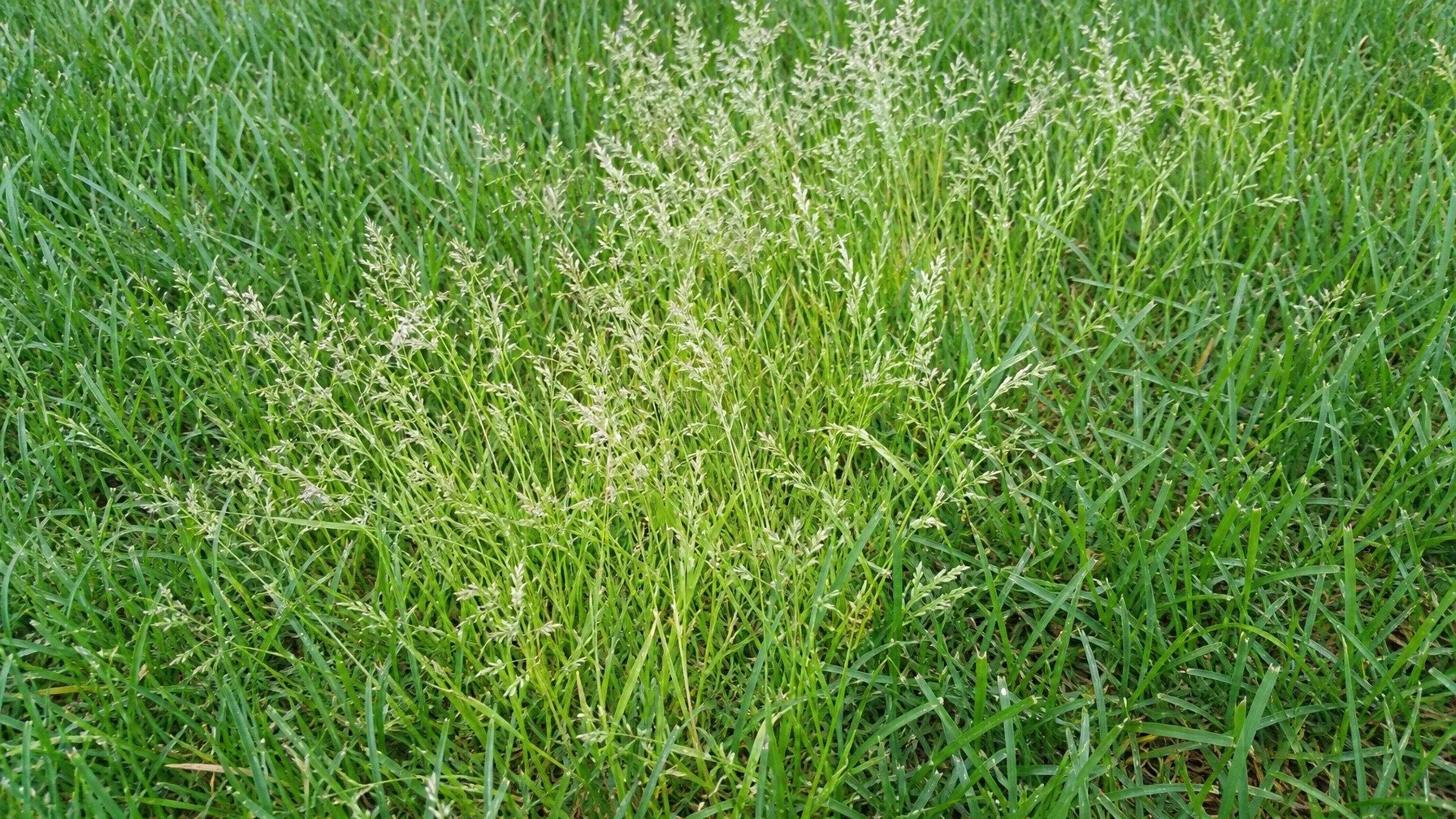
Pale clumps of winter grass with white seed heads spreading through a Canberra lawn
The quick answer: is it winter grass?
If you are seeing light-green, clumpy grass with fine white or pale seed heads appearing through your lawn in the cooler months, it is very likely winter grass.
It stands out because it is a slightly different colour and texture to your main turf, it grows in distinct tufts rather than blending in, and it produces those tell-tale seed heads even when mown low. As the weather warms in late spring it dies off, which is why lawns infested with winter grass often look patchy and bare heading into summer.
The fastest way to be certain, and to treat it correctly, is to identify it early, which I will walk through below.
What is winter grass?
Winter grass is the common name for Poa annua, an annual weed grass that germinates in autumn, grows through winter, sets seed in late winter and spring, then dies off as the weather heats up.
It is a weed for a few reasons. It is a different colour and texture to your lawn, so it looks patchy and inconsistent. It grows in clumps that feel soft and spongy underfoot. And because it is an annual that dies in the heat, an infested lawn is left with bare, weak patches in late spring just as the growing season starts.
Its real trick is seed. A single winter grass plant can produce a huge number of seeds, even when the lawn is mown short, and those seeds sit in the soil waiting for the next autumn. That is why winter grass that is left to seed one year comes back worse the next, and why timing your control before it seeds matters so much.
It is one of several common lawn weeds I see across Canberra, and like most of them, it moves into lawns that are thin, stressed or have gaps for it to fill.
How to identify winter grass
Winter grass is fairly easy to pick once you know the signs:
Colour. It is usually a paler, brighter green than the surrounding turf, so infested areas look blotchy and uneven.
Growth habit. It grows in soft, dense clumps or tufts rather than blending smoothly into the lawn.
Seed heads. The clincher is the fine, whitish seed heads it throws up, often sitting just above the lawn even after mowing.
Timing. It appears and spreads through the cool, damp months of autumn and winter, and fades out as summer heat arrives.
Feel. Patches of winter grass often feel softer and spongier underfoot than the rest of the lawn.
If you are seeing pale, seeding clumps spreading through your lawn over winter, that combination is almost always Poa annua.
Why winter grass keeps appearing
Winter grass takes hold for the same reasons most weeds do: it finds space and conditions that suit it better than your lawn.
Through autumn and winter, your main turf slows right down, especially cool-season lawns under Canberra frosts. That gives winter grass, which loves cool damp conditions, the perfect window to germinate and spread while your lawn is not competing strongly. Thin, bare or compacted areas give it an easy foothold, and damp, poorly drained spots are a favourite.
Then there is the seed bank. Because winter grass seeds so heavily, every season you let it seed adds thousands more seeds to the soil, ready to germinate the following autumn. This is why winter grass tends to get worse year on year if it is never properly dealt with, and why a thick, healthy, well-fed lawn is your best long-term defence.
Understanding why it is appearing matters, because lasting control is as much about closing the gaps it exploits as it is about killing the plants you can see.
Effective winter grass removal methods
How I treat winter grass depends on how much there is, the time of year, and your grass type.
For a small, early infestation, hand removal can work if you pull the clumps before they seed, getting the roots out and filling the gaps so it cannot simply return. For anything more widespread, targeted treatment is usually needed, always matched carefully to your lawn type and the season so the turf is not stressed in the process.
The single most important factor is timing. Treating winter grass before it sets seed stops it sowing next year's crop, which is the difference between knocking it back for good and fighting the same battle every winter. There are also approaches that focus on preventing germination in the first place, applied before the autumn flush, which can be very effective as part of a planned programme.
I deliberately steer people away from grabbing the strongest product on the shelf and hoping. The wrong treatment, the wrong timing, or treating an already thin and stressed lawn is how people damage their turf and still end up with winter grass. Effective control is about the right method, at the right time, followed by thickening the lawn so it crowds the weed out.
If winter grass is through your lawn and you want it handled properly, Book a Free Assessment and I'll match the treatment to your lawn.
How to stop winter grass coming back
Killing the winter grass you can see is only half the job. Keeping it out is the other half, and it comes down to giving it no room and no easy conditions.
Feed and thicken the lawn. A dense, well-fed lawn leaves winter grass no gaps to germinate into. Correct fertilisation is one of the most effective long-term defences.
Repair thin and bare patches. Overseeding and recovery work remove the open ground winter grass relies on, especially the bare patches it leaves behind when it dies off.
Improve drainage and relieve compaction. Winter grass loves damp, compacted spots, so aeration and better drainage make the lawn far less inviting.
Mow at the right height. Scalping weakens your lawn and opens the door, so keeping the grass at a healthy height helps it compete.
Time prevention to autumn. Because winter grass germinates in autumn, the most effective prevention happens before that flush, not once the lawn is already full of it.
Do these consistently and winter grass has nowhere to establish, which is far easier than fighting it clump by clump every winter.
Final word
Winter grass is a frustrating weed because it shows up just as your lawn slows for the season, seeds heavily, and then leaves bare patches behind as it dies off in the heat.
The two things that beat it are early identification and good timing. Catch it and treat it before it sets seed, then thicken and feed the lawn so it has no gaps to return to, and you break the cycle instead of repeating it every year.
If pale, clumpy winter grass is taking over your lawn, Book a Free Assessment and I'll identify it, treat it at the right time, and build a stronger lawn that keeps it out.
Key points I get asked on a regular basis
What does winter grass look like?
Winter grass is a pale, bright-green weed that grows in soft clumps and throws up fine white seed heads, often sitting just above the lawn even after mowing. It looks blotchy against your main turf and appears through the cool, damp months of autumn and winter.
Is winter grass the same as Poa annua?
Yes. Winter grass is the common name for Poa annua, an annual weed grass that germinates in autumn, grows and seeds through the cooler months, then dies off in the summer heat, leaving bare patches behind.
When should I treat winter grass in Canberra?
The key is to treat it before it sets seed, through late autumn and winter, so it cannot sow next year's crop. Prevention is most effective applied before the autumn germination flush. Leaving it until it has seeded means a worse infestation the following year.
Why does winter grass keep coming back every year?
Because it seeds so heavily. Every season you let it seed adds thousands of seeds to the soil, ready to germinate the next autumn. Combined with thin or damp patches in the lawn, that seed bank is why it returns worse each year unless you treat it before seeding and thicken the lawn.
Will winter grass go away on its own?
It dies off on its own as the weather warms in late spring, but it leaves bare patches behind and has already dropped seed for next season. So while the plants disappear, the problem does not, which is why treating it before it seeds is so important.
How do I book winter grass treatment in Canberra?
Book a Free Assessment and I'll confirm it is winter grass, treat it at the right time before it seeds, and put a plan in place to thicken your lawn so it stops coming back.

Looking for the perfect gift for the lawn enthusiast in your life? The Lawn Firm Gift Cards are the ideal solution. Redeemable for any of our professional lawn care services, these gift cards make it easy to give the gift of a greener, healthier lawn. From fertilisation to weed control and pest management, there’s something for every lawn need.
Why Choose a Lawn Firm Gift Card?
Versatility: Can be used for any service offered by The Lawn Firm.
Thoughtful Giving: A practical gift for anyone who values a beautiful outdoor space.
Simple to Use: Purchase online and enjoy easy redemption.
Order your gift card today and let your loved ones experience the professional touch of The Lawn Firm. It’s the perfect way to show you care while helping someone achieve the lawn of their dreams.
This gift card never expires.