
Spring Lawn Care in Canberra: My Season-Start Reset
G'day, Nikolai here from The Lawn Firm.
Spring is the most important time of year for a Canberra lawn. Everything you do in the first weeks of the growing season sets up how the lawn looks and copes right through summer. Get spring right and the lawn is thick, green and resilient by the time you want to be out on it. Miss the window and you spend the rest of the year playing catch-up.
Our winters are cold and hard on lawns, so by the time the soil starts to warm most Canberra lawns are hungry, compacted, a bit thatchy and carrying some winter damage. Spring is when I reset all of that. Here is the order I do it in and why.
If you would rather have your spring reset done properly and on time, Book a Free Assessment and I'll build a plan around your lawn.

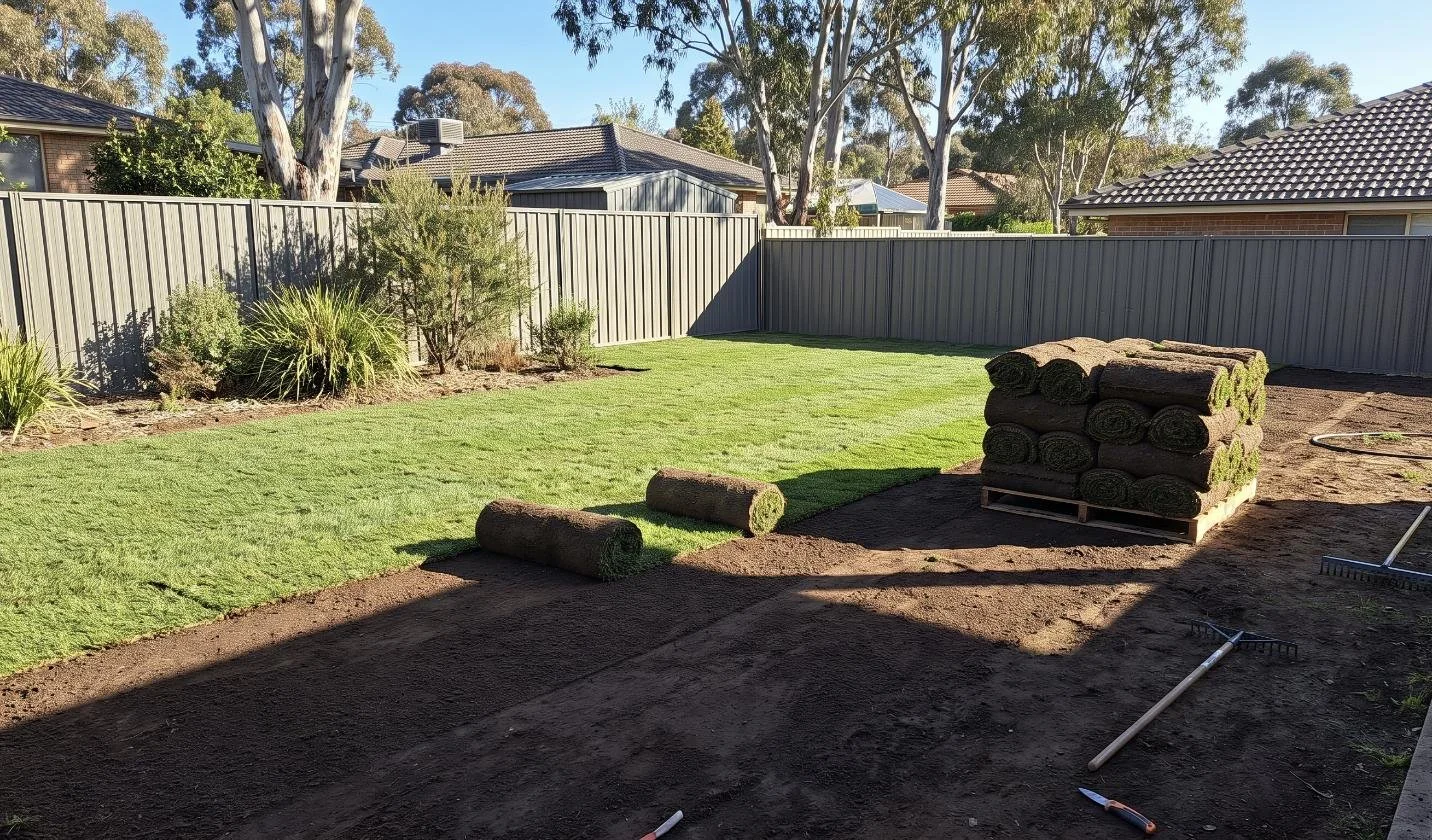
A fresh, green Canberra suburban lawn greening up in early spring
The quick answer: what spring lawn care involves in Canberra
Spring lawn care is a sequence, and the order matters. Start by cleaning up and assessing winter damage, then dethatch to clear built-up matter, aerate to relieve compacted clay, and give the lawn its first proper feed as the soil warms. Around the same time, apply a pre-emergent to stop summer weeds before they germinate, overseed and repair any bare patches, and start watching for pests as they become active in late spring.
The timing depends on your grass type. Warm-season lawns like couch and kikuyu are just waking up and want the heavier work as they get going, while cool-season lawns like fescue and rye are already growing and need feeding and repair without the summer heat on them yet.
Do these steps in the right order and at the right time and you build a lawn that carries through summer instead of struggling.
Why spring matters most in Canberra
A Canberra winter takes a toll. Hard frosts, cold soil and dormant growth leave most lawns tired by the time September comes around. As the soil warms and daylight lengthens, the grass switches back on and starts growing again, and that surge of new growth is your one big opportunity each year.
Everything you do in that window has maximum effect, because the lawn is actively growing and can recover fast and take advantage of the help. Feeding lands when the grass can use it. Aeration and dethatching heal quickly. Repairs knit in before the heat arrives. That is why I treat spring as a proper reset rather than just a mow and a feed.
One thing to hold in mind throughout is grass type, because it changes the timing of nearly every step. If you are not sure what you have got, my care guides for buffalo, kikuyu and couch will help you work it out.
Step 1: Clean up and assess
I always start by reading the lawn. A good rake over lifts matted leaf and debris, and the first proper mow of the season tidies things up and shows you what you are working with underneath.
This is the moment to take stock. Where are the bare patches, the thin areas, the compacted tracks, the weedy corners? If the lawn has been struggling for a while, spring is also the ideal time for a soil test, because it tells us whether the soil itself is holding the lawn back before we spend the season feeding into a problem we cannot see.
Step 2: Dethatch or scarify
Winter often leaves a lawn with a built-up layer of thatch, that spongy mat of old stems and roots between the green leaf and the soil. Too much of it holds water at the surface, harbours pests and stops feed and water getting down.
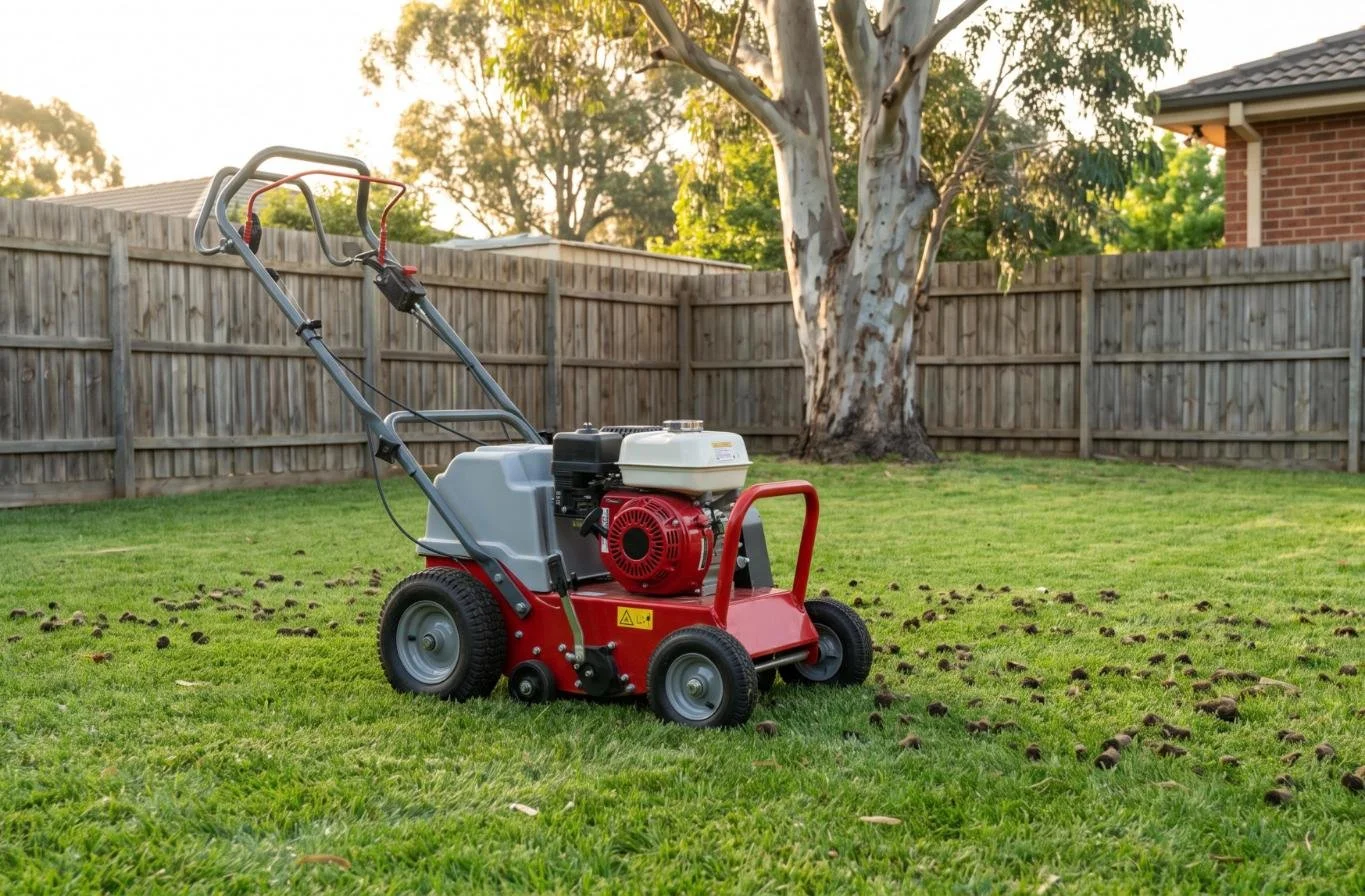
Spring, once the grass is actively growing, is a good time to clear it, because the lawn recovers quickly. How firmly you go depends on the grass. Kikuyu and couch take a solid dethatch and bounce back fast, while buffalo needs a gentler touch because it grows from runners you do not want to tear out. I walk through the whole job in my guides to managing lawn thatch and dethatching and scarifying.
Step 3: Aerate compacted clay
Most Canberra lawns sit on heavy clay, and winter leaves that clay compacted and slow to drain. Compacted soil is the quiet reason a lot of lawns never respond to feeding, because air, water and nutrients cannot reach the roots.
Spring is prime time to relieve it with aeration and coring, pulling plugs of soil to open the ground back up so everything you do next actually works. It also sets the lawn up perfectly for the feeding and overseeding that follow, because seed and nutrients finally have somewhere to go. I have written the full explanation in my guide to lawn aeration and coring.
Step 4: Feed as the soil warms
This is the big one for colour and growth, and timing is everything. The trap people fall into is feeding too early, while the soil is still cold and the grass is not yet actively growing, which largely wastes the feed.
I wait until the soil is genuinely warming and the lawn has started to move, then give it its first proper feed of the season. For warm-season lawns like couch and kikuyu that means holding off until they are clearly waking up, usually a bit later. Cool-season lawns like fescue and rye get going earlier and can be fed sooner. A slow-release fertiliser gives steady, even growth rather than a soft flush. My complete guide to lawn fertilisation in Canberra lays out how I stage it.
Step 5: Pre-emergent before summer weeds
Spring is your one chance to stop summer weeds before they start. Weeds like summer grass and crabgrass germinate as the soil warms, and once they are up they are much harder to shift. A pre-emergent puts down a barrier that stops the seeds establishing in the first place, which is far easier than chasing weeds all summer.
The catch is timing. A pre-emergent has to go down before the weeds germinate to do its job, so getting in early in spring is the whole game. I explain how I time and apply it in my pre-emergent weed control guide. For weeds already showing, my guide to common lawn weeds in Canberra will help you identify them, and remember that buffalo lawns need buffalo-safe products only.
Step 6: Overseed and repair bare patches
Once the soil is warming and you have cleaned up, aerated and fed, the lawn is primed to repair. Spring is a strong window to overseed thin and bare areas, especially for cool-season lawns, because the seed germinates readily and establishes before summer heat sets in. The open holes left by aeration make an ideal seedbed, which is why aeration and overseeding work so well together.
Warm-season runner lawns like couch and kikuyu tend to repair themselves by creeping across bare patches as they surge in spring, so for those the job is often more about feeding them to fill in than sowing seed. My overseeding guide covers how I approach it.
Step 7: Water and check for dry patch as it warms
As the weather warms and the lawn grows, its water needs climb. The aim is deep, infrequent watering that drives roots down, rather than frequent light sprinkles that keep them shallow and lazy.
Spring is also when water-repellent soil shows itself, where water beads up and runs off instead of soaking in, leaving dry patches even after rain or watering. If you see that, my guide to fixing hydrophobic soil and dry patch explains how I sort it out before summer.
Step 8: Start the pest watch
Lawn pests wake up in spring and get busy through late spring and early summer. Grubs, beetle larvae and armyworm can do real damage quickly, and the earlier you catch them the easier they are to deal with.
Through spring I keep an eye out for the signs, brown patches that lift easily, birds working the lawn over, and moths about in the evenings, so we can act before the damage spreads. My guide to lawn pest control in Canberra covers what to watch for and how I diagnose it.
Warm-season versus cool-season: get the timing right
The single thing that trips people up with spring lawn care in Canberra is that we grow both types of grass here, and they run on opposite clocks.
Warm-season lawns, such as couch, kikuyu and buffalo, are only just coming out of winter dormancy in early spring. Push the heavy work, the firm dethatching, aeration and first feed, as they properly wake up and start growing hard, which is usually a little later in spring, so they can recover fast.
Cool-season lawns, such as tall fescue and ryegrass, which are very common in Canberra, are already growing in early spring and were never fully dormant. They want feeding and repair earlier, while conditions are mild, well before the summer heat that stresses them.
Matching each step to your grass type is what separates a spring reset that works from one that spins its wheels. If you are unsure, that is one of the first things I sort out on an assessment.
Final word
Spring is the foundation of the whole lawn year in Canberra. A tired, compacted, hungry lawn coming out of winter has enormous potential in those first warm weeks, and the reset, clean up, dethatch, aerate, feed, pre-emergent, overseed and pest watch, in the right order and at the right time for your grass, is what unlocks it. Do it well and the lawn carries itself through summer. Skip it and you chase problems all season.
If you want your spring reset done properly and timed to your lawn, Book a Free Assessment and I'll check the lawn and soil, confirm your grass type, and build the season around it.
Key points I get asked on a regular basis
When does spring lawn care start in Canberra?
It follows the soil, not the calendar. In Canberra the real start is when the soil is warming and the grass is actively growing again, usually through September and October. Cool-season lawns get moving earlier, so they can be fed and repaired sooner, while warm-season lawns like couch and kikuyu want the heavier work a little later once they have properly woken up.
What is the first thing I should do to my lawn in spring?
Clean up and assess. Rake out matted leaf and debris, give it the first proper mow, and look closely at what winter has left behind, the bare patches, thin areas and compacted tracks. If the lawn has been struggling, a soil test at this point tells you whether the soil itself needs attention before you spend the season feeding.
When should I fertilise my lawn in spring?
Once the soil is genuinely warming and the lawn has started growing, not before. Feeding too early, while the soil is cold and the grass is dormant, largely wastes the fertiliser. Cool-season lawns can be fed earlier than warm-season lawns. A slow-release feed gives steady growth rather than a soft flush.
Should I use a pre-emergent in spring?
Yes, if you want to stay ahead of summer weeds. A pre-emergent stops weeds like summer grass and crabgrass germinating as the soil warms, which is far easier than removing them once they are established. The key is applying it early enough in spring, before the weed seeds germinate, because it works as a barrier rather than a cure. Buffalo lawns need buffalo-safe products.
Can I overseed my lawn in spring in Canberra?
Yes, particularly for cool-season lawns, which germinate and establish well in spring before the summer heat. Aerating first gives the seed an ideal seedbed. Warm-season runner lawns like couch and kikuyu often repair themselves by spreading as they surge in spring, so for those it is usually more about feeding them to fill in than sowing seed.
How do I book a spring lawn service in Canberra?
Book a Free Assessment and I'll check your lawn and soil, confirm your grass type, and put together a spring reset in the right order and timed to your lawn.

Looking for the perfect gift for the lawn enthusiast in your life? The Lawn Firm Gift Cards are the ideal solution. Redeemable for any of our professional lawn care services, these gift cards make it easy to give the gift of a greener, healthier lawn. From fertilisation to weed control and pest management, there’s something for every lawn need.
Why Choose a Lawn Firm Gift Card?
Versatility: Can be used for any service offered by The Lawn Firm.
Thoughtful Giving: A practical gift for anyone who values a beautiful outdoor space.
Simple to Use: Purchase online and enjoy easy redemption.
Order your gift card today and let your loved ones experience the professional touch of The Lawn Firm. It’s the perfect way to show you care while helping someone achieve the lawn of their dreams.
This gift card never expires.