
The Best Lawn for Dogs in Canberra: Choosing It and Protecting It
G'day, Nikolai here from The Lawn Firm. If you have got a dog and a lawn you already know the pattern: a worn strip along the fence where the dog patrols, bare ground at the gate, and a few spots that never quite come back. Most people assume they need a tougher grass. Sometimes they do. But the grass that wins on dog properties is not the toughest one, it is the one that heals fastest.
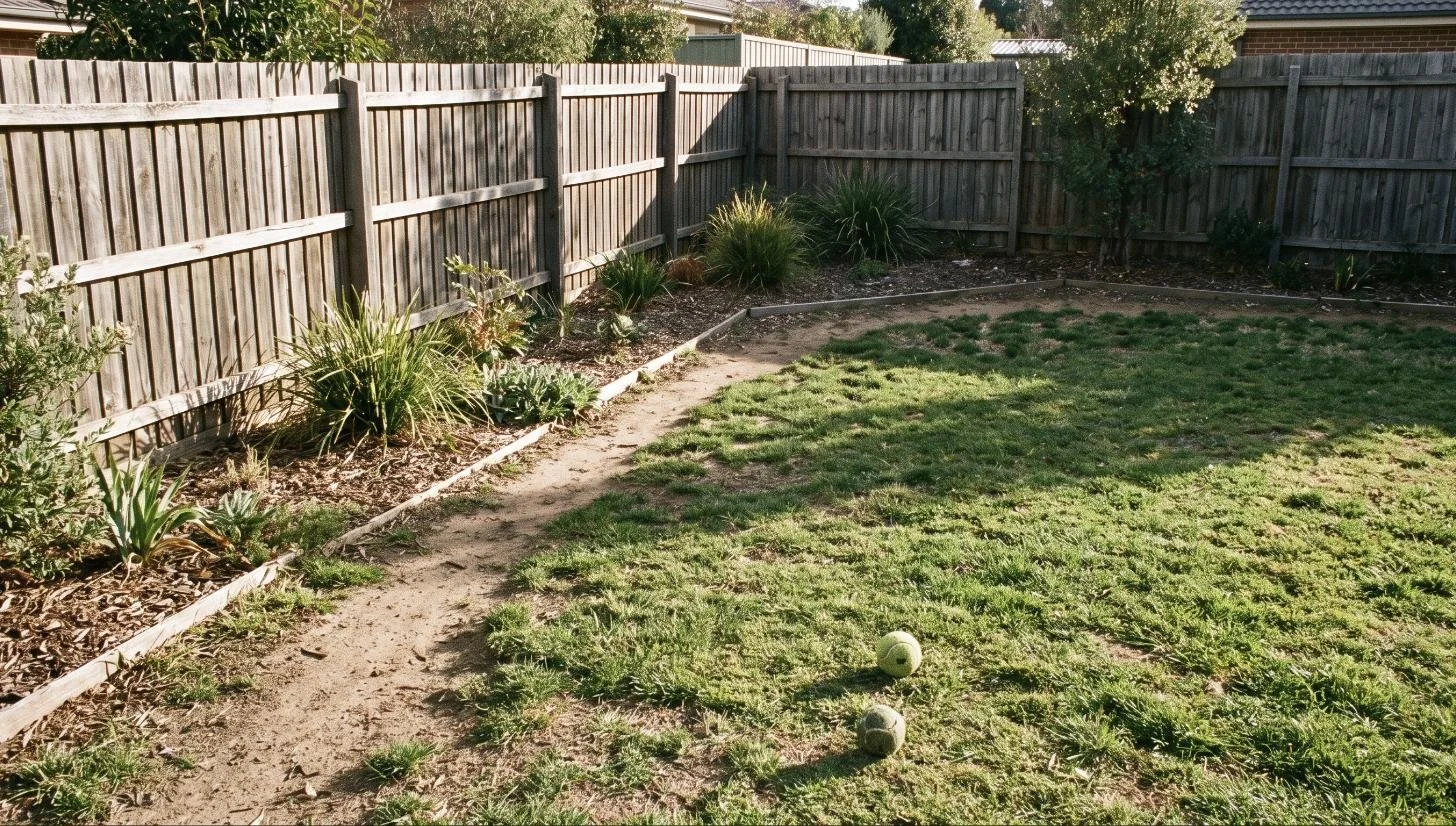
A dense, well fed Canberra lawn stands up to dog traffic far better than a thin one, whatever the variety.
The quick answer:
For heavy dog traffic in Canberra, kikuyu recovers from damage faster than anything else we grow here, which makes it the most forgiving choice if you can accept that it will try to invade your garden beds. Couch is a close second with a finer leaf, provided the yard gets genuine full sun. Buffalo is softer underfoot and much better in shade, but it spreads and repairs more slowly, so patches cost money to fix. Tall fescue is the only one of the four that holds colour through a Canberra winter, which matters because dogs use the lawn year round, but it repairs by seed rather than by runners, so wear shows and stays showing until you oversow it.
Two things decide a dog lawn, and one matters more
Every conversation I have about dog lawns starts with wear tolerance. How much traffic can the grass take before it gives up. Fair question, and the four do differ. But wear tolerance is the less important half. A dog does not apply a steady, survivable load, it applies the same damage to the same half metre strip, every day, forever. No grass tolerates that. What decides whether your lawn looks acceptable is recovery rate, meaning how fast the grass puts new growth back into the damaged area between hits.
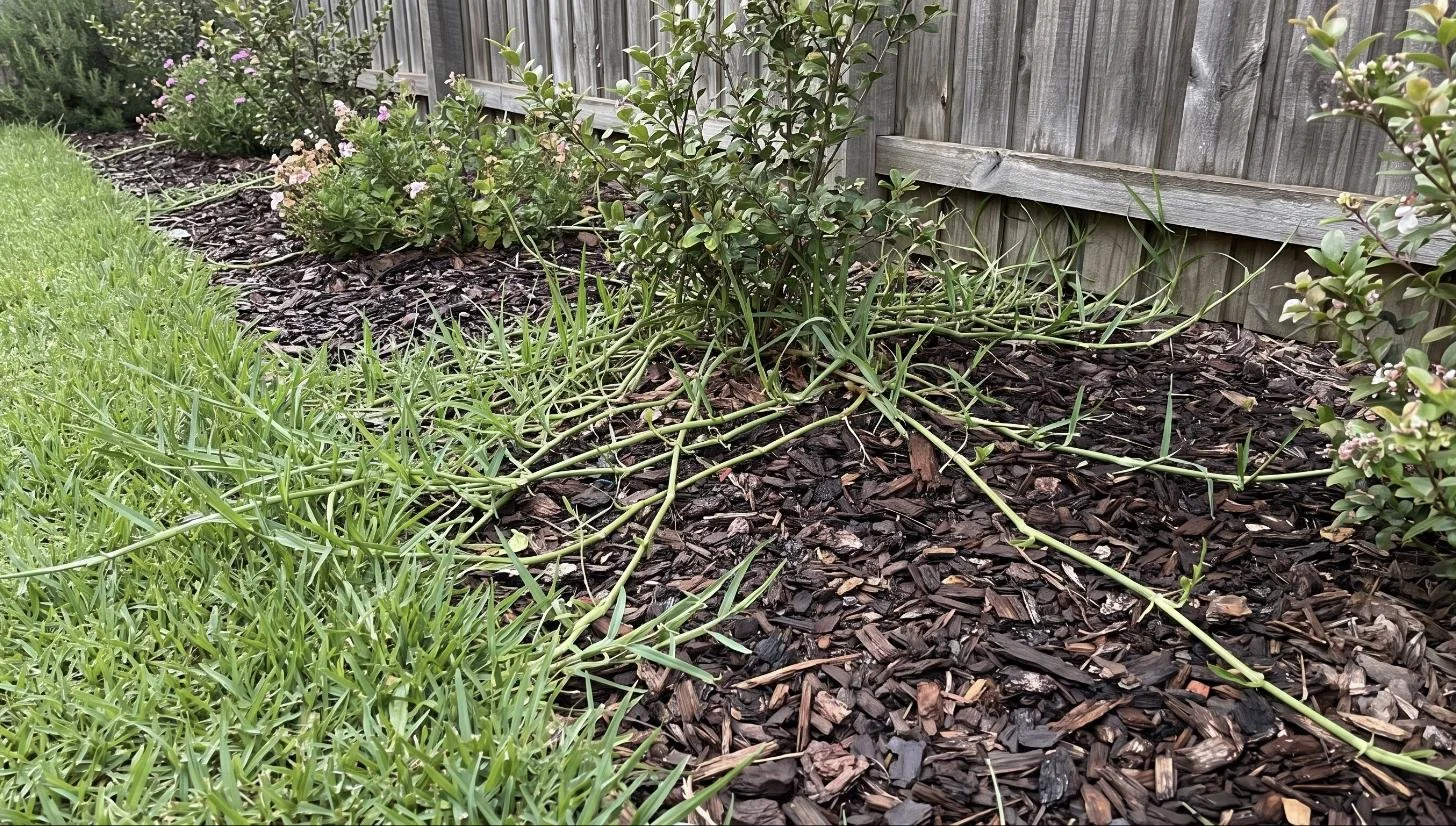
That is why runner grasses beat seed grasses on dog properties. Kikuyu, couch and buffalo spread sideways by stolons and rhizomes, so an undamaged plant a hand span away sends a runner into a bare patch and closes it over on its own. Tall fescue grows in clumps, and when a clump dies nothing moves in to replace it.
The four realistic Canberra options, compared
Wear toleranceRecovery speedWinter colourShade toleranceRepair costKikuyuExcellentFastest of the fourDormant, browns offPoor to fairLowest, self repairsCouchExcellentVery goodDormant, browns offPoor, needs full sunLow, self repairsBuffaloVery goodSlow lateral spreadDormantBest of the fourHigher, often needs turf patchesTall fescueGoodPoor, no lateral spreadStays greenFair to goodOngoing, seed every autumn
Kikuyu: the forgiving one
If you have a big, active dog and a decent sized yard, kikuyu is what I would put down. Nothing else recovers like it. A patch that would sit bare in fescue for a whole season closes over in kikuyu in a few weeks of warm weather, and it is cheap to fix because it fixes itself.
The cost is aggression. Kikuyu does not respect edges. It runs into beds, under fences and through gravel, so on a property with mixed plantings you are signing up for edge maintenance several times a year. It also browns off properly from about May to September. Plenty of dog owners decide that is a fair trade. More in my kikuyu lawn care guide.
Couch: the fine leafed workhorse
Couch gives you most of kikuyu's toughness and recovery with a finer, neater leaf and far less invasiveness. On a sunny back yard with a medium sized dog it is an excellent answer and usually the best looking one.
The hard limit is light. Put couch under a eucalypt or along a south facing fence and it thins out, and thin couch under dog traffic becomes dirt quickly. It also goes dormant in winter. My couch lawn care guide covers what it needs through our seasons.
Buffalo: softer, shadier, slower to heal
Buffalo is the grass people with dogs and kids most often want, and I understand why. The broad leaf is soft to lie on, it handles shade better than anything else here, and it takes reasonable wear without complaint.
Where it falls short is repair speed. Buffalo's thick surface runners move noticeably slower than kikuyu or couch, so a worn track takes far longer to close and often needs turf patches. It is also more sensitive to certain herbicides, so weed control has to be chosen carefully rather than grabbed off a shelf. See my buffalo lawn care guide.
Tall fescue: green all winter, but wear shows
Here is the one people underrate. Dogs do not stop using the lawn in July. If your grass is dormant for four months, that is four months of traffic on a plant that cannot repair itself, and that is when the worst damage happens.
Tall fescue keeps growing through a Canberra winter, takes dog traffic reasonably well and copes with part shade. The catch is that it repairs by seed only, so a bare patch stays bare until you sow it and autumn overseeding becomes a permanent part of owning the lawn. For some clients that annual cost is worth never having a brown yard, for others it is not. My tall fescue guide goes through the trade off.
Designing the yard for the dog you actually have
This is the part that makes the biggest difference and the part almost nobody does. You can fight your dog's habits or design around them, and designing around them wins every time.
Watch the dog for a week and note where it goes:
The fence line patrol. Most dogs run a track along the boundary where they can see the footpath. Grass will never hold there, so formalise it. A mulched or decomposed granite strip half a metre wide turns an eyesore into a deliberate garden feature.
The gate and door approaches. High concentration, small area. Pavers or stepping stones take that load off the grass entirely.
The sentry spot. Dogs pick one place to lie and watch. Give them a shaded, free draining spot that is not in the middle of the lawn.
The dig zone. If your dog digs, it will dig. A defined sand or soft soil corner that is allowed to be dug saves the rest of the yard.
Shade. Dogs seek it in a Canberra summer, and the shadiest part of the yard usually has the weakest grass. If that is where your dog parks itself, shade tolerance moves up your priority list.
Take those spots out of the lawn's job description and the grass you have left only has to handle general play, which any of the four will manage.
The maintenance that makes the real difference
Variety sets your ceiling. Maintenance decides whether you get anywhere near it. A well fed, dense kikuyu lawn and a hungry, thin one are not the same product, and under a dog the difference is dirt or no dirt.
What I focus on, in order of impact:
Density above everything. Dog damage shows on thin lawns because there is no neighbouring growth to move in. Density comes from a steady nutrition programme, not one big feed in spring.
Soil that lets roots down. Dog traffic compacts soil faster than foot traffic, and compacted Canberra clay stops roots at around 50 millimetres, which is why worn areas collapse. Aeration or coring is the most useful single job on a dog lawn.
Deeper, less frequent watering. Short daily sprinkles keep roots shallow and the surface soft, and soft surfaces rut.
Correct mowing height. For homeowners doing their own mowing, do not scalp a dog lawn. More leaf means faster recovery and better wear resistance. Kikuyu and couch around 25 to 40 millimetres, buffalo and fescue higher at 40 to 60. We do not mow, but I will tell you what height to ask for.
Timing. Warm season grasses repair in the warmth, fescue repairs in autumn. Seed or runners in the wrong season is money wasted.
Urine damage, briefly
I am not going to work through urine repair here, because I have written about it properly twice already. The short version: those dark green rings with dead centres are a concentrated nitrogen and salt load, not a disease, and the fix is dilution, soil health and redirecting the habit rather than any product.
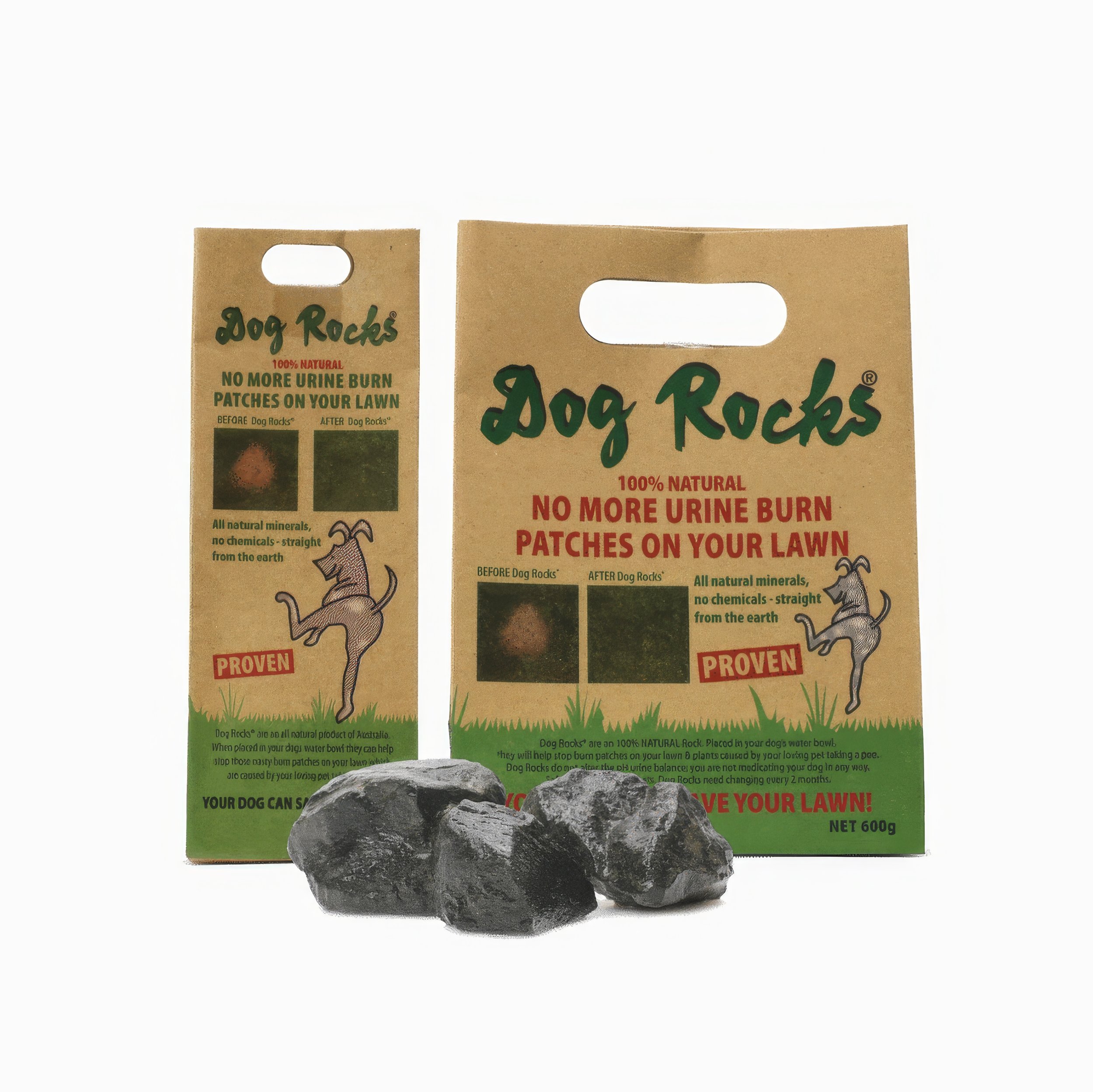
If that is your main problem, read pet urine spots on Canberra lawns, causes, fast fixes and prevention for the method, and do dog rocks work in Canberra if you are weighing up a supplement. Worth noting for this article: runner grasses grow over a dead urine spot on their own, while fescue does not. One more point in the kikuyu and couch column.
Honest realism about small yards
A large, energetic dog on a small Canberra courtyard will beat any grass on the market. If the lawn is 30 square metres and a kelpie lives on it, there is no variety, no fertiliser and no watering schedule that produces an unblemished lawn. What works on those blocks is reducing the lawn's workload: paving over the busiest section, a mulched bed where the patrol track runs, and real grass only where it has a fighting chance. A smaller lawn that looks good beats a larger one that is half dirt.
No grass is dog-proof. Anyone who tells you theirs is has not met your dog.
Final word
Choose for recovery rate, not just toughness. Heavy traffic and full sun, go kikuyu or couch, and accept kikuyu's wandering habit as the price of its healing speed. Need shade tolerance and a softer surface, and can live with slower repairs, go buffalo. If a brown winter lawn bothers you more than an annual seed bill, go tall fescue and plan the overseeding in from the start.
Then do the two things that matter more than the variety on the invoice: take the fence line, the gate and the dig zone out of the lawn's job, and keep the grass that remains thick, well fed and growing in soil roots can get into. I keep treatments and re-entry times in mind on dog properties and will talk you through it at the assessment.
Key points I get asked on a regular basis
What is the toughest grass for dogs in Canberra?
On pure wear tolerance, kikuyu and couch are line ball at the top with buffalo just behind. But toughness is the wrong thing to optimise for, because a dog will out damage any grass in its favourite spots. Kikuyu wins for dog households because it recovers fastest, so the damage it takes does not stay visible for long.
Is buffalo or kikuyu better for a dog?
It depends on your yard, not your dog. Good sun and an active dog, kikuyu, because it heals quicker and repairs are cheaper. Shaded for part of the day, or a dog that lies on the lawn more than it sprints across it, buffalo, because it handles low light far better. Just know that buffalo's worn patches often need turf patching rather than closing over by themselves.
Will tall fescue survive my dog?
It will survive, it just will not hide the evidence. Fescue takes dog traffic reasonably well and has a real advantage in that it keeps growing through a Canberra winter, when warm season lawns are dormant and taking damage they cannot repair. The catch is no runners, so every bare patch has to be reseeded by you. Commit to autumn overseeding and fescue works well on a dog property. Skip it and the bare spots accumulate.
How do I stop the worn track along my fence?
You mostly do not, and that is the honest answer. A dog patrolling a boundary applies more concentrated wear than any grass can take, and chasing it with repairs is money down the drain. The winning move is to stop asking grass to live there: a mulched or decomposed granite strip along that fence line, made to look intentional, with the lawn starting where the dog's track ends.
Should I use artificial turf instead?
Sometimes, and I will say so if I think it fits. On a tiny courtyard with a big dog, synthetic in the worst zone is a sensible call. Weigh up heat, because synthetic gets very hot in a Canberra January, odour management, because urine does not break down in it the way it does in living soil, and cost. My usual recommendation is a hybrid: synthetic or paving where grass cannot win, real grass everywhere else.
How do I book a dog friendly lawn assessment in Canberra?
Come and have a look with me. I will walk the yard, identify your grass, check soil and compaction in the worn areas, map where your dog actually travels and tell you plainly whether the lawn can be brought back or whether you are better off changing variety or shrinking it. I will also go through nutrition, aeration, watering and any treatments, including re-entry times on a dog property. Book a Free Assessment
Looking for the perfect gift for the lawn enthusiast in your life? The Lawn Firm Gift Cards are the ideal solution. Redeemable for any of our professional lawn care services, these gift cards make it easy to give the gift of a greener, healthier lawn. From fertilisation to weed control and pest management, there’s something for every lawn need.
Why Choose a Lawn Firm Gift Card?
Versatility: Can be used for any service offered by The Lawn Firm.
Thoughtful Giving: A practical gift for anyone who values a beautiful outdoor space.
Simple to Use: Purchase online and enjoy easy redemption.
Order your gift card today and let your loved ones experience the professional touch of The Lawn Firm. It’s the perfect way to show you care while helping someone achieve the lawn of their dreams.
This gift card never expires.