
Frost Damage on Canberra Lawns: What Recovers and What Needs Repair
G'day, Nikolai here from The Lawn Firm. If you have spent three months looking at a flat, straw coloured lawn and quietly assuming it is dead, this one is for you. Early October is the best time to work out what you are dealing with, because the soil is warming and the difference between a lawn that is asleep and one that has been killed off shows up within a couple of weeks. Most lawns I assess in spring are fine. A few are not. Guessing is how people buy turf they did not need.
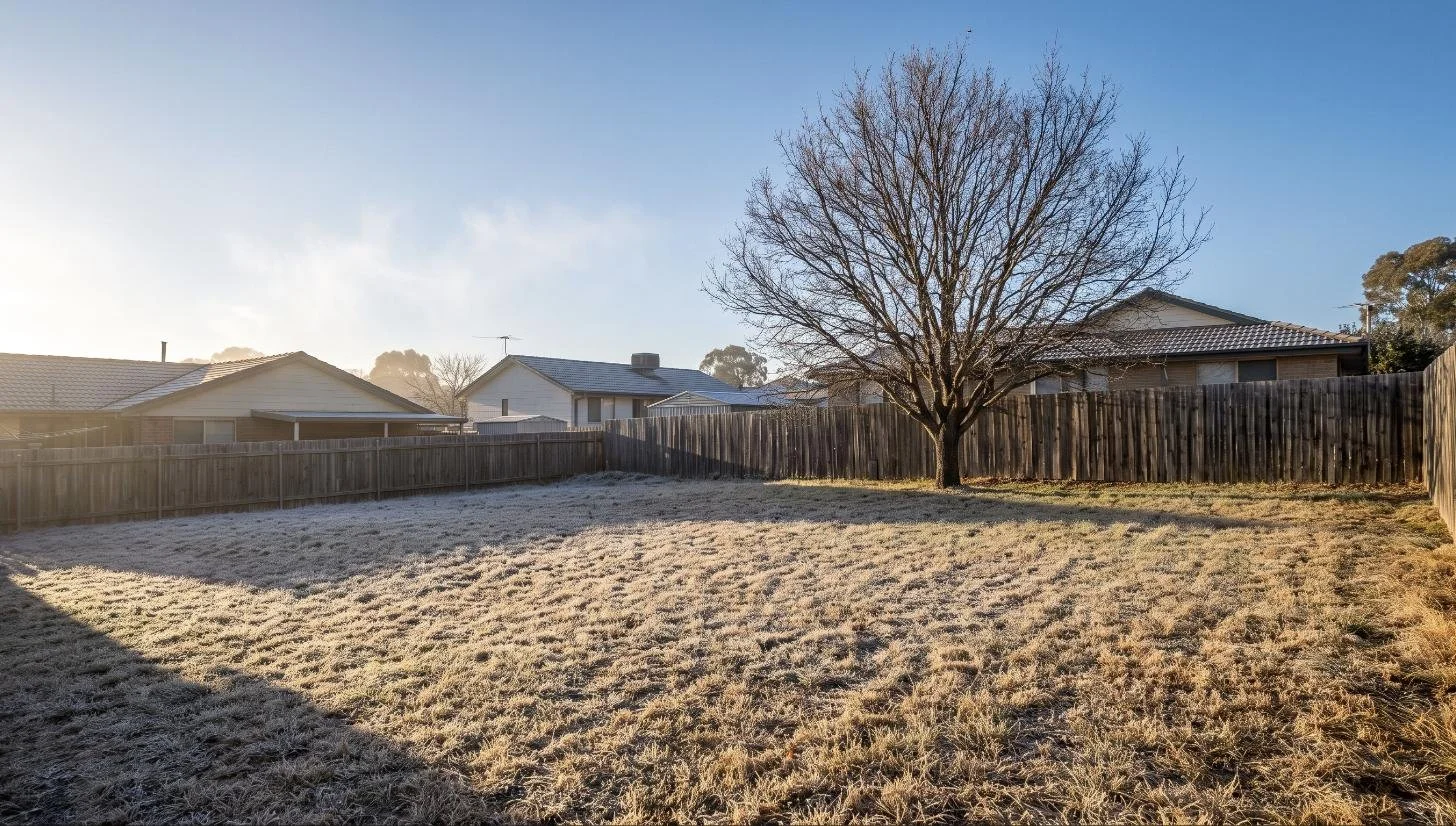
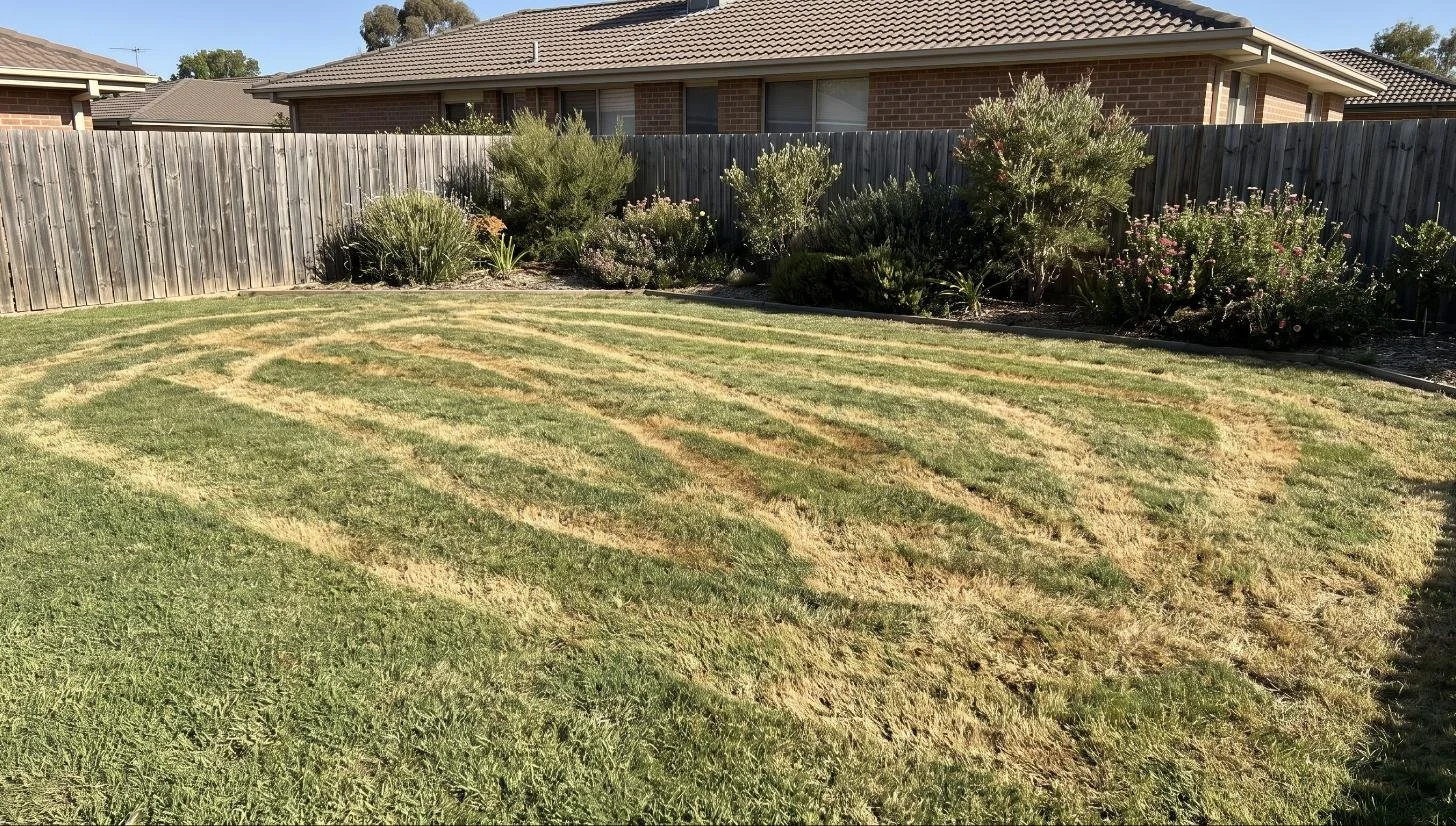
Frosted couch lawn in a Canberra backyard, straw coloured on top with a living crown underneath.
The quick answer:
Most brown, purple or straw coloured lawn in Canberra after winter is frost dormancy, not frost damage. Warm season grasses like couch and kikuyu shut down and discolour when soil temperatures drop, but the crown at the base of the plant stays alive and regrows unaided once soil warms in spring. True frost damage means the crown itself has died, and it almost always has a specific cause: foot traffic on frosted grass, waterlogged ground, or deep shade plus prolonged frost. A pull test and a close look at the base of the plant will tell the two apart.
Why Canberra lawns cop this more than anywhere else
Canberra gets more frost days in a typical year than any other Australian capital. That is just local knowledge for anyone who has scraped a windscreen in Weston Creek in July. We sit in an inland basin, cold air pools overnight, and clear skies let the ground radiate its heat away.
For lawns that means two things. Our warm season grasses go fully dormant rather than half dormant, which is why Canberra lawns look so much deader in winter than the same grass in Sydney. And frost sits on the blades for hours, sometimes until mid morning in shaded corners, leaving a long window where the lawn is fragile. Neither is damage on its own. More in my winter lawn care guide.
Frost dormancy versus frost damage
This is the whole question, so let me be plain about it.
Frost dormancy is a survival strategy. As soil temperature falls, warm season grasses pull sugars down into the crown, rhizomes and stolons and let the leaf blades go. You often see a purple or bronze phase first, then the blades straw off to a pale fawn. The plant is sheltering, not dying. The growing point sits at or just below soil level, insulated by thatch and soil, and comes back when conditions suit.
Frost damage is cell death in that crown. Water inside the cells freezes, the ice crystals expand and rupture the cell walls, and the tissue is gone. Dormancy is reversible. Crown death is not, and the only fix is re-establishing grass there.
Signs that point to dormancy:
Discolouration is even, or follows sun and shade patterns gradually
The straw colour arrived over weeks, not overnight
The lawn feels springy underfoot, not crunchy and loose
Blade bases near the soil are still pale cream or white
Signs that point to real damage:
Sharply defined patches, especially footprint or wheelbarrow shapes
Patches that stay brown while the rest of the lawn greens up
Low lying or boggy areas that are browner than everything else
Shaded strips along south facing fences that look worse every year
Tissue at the base that is dark, slimy or pulls away easily
How to test whether the crown is alive
Three tests, in order of how quickly they answer the question.
The pull test. Grab a small clump and give it a steady tug. Living turf resists, because the roots are anchored. Dead turf lifts out with almost no effort, with brown dry undersides. Do it in four or five spots including one you know is healthy, for comparison.
The growing point check. Pull up a few runners and look closely at the base. A live crown has a firm white or pale cream growing point where the blade emerges, and plump nodes along the runner. A dead one is brown, shrivelled or soft right through. On couch and kikuyu, scratch into the soil and check the rhizomes and stolons too: white and firm is alive, brown and hollow is not.
The patience test. The one I recommend most and the one nobody likes. Water the area lightly, keep traffic off it, wait two or three weeks of warming weather, then look again. Dormant grass greens up from the base and sends runners into the brown. Dead grass just sits there.
Why walking on frosted grass leaves footprint shaped dead patches
This is the most common cause of genuine frost damage I see in Canberra yards, and it is entirely avoidable.
When grass is frosted, the water inside the leaf and crown cells has turned to ice, so the tissue is rigid rather than flexible. Step on it and you are not bending the blades, you are crushing them. The ice crystals slice through cell walls from the inside and the cells rupture. That tissue is dead the moment you lift your foot, you just cannot see it yet. A week or two later the track shows up as a brown footprint, and in spring those footprints are the patches that never recover.
The usual culprits:
Kids out to the trampoline before school on a frosty morning
Dogs doing the same lap of the yard every dawn
Bins, wheelbarrows, trailers or machinery rolled across a frosted lawn
The rule I give every client is simple. If there is frost on the lawn, stay off it until it has thawed and dried, which in a shaded backyard can mean late morning. If there is a route people use daily, put down pavers, because turf will not win that fight.
Which grasses do what in a Canberra winter
Knowing your grass type changes what you should expect. If you are not sure what you have, my guide on how to identify your grass type will sort it in a few minutes.
Couch goes fully dormant and gets the most dramatic colour change: purple, then bronze, then pale straw. It is also quick to recover, because it spreads by both rhizomes and stolons.
Kikuyu goes dormant too, usually a little later than couch and often patchier. It recovers aggressively once soil warms.
Buffalo is semi dormant here. It holds some colour but goes dull and can show frost burn on the leaf tips. It fills gaps slowly, because it only spreads by stolons.
Tall fescue is cool season and stays green through a Canberra winter. If your fescue lawn has gone brown, that is not dormancy, so look at disease, drought, waterlogging or traffic.
Shade changes the picture regardless of species, because a shaded lawn goes into winter with less stored energy and stays frosted longer each morning. If your problem areas are all on the south side, read my guide to shady Canberra lawns before buying turf.
What not to do in winter
A lot of the damage I assess in spring was created by well meant winter intervention.
Do not fertilise heavily into the cold. A dormant lawn cannot use a big hit of nitrogen, so most of it is wasted, and pushing soft growth before a hard frost gives the frost something tender to kill. Timing matters more than product here, which is why I set it out in my guide to lawn fertilisation in Canberra.
Do not scalp it. Cutting a dormant lawn short exposes the crown and strips away the insulating canopy, so leave a bit of extra height on through winter.
Do not panic-repair in July. Turf will not knit in and seed will not germinate reliably in cold soil.
Do not keep watering on a schedule. Frost over saturated soil is a genuine crown killer, because waterlogged ground stays colder, holds more ice and starves roots of oxygen.
Do not apply anything you are unsure about. Plenty of browning gets blamed on frost when it is really disease or drainage, and I will not put a product or rate in writing without seeing the lawn.
The spring recovery plan
If the crown is alive, your job is to make recovery easy. The order I work in from early October:
Keep traffic off the weakest areas until they have knitted together again
Clear leaf litter and anything that sat on the turf all winter, because matted debris keeps those spots cold and damp
Lower the mowing height gradually over two or three cuts, not all at once
Water deeply but infrequently as it warms, so roots chase moisture downward
Feed once soil has warmed and the lawn is visibly growing, not before
Deal with compaction in high traffic areas, because it slows recovery
Reassess in three to four weeks, and only then decide what needs repair
The sequencing is the part people get wrong, and I cover it in my spring lawn care guide.
When to repair, and whether to seed or turf
Wait until mid to late spring before committing to repair work. By then the dormant grass has shown its hand and you are only replacing what is genuinely dead.
Small gaps in couch or kikuyu, up to roughly the size of a dinner plate, will usually close from the edges once the lawn is actively growing. Leave them alone and keep traffic off.
Medium patches in a warm season lawn generally do best with turf, because couch and kikuyu seed is slow and unreliable to establish here. Match the variety or you will see the join forever.
Fescue and other cool season lawns repair well from seed, and autumn is usually the stronger window, though spring seeding works if you keep moisture up. More on method and timing in my lawn seeding and overseeding guide.
And repeat offenders need the cause fixed first. If the same strip dies every winter, new turf will go the same way.
Final word
Frost is not the enemy of a Canberra lawn. It is just the local climate, and our grasses have a strategy for it. The enemy is what we do to a lawn while it is frozen and defenceless.
So before you order turf this spring, do the pull test, look at the crowns, and give it two or three warm weeks. Most Canberra lawns that look written off in September are putting out runners by late October. The ones that are not have a reason you can point to: a worn track, a corner that never drains, or a shaded strip that was already struggling. Find the reason, then fix the grass.
Key points I get asked on a regular basis
Is my brown winter lawn dead or just dormant?
Nine times out of ten in Canberra it is dormant, especially with couch or kikuyu and especially if the browning is even across the lawn. Do the pull test: living turf resists a firm tug and dead turf lifts out easily. Then check the base of a few plants for a firm white growing point. If the crowns look alive, let spring do the work.
Does walking on frosted grass really kill it?
Yes, and it is the most common cause of genuine frost damage I see. Frozen cells are full of ice crystals, and the weight of a footstep ruptures the cell walls from the inside. The tissue dies immediately, even though the brown footprint takes a week or two to appear. Keep people, pets and wheels off a frosted lawn.
How long before a frost affected lawn greens up again in Canberra?
It depends on grass type and how warm the spring runs. Couch and kikuyu usually start moving once soil temperatures lift in October and look respectable by late November. Buffalo is slower to recover its density. If an area shows no change after three weeks of warm weather while the rest has greened up, treat it as dead.
Should I fertilise my lawn in winter to protect it from frost?
No, not heavily. A dormant lawn cannot use a big nitrogen application, so most of it is wasted, and soft new growth is more vulnerable to frost than hardened off tissue. Save the main feeding for when the soil has warmed and the lawn is growing. Timing for your lawn is better worked out on site.
Why do the same patches die every winter?
Because something other than frost is the real problem and frost is just finishing it off. The usual culprits are poor drainage, deep shade, or a traffic route people use daily. Frost over waterlogged soil is especially destructive, because wet ground stays colder and holds more ice around the crown. Fix the cause before you spend money on grass.
How do I book a frost damage assessment in Canberra?
Easy. I come out, walk the lawn with you, identify your grass type, test the crowns in the suspect spots, check drainage and shade, and tell you straight what you are dealing with.
Looking for the perfect gift for the lawn enthusiast in your life? The Lawn Firm Gift Cards are the ideal solution. Redeemable for any of our professional lawn care services, these gift cards make it easy to give the gift of a greener, healthier lawn. From fertilisation to weed control and pest management, there’s something for every lawn need.
Why Choose a Lawn Firm Gift Card?
Versatility: Can be used for any service offered by The Lawn Firm.
Thoughtful Giving: A practical gift for anyone who values a beautiful outdoor space.
Simple to Use: Purchase online and enjoy easy redemption.
Order your gift card today and let your loved ones experience the professional touch of The Lawn Firm. It’s the perfect way to show you care while helping someone achieve the lawn of their dreams.
This gift card never expires.