
Lawn Seeding and Overseeding Guide for Canberra
G'day, Nikolai here from The Lawn Firm.
If your lawn has gone thin, patchy or tired, your first thought might be that it needs ripping up and replacing. Most of the time, it does not. More often, it just needs seed, and the right approach to putting it down.
Seeding and overseeding are two of the most cost-effective ways to bring a Canberra lawn back to thick, even, healthy turf. Done well, they fill bare patches, lift the density of the whole lawn, and crowd out the weeds that thrive in thin grass. Done at the wrong time of year, or with the wrong seed, you can waste a lot of effort watching very little come up.
In Canberra, timing and seed choice are everything, because our climate is genuinely demanding on young grass. Get those two right and seeding is hugely rewarding.
If your lawn is thin and you are wondering whether to seed it or replace it, Book a Free Assessment and I'll tell you honestly which one your lawn needs.
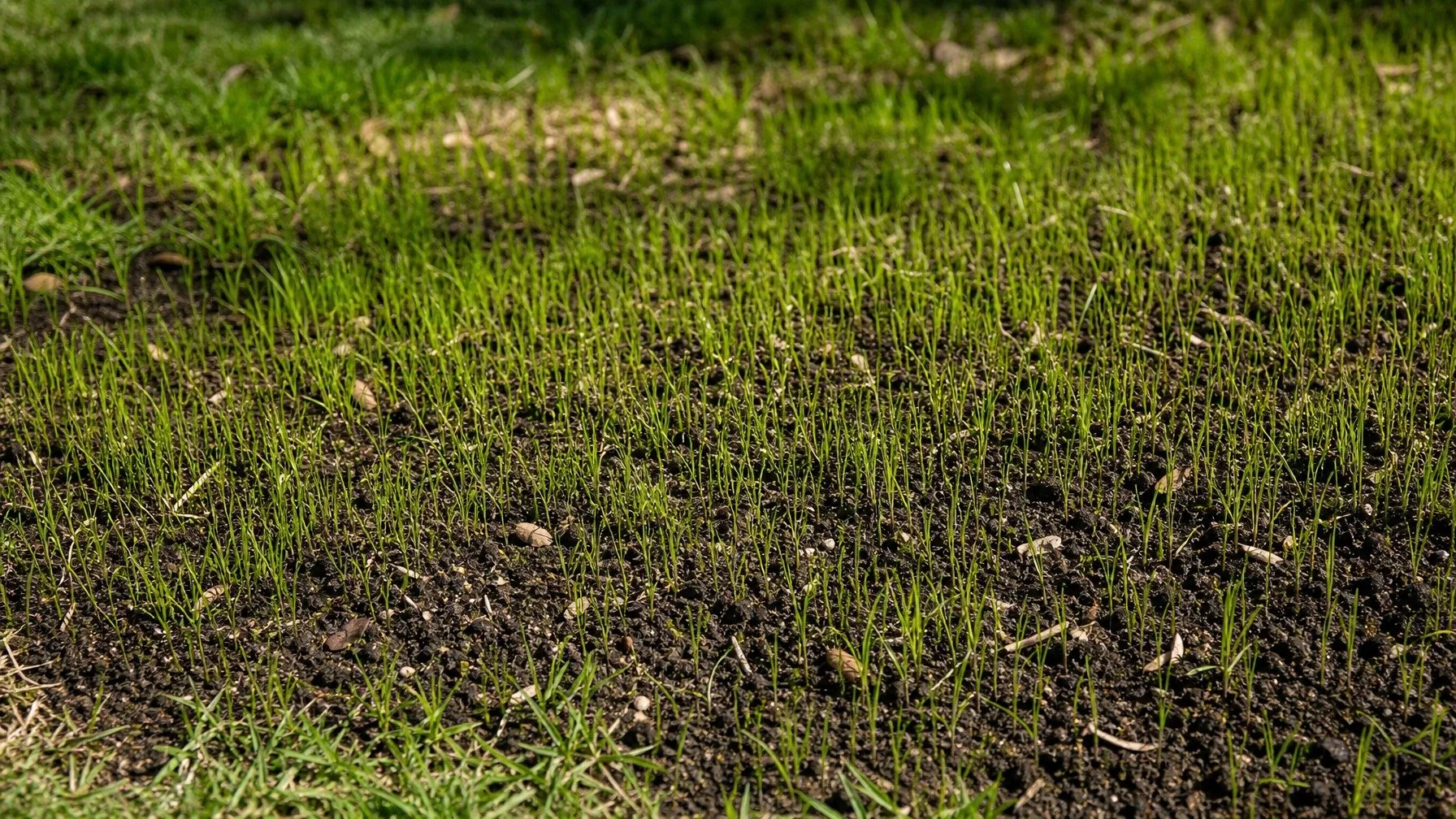
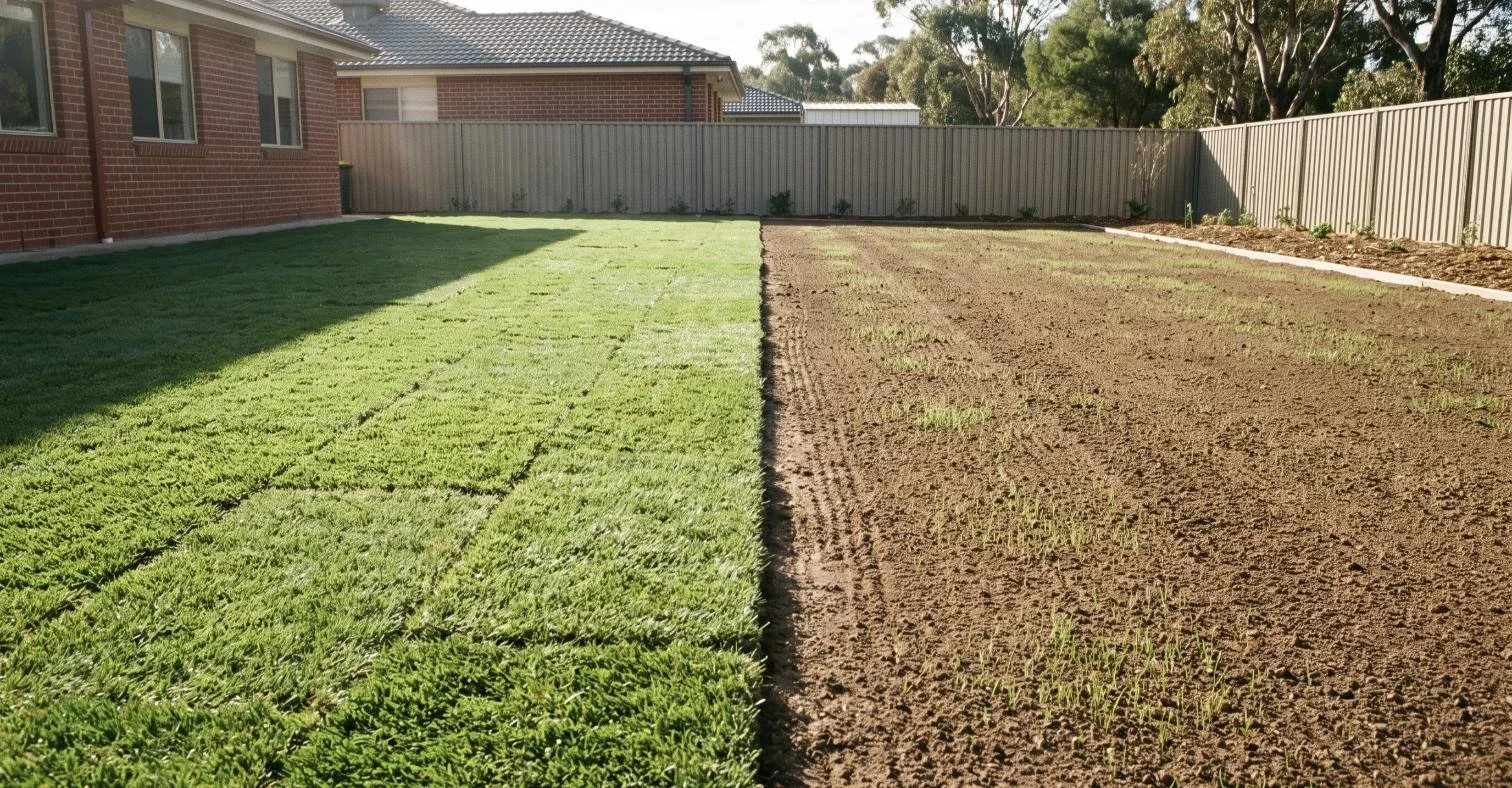
Fresh grass seed germinating in a previously thin patch of a Canberra lawn
The quick answer: seeding vs overseeding
Seeding establishes grass on bare or new ground. Overseeding adds seed into an existing lawn to thicken it up.
Both come down to the same three things working in your favour: good seed-to-soil contact, the right grass seed for Canberra, and the right time of year so the seed germinates and establishes before harsh weather hits.
For most established Canberra lawns that have simply thinned out, overseeding is the answer, and it pairs perfectly with aeration.
What is the difference between seeding and overseeding?
The two terms get used loosely, so here is how I separate them.
Seeding (or reseeding a grass lawn) means establishing grass on ground that is bare or being started fresh, such as a new area, a dead patch that has been cleared, or a lawn so far gone it is being started again. There is little or no existing grass competing with the new seed.
Overseeding means sowing seed straight into an existing lawn that has thinned out, without tearing it up first. The goal is to increase density: fill the gaps, thicken tired turf, and refresh an older lawn so it looks full and even again.
In practice, most Canberra homeowners I work with need overseeding rather than full reseeding. Their lawn is not dead. It is just thin, patchy and tired, and adding the right seed at the right time brings it back without the cost and disruption of starting over.
Why overseeding is essential for Canberra lawns
Canberra's climate is hard on lawns. Hot, dry summers stress the grass and thin it out, frosty winters slow everything down, and the wear of a full year leaves most lawns patchier in places than they were twelve months earlier.
Lawns also naturally thin over time. Older grass slows down, individual plants weaken, and gaps open up from foot traffic, pets, pests or dry spells. Left alone, those gaps do not stay empty. They fill with weeds, because bare and thin turf is exactly what weeds like clover, bindii and winter grass move into.
Overseeding is how you get ahead of that. By regularly adding fresh seed, you:
keep the lawn dense enough to crowd weeds out
replace ageing grass with vigorous new growth
repair the thin patches summer and winter leave behind
improve the overall colour, texture and resilience of the lawn
For a lot of Canberra lawns, an annual overseed is one of the highest-value jobs in the calendar. It keeps the whole lawn young, thick and competitive.
Choosing the right grass seed for Canberra
This is where a lot of DIY seeding goes wrong, because the best grass seed for the ACT depends on the lawn you already have and the conditions in your yard.
Canberra's cool-temperate climate suits cool-season grasses very well, and they are the most common choice here:
Tall fescue is a popular, hard-wearing choice for Canberra. It has good drought tolerance for a cool-season grass, handles our frosts, and stays green through more of the year.
Perennial ryegrass germinates and establishes fast, which makes it useful in seed blends and for quick repair, and it copes well with cold.
Kentucky bluegrass is sometimes included in blends for its fine texture and self-repairing habit, though it is slower to establish.
Many quality lawn seeds for our region are blends, combining the fast establishment of ryegrass with the durability of fescue.
The golden rule with overseeding is to match the new seed to your existing lawn. Oversowing a fine cool-season lawn with a coarse seed, or trying to overseed a warm-season couch or kikuyu lawn with cool-season seed, gives you a patchy, mismatched result. Identifying your current grass first is what makes the seed choice right, and that is one of the first things I check on an assessment.
If you are not sure what grass you have or what to oversow it with, Book a Free Assessment and I'll match the seed to your lawn.
When is the best time to seed or overseed in Canberra?
Timing is the single biggest factor in seeding success, and it is where Canberra's climate really matters.
For the cool-season grasses most common in Canberra, namely fescue and ryegrass, the best windows are:
Autumn is generally the ideal time. The soil is still warm enough for fast germination, the harsh summer heat has passed, and the young grass has the cool, moist conditions of the coming months to establish strong roots before facing its first real test.
Spring is the second option, once the worst frosts have eased. It works well, but you are then racing to get the lawn established before summer heat arrives, so it needs more careful watering.
What I avoid is sowing cool-season seed in the heat of summer, when young seedlings struggle and dry out, or in the depths of a frosty Canberra winter, when germination stalls and seed can simply rot in cold, wet soil.
Warm-season lawns like couch and kikuyu are usually established differently and at a different time, generally the warmer months, which is another reason identifying your grass first matters.
Get the timing right and you give every seed the best possible chance. Get it wrong and even premium seed underperforms.
Step-by-step seeding and overseeding process
Whether seeding bare ground or overseeding a thin lawn, the principles are the same. It all comes down to giving the seed contact with soil, moisture and light. Here is the process I follow:
Prepare the lawn. Mow a little lower than usual and remove clippings, leaves and excess thatch so seed can reach the soil rather than sitting on top of debris.
Open up the soil. This is where aeration earns its place. Coring or scarifying before overseeding creates the perfect seedbed by giving seed somewhere to settle into and make contact with soil. Aeration and overseeding genuinely belong together.
Sow the seed evenly. Spread quality seed at the right rate for your lawn. Too thin and you get gaps, too heavy and the seedlings compete with each other.
Top dress lightly. A thin layer of quality soil or seed-raising mix over the top improves seed-to-soil contact and helps hold moisture around the seed.
Water gently and consistently. This is the make-or-break step. New seed must stay consistently moist, with short, frequent, light waterings, until it germinates and establishes. Let it dry out once and you can lose the lot.
Feed appropriately. A suitable starter feeding supports young seedlings as they establish.
Skipping the preparation, sowing at the wrong rate, or letting the seed dry out are the three mistakes I see most often, and any one of them can undo the whole job.
Post-seeding care and maintenance
The first few weeks after seeding decide the result, so this is where patience pays off.
Keep it moist. Until the new grass is established, consistent moisture is everything. Light, frequent watering beats one heavy soak.
Stay off it. Keep foot traffic, pets and mowing off the new grass while it is establishing, so the young seedlings are not damaged.
Mow only when ready. Wait until the new grass is tall enough and well rooted before the first mow, then take only a little off the top.
Feed as it establishes. Appropriate feeding once the grass is up supports it into a strong, dense turf.
Hold off on weed treatments. Many weed products will harm young, establishing seedlings, so the timing of any weed control needs care after seeding.
Done right, an overseed transforms a thin, tired lawn into thick, even turf, and a thick lawn is your best long-term defence against weeds and wear.
If you want seeding or overseeding done at the right time, with the right seed, and the preparation and aftercare handled properly, Book a Free Assessment.
Final word
A thin, patchy lawn rarely needs replacing. Far more often, it just needs the right seed, put down the right way, at the right time of year.
In Canberra, that means matching the seed to your existing grass, sowing in autumn or spring rather than fighting the heat or the frost, preparing a proper seedbed, ideally with aeration, and then protecting the seed while it establishes. Get those right and seeding is one of the most rewarding things you can do for your lawn.
If your lawn has thinned out and you want it thick and even again, Book a Free Assessment and I'll tell you whether it needs overseeding or a fresh start, and handle it at the right time for the best result.
Key points I get asked on a regular basis
What is the difference between seeding and overseeding a lawn?
Seeding establishes grass on bare or new ground where there is little existing grass. Overseeding sows seed into an existing lawn to thicken it and fill thin patches without tearing it up. Most established Canberra lawns need overseeding rather than full reseeding.
When is the best time to seed a lawn in Canberra?
For the cool-season grasses common in Canberra, autumn is generally best, with warm soil for germination and cooler months ahead to establish. Spring also works once frosts ease. Avoid summer heat and deep winter, when seed struggles or rots.
What is the best grass seed for Canberra lawns?
Cool-season grasses suit Canberra's climate well. Tall fescue is hard-wearing and frost-tolerant, perennial ryegrass establishes quickly, and quality blends combine both. The most important thing is matching the seed to your existing lawn.
Do I need to aerate before overseeding?
Aerating before overseeding makes a big difference. Coring opens the soil and gives seed somewhere to settle and make contact with soil, which dramatically improves germination. Aeration and overseeding are a natural pairing.
How often should I overseed my lawn?
Many Canberra lawns benefit from an annual overseed to replace ageing grass, repair the thinning that summer and winter cause, and keep the turf dense enough to crowd out weeds. Lawns under heavy wear may benefit from it more often.
How long does grass seed take to germinate?
It depends on the seed and conditions, but ryegrass germinates quickly while fescue and bluegrass are slower. The key is keeping the seed consistently moist throughout. If it dries out during germination, you can lose the whole sowing.
How do I book lawn seeding or overseeding in Canberra?
Book a Free Assessment and I'll identify your grass, advise whether to overseed or reseed, recommend the right seed, and handle the timing, preparation and aftercare.

Looking for the perfect gift for the lawn enthusiast in your life? The Lawn Firm Gift Cards are the ideal solution. Redeemable for any of our professional lawn care services, these gift cards make it easy to give the gift of a greener, healthier lawn. From fertilisation to weed control and pest management, there’s something for every lawn need.
Why Choose a Lawn Firm Gift Card?
Versatility: Can be used for any service offered by The Lawn Firm.
Thoughtful Giving: A practical gift for anyone who values a beautiful outdoor space.
Simple to Use: Purchase online and enjoy easy redemption.
Order your gift card today and let your loved ones experience the professional touch of The Lawn Firm. It’s the perfect way to show you care while helping someone achieve the lawn of their dreams.
This gift card never expires.