
Lawn Grubs, Beetles and Armyworms: A Canberra Homeowner’s Complete Pest Guide
G'day, Nikolai here from The Lawn Firm.
If your lawn is suddenly developing brown patches that seem to spread, and watering does not bring it back, there is a real chance you are not looking at a dry-out. You are looking at lawn pests feeding under the surface.
Lawn grubs, beetle larvae and armyworms can do an enormous amount of damage in a short space of time, often right when the lawn looks its best in the warmer months. The frustrating part is that the damage usually shows up on the surface well after the pests have been at work below it, so by the time most people notice, the infestation is already established.
The key with lawn pests is reading the signs early and identifying what you are actually dealing with, because grubs, beetles and armyworms do not all behave the same way or get treated the same way.
If brown patches are appearing and spreading across your lawn, Book a Free Assessment and I'll work out whether it is pests, and which ones, before the damage gets worse.
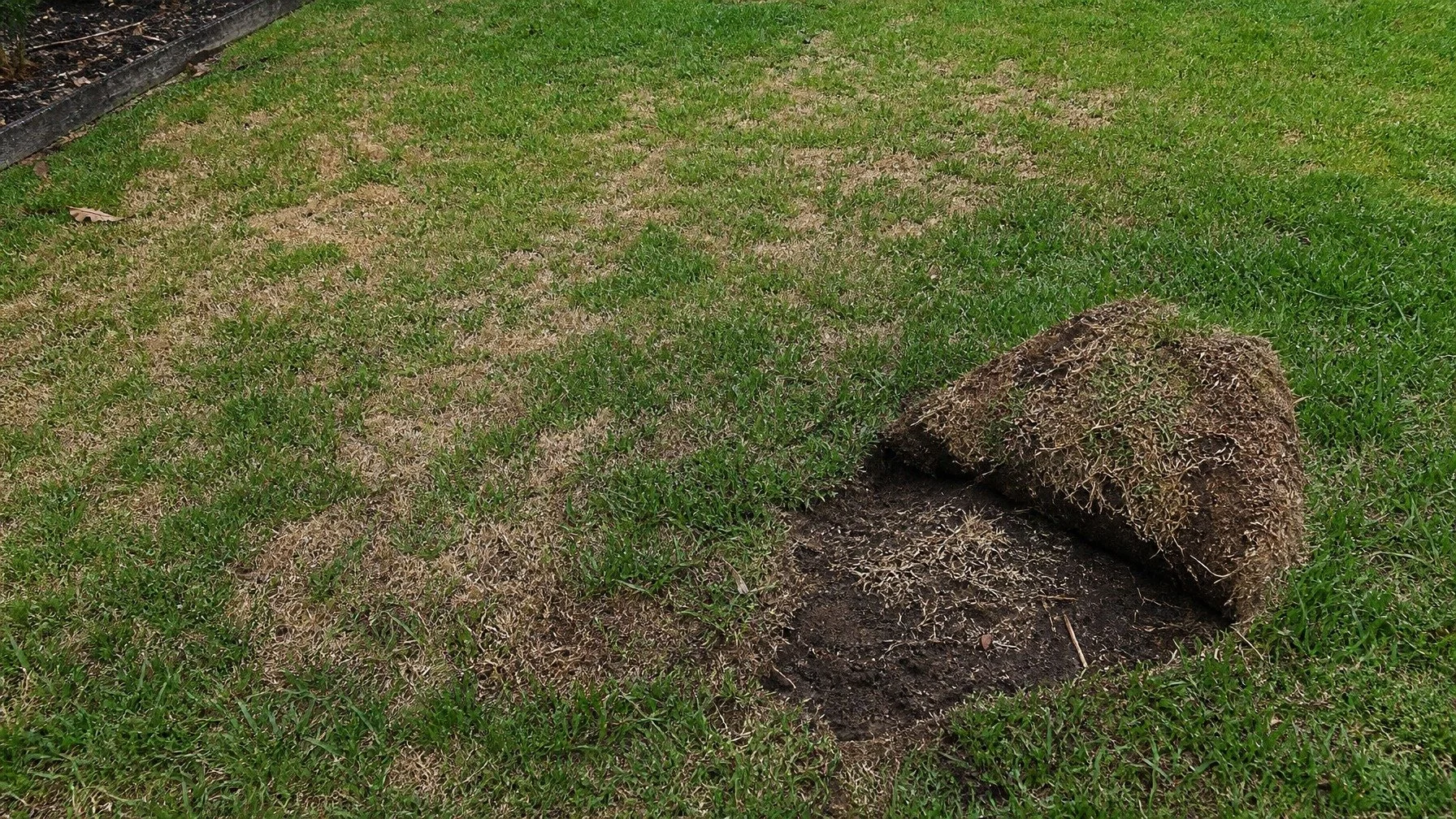
A damaged Canberra lawn with turf lifting away to reveal soil, a sign of lawn grub feeding
The quick answer: is it pests or just dry patches?
If a brown patch keeps spreading, peels back easily like loose carpet, or attracts birds pecking at the lawn, it is very likely lawn pests rather than dry soil.
Dry patch tends to stay roughly where it is and greens up after a good water. Pest damage keeps expanding, the grass lifts away with almost no resistance because the roots have been eaten, and you will often see increased bird, magpie or even fox activity as they feed on the grubs.
The fastest way to confirm it is the tug test, which I will walk through below.
Common lawn pests in Canberra and the ACT
A handful of pests cause the majority of the lawn damage I see across Canberra and the ACT, and they overlap with the broader range I cover in my guide to identifying and treating common lawn pests in Canberra. They tend to be most active from late spring through summer and into autumn, when the soil is warm and the lawn is growing.
Lawn grubs (beetle larvae). "Lawn grub" is a general term for the larvae of several beetles. They are usually curled, C-shaped, creamy-white larvae with brownish heads, living in the soil and feeding on grass roots. This is the classic root-feeding lawn grub.
African black beetle. A common culprit in Canberra lawns. The adult beetles and especially their larvae feed on roots, causing patches that wilt and die. You may also notice the hard-shelled adult beetles in the soil or around paths and lights.
Scarab beetle larvae. Another group of root-feeding grubs that behave much like black beetle larvae and cause similar dieback.
Lawn armyworm. The caterpillar of a moth. Unlike root-feeding grubs, armyworms feed on the leaf and chew the lawn down from the top, often overnight, leaving the lawn looking scalped or grazed. They can move across a lawn in a "front", which is where the name comes from.
Sod webworm and cutworm. Other leaf and stem-feeding caterpillars that cause similar surface damage and ragged, chewed patches.
The reason it matters which one you have is simple: root-feeders and leaf-feeders are not the same problem and are not treated the same way.
How to identify lawn pest damage (the "tug test")
When I suspect lawn grubs, the first thing I do is the tug test, because it is quick, free and surprisingly reliable.
Here is how I do it:
Find the edge of a brown or thinning patch, where damaged grass meets healthy grass.
Grip a handful of the affected grass and give it a firm tug.
Watch how it responds. Healthy lawn resists and stays anchored. If the roots have been eaten by grubs, the grass lifts away easily, often peeling back like a loose piece of carpet.
If the lawn pulls up with almost no resistance, that is a strong sign of root-feeding grubs. While you are there, part the grass at the soil line and look for the curled, C-shaped white larvae in the top few centimetres of soil.
For leaf-feeders like armyworm, the tug test will be less dramatic because the roots are intact, but you will see chewed, ragged grass blades and sometimes the caterpillars themselves at dusk. A simple soapy-water flush poured over a small area can also bring caterpillars to the surface.
Other tell-tale signs I look for:
brown patches that spread rather than staying put
increased bird, magpie or ibis activity pecking at the lawn
spongy areas that feel soft underfoot
a lawn that does not green up after watering
moths flying up out of the lawn at dusk (a sign of armyworm or webworm)
Understanding the lawn pest life cycle
Understanding the life cycle is what makes the difference between guessing and getting the timing right.
Most lawn grubs follow a similar pattern. Adult beetles or moths lay eggs in or on the lawn through the warmer months. Those eggs hatch into larvae, the grubs and caterpillars, and it is this larval stage that does the real damage as the young feed hungrily on roots or leaves. The larvae eventually pupate and emerge as the next generation of adults, and the cycle repeats.
Two things flow from this.
First, the damage and the larvae peak at a particular time. In Canberra that is generally the warmer months, especially late spring through summer and into early autumn, when soil temperatures are up and the young are feeding.
Second, timing the treatment to the life cycle matters enormously. Treating when the larvae are young and actively feeding near the surface gives a far better result than treating mature larvae or adult beetles. Get the timing wrong and even the right product underperforms.
This is exactly why I do not treat on a hunch. Identifying the pest and where it is in its life cycle tells me whether to act now, what to use, and what to expect.
How to prevent lawn pest infestations
You cannot keep every beetle and moth off your lawn, but you can make the lawn far less attractive and far more able to shrug off an attack.
Keep the lawn healthy and dense. A strong, well-fed, deeply rooted lawn tolerates and recovers from pest feeding much better than a thin, stressed one.
Watch the high-risk window. Through the warmer months, keep an eye out for early signs so you catch an infestation while it is small.
Do not over-thatch. A heavy thatch layer can harbour pests, so a good year-round lawn care programme that manages thatch helps.
Watch for beetle and moth activity. Lots of beetles around outdoor lights or moths lifting off the lawn at dusk can be an early warning of the next generation.
Address damage early. A small patch caught early is a quick fix. A whole lawn discovered late is a much bigger job.
Prevention will not make a lawn pest-proof, but it dramatically reduces both the likelihood and the severity of damage.
Treatment options for lawn grubs and beetles
Once I have identified root-feeding grubs and confirmed they are active, treatment becomes targeted rather than guesswork.
The key principles I work to are:
Identify first, treat second. The pest and its life-cycle stage determine the right approach. Treating blind wastes time and money.
Time it to the larvae. Treating when grubs are young and feeding near the surface gives the best control.
Match the treatment to the lawn. The product and method need to suit your grass type and the situation so the lawn is not put under unnecessary stress.
Repair afterwards. Grub damage leaves dead, rootless patches. Once the pest is controlled, those areas need feeding, and often aeration, overseeding or repair, to recover.
I deliberately steer people away from simply grabbing the strongest thing on the shelf and dousing the lawn. The wrong product, the wrong timing, or treating the surface while ignoring a heavy infestation underneath is how people end up treating the same lawn again and again. Effective lawn grub control is about the right treatment, at the right time, followed by recovery.
If grubs have taken hold, Book a Free Assessment and I'll confirm what is feeding and recommend the right plan.
Dealing with armyworm outbreaks
Armyworm deserves its own mention because it behaves differently and moves fast.
Because armyworms feed on the leaf rather than the roots, the damage can appear almost overnight. A lawn that looked fine yesterday can look scalped or grazed today. They often advance across a lawn in a moving front, and a heavy outbreak can strip large areas in a matter of days.
The flip side is that, because the roots are usually still intact, a lawn damaged by armyworm can recover quickly once the caterpillars are dealt with and the lawn is fed and watered. The priority with armyworm treatment is speed: identify it early, act while the caterpillars are present and feeding, and then push recovery so the lawn bounces back before weeds move into the thinned areas.
If you have seen ragged, chewed grass, moths lifting off the lawn at dusk, or a patch that suddenly spread overnight, do not wait. Armyworm damage compounds quickly.
When to book a free assessment
You can handle a small, clearly identified pest patch yourself if you catch it early. I would book an assessment if:
brown patches are spreading and watering does not fix them
the grass lifts away easily in the tug test
you can see white C-shaped grubs in the soil
you have ragged, chewed grass or moths lifting off the lawn at dusk
birds, magpies or foxes are digging at the lawn
the damage is across a large area or keeps coming back
you want the lawn repaired, not just sprayed
If pests are damaging your lawn and you want it identified and dealt with properly, Book a Free Assessment.
Final word
Brown patches are not always about heat or water. Very often, they are lawn pests feeding where you cannot see them.
The difference between a quick recovery and a ruined lawn usually comes down to two things: noticing early, and identifying correctly. Lawn grubs, beetles and armyworms each behave differently, peak at different points in their life cycle, and need the right treatment at the right time, followed by repair so the grass takes the bare ground back before weeds do.
If your lawn is showing signs of pest damage, Book a Free Assessment and I'll identify what is feeding, treat it properly, and help the lawn recover.
Key points I get asked on a regular basis
How do I know if I have lawn grubs?
Try the tug test: grip the grass at the edge of a brown patch and pull. If it lifts away easily like loose carpet, the roots have been eaten by grubs. Curled, white C-shaped larvae in the top few centimetres of soil confirm it.
What is the tug test for lawn pests?
The tug test is a simple check where you firmly pull a handful of affected grass. Healthy lawn stays anchored, but grass with grub-eaten roots peels back with almost no resistance. It is the quickest way to tell pest damage from dry patch.
What is the difference between lawn grubs and armyworms?
Lawn grubs are beetle larvae that live in the soil and eat roots, so the grass lifts easily. Armyworms are caterpillars that feed on the leaf from the top, chewing the lawn down quickly, often overnight, while the roots stay intact.
When are lawn pests worst in Canberra?
Most lawn pests are most active and damaging through the warmer months, late spring, summer and into early autumn, when soil temperatures are up and the larvae are feeding. That is the window to watch for early signs.
Why do birds keep pecking at my lawn?
Birds, magpies and ibis pecking and digging at the lawn are often feeding on grubs in the soil. Sudden, increased bird activity over a patch of lawn is a common early warning sign of a lawn grub problem.
Will my lawn recover from grub or armyworm damage?
Often, yes. Armyworm damage usually recovers quickly because the roots are intact. Grub damage takes longer because the roots are eaten, so those patches need feeding, and often aeration, overseeding or repair, once the pest is controlled.
How do I book lawn pest control in Canberra?
Book a Free Assessment and I'll inspect the lawn, run the tug test, identify the pest, and recommend the right treatment and recovery plan.

Looking for the perfect gift for the lawn enthusiast in your life? The Lawn Firm Gift Cards are the ideal solution. Redeemable for any of our professional lawn care services, these gift cards make it easy to give the gift of a greener, healthier lawn. From fertilisation to weed control and pest management, there’s something for every lawn need.
Why Choose a Lawn Firm Gift Card?
Versatility: Can be used for any service offered by The Lawn Firm.
Thoughtful Giving: A practical gift for anyone who values a beautiful outdoor space.
Simple to Use: Purchase online and enjoy easy redemption.
Order your gift card today and let your loved ones experience the professional touch of The Lawn Firm. It’s the perfect way to show you care while helping someone achieve the lawn of their dreams.
This gift card never expires.