
Lawn Pest Control Canberra: How I Identify, Treat and Repair Pest-Damaged Lawns
G’day, Nikolai here from The Lawn Firm. If your lawn has suddenly gone brown, thin, spongy or patchy, lawn pests are one of the first things I want to rule in or out.
In Canberra, the pest problems I most often look for are lawn grubs, curl grubs, armyworm, sod webworm and beetle larvae. These pests can damage the leaf, crown or root zone of the lawn, and the symptoms can look very similar to dry patch, heat stress, compaction, poor soil health or general lawn decline.
That is why I do not like guessing with pest control.
A brown patch is not automatically a grub problem. A dry patch is not automatically a watering problem. A lawn that lifts easily is not always dead beyond repair. The right treatment depends on identifying the cause properly, then repairing the lawn afterwards so it can thicken back up.
If your lawn is browning, thinning or lifting too easily, Book a Free Assessment and I’ll help you work out whether pests are the real cause.
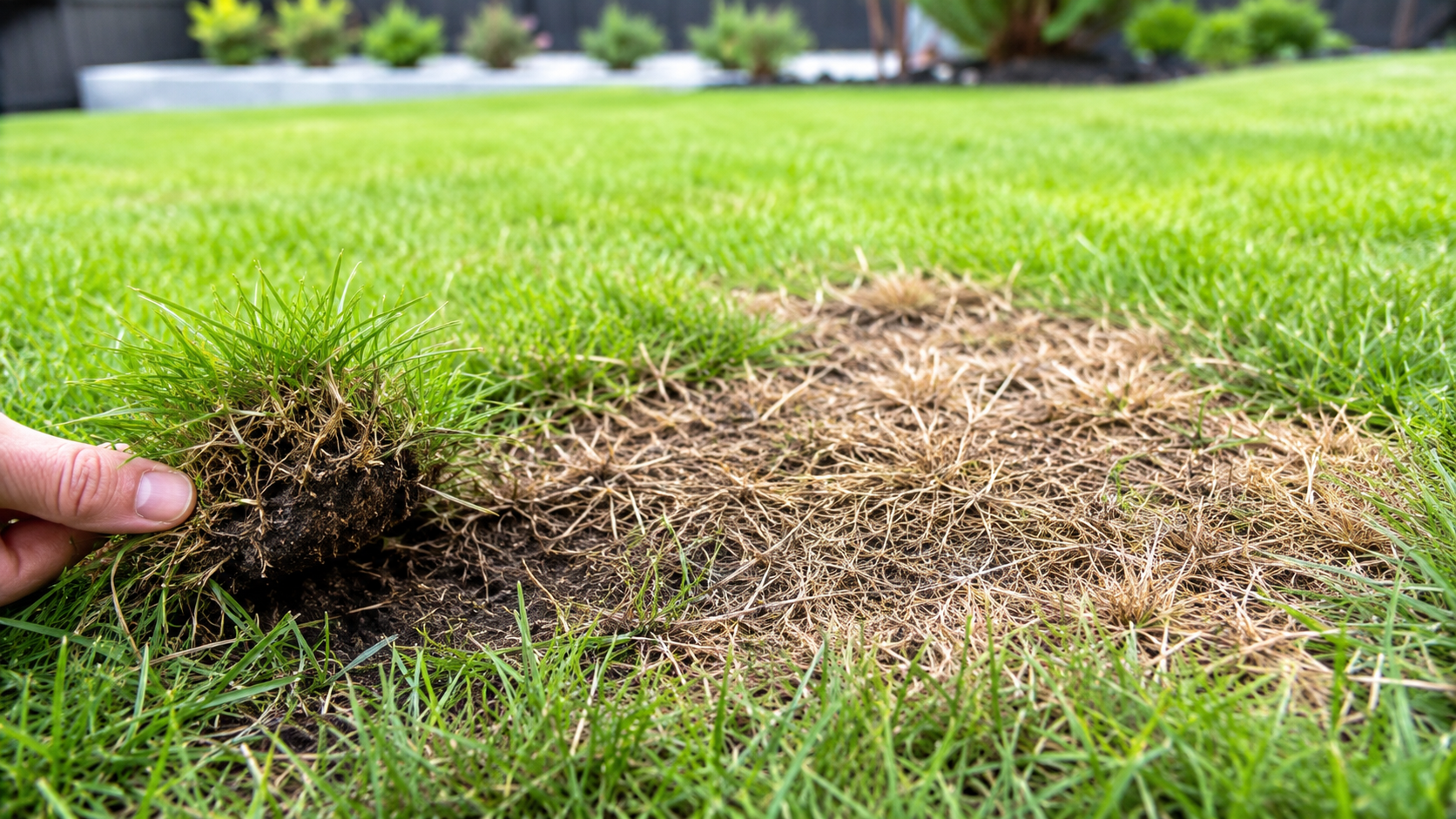
Why lawn pests are such a problem in Canberra
Canberra lawns already deal with a lot of pressure.
I regularly see lawns struggling with compacted soil, dry patch, shallow roots, heavy thatch, seasonal stress and thin coverage. When a lawn is already under pressure, pest damage can show up faster and become more obvious.
That is especially true when the root zone is weak. A healthy lawn with strong roots and dense coverage can often recover better from minor stress. A thin or already struggling lawn has less stored energy, fewer healthy runners, and less ability to bounce back once pests start feeding.
This is why I always look at pest control as part of a broader lawn health plan. Treating the pest is one step. Restoring the lawn is the next.
The quick answer: how I check for lawn pests
When I inspect a lawn for pest damage, I usually start with the signs I can see and feel.
The main signs I look for are:
brown or straw-coloured patches spreading faster than normal
turf that feels loose, soft or spongy underfoot
grass that lifts too easily from the soil
bird activity in the same area of lawn
moths or caterpillar activity around dusk
chewed or grazed-looking patches
sudden thinning after warm nights
weak roots under the damaged section
patches that do not respond the way I would expect after normal care
No single sign proves the problem on its own. The pattern matters.
If I see fast-spreading damage, loose turf and birds feeding in the same area, pests move higher up my list. If the soil is dry underneath and water is not penetrating properly, I also think about dry patch. If the lawn is compacted and weak across a broader area, I look at the soil and root zone.
That is the difference between guessing and diagnosing.
Pest damage or dry patch? This is where people get caught
One of the biggest mistakes I see is treating every brown patch as a pest problem.
In Canberra, dry patch and hydrophobic soil are very common. I have written about this before because I see it often. A homeowner waters the lawn, but the water does not properly soak in. It might run sideways, sit on the surface, or only wet the top layer. The lawn then looks dry, patchy and stressed even though the homeowner feels like they are doing the right thing.
Pest damage can look similar from a distance, but it behaves differently.
If it is dry patch, the soil underneath is often the giveaway. It may feel dusty, hard, dry or unevenly wet. The patch often follows the way water moves through the lawn.
If it is pest damage, the grass may detach too easily, feel spongy, or show signs of feeding. You may also notice birds returning to the same area because they are chasing larvae or insects under the surface.
Sometimes both things are happening together. A dry, stressed lawn is often more vulnerable to pest activity, and pest damage can make the lawn less able to recover from heat and soil stress.
If you are not sure which problem you have, Book a Free Assessment and I’ll help you work through the signs properly.
The main lawn pests I look for in Canberra
Lawn grubs and curl grubs
When people say “lawn grubs”, they are usually talking about larvae that feed around the root zone. Curl grubs and beetle larvae are common examples.
The biggest clue is often weak turf.
If the roots have been damaged, the grass may lift too easily from the soil. It can feel like the lawn has lost its grip. You may also notice brown patches, greyish patches, thinning turf or birds pecking at the lawn.
When I check for grub activity, I pay close attention to how firmly the grass is attached. If the leaf looks bad but the roots are still strong, I keep investigating other causes. If the turf pulls away too easily, root-feeding pests become much more likely.
Armyworm
Armyworm damage can move quickly.
This is the pest problem I do not like people sitting on for too long. Armyworm can chew through leaf tissue and leave the lawn looking grazed, scalped or stripped. Sometimes the lawn seems fine one week and then suddenly looks like it has been attacked.
The key sign is speed.
If a damaged section is spreading quickly, especially in warmer conditions, I take it seriously. I look for chewed leaf blades, thinning edges, caterpillar activity and damage that seems to move across the lawn.
The earlier armyworm is identified, the easier it usually is to limit the damage and start recovery.
Sod webworm
Sod webworm can be harder to spot early because the larvae tend to hide during the day and feed at night.
That means the homeowner may not see much happening until the lawn starts thinning. The damage can look like small chewed patches at first, then become more noticeable as the feeding continues.
With sod webworm, I look for thinning turf, moth activity, grazed-looking sections and signs of feeding close to the surface. I also pay attention to thatch levels, because pests can use that layer as shelter.
Beetle larvae
Beetle larvae can create similar signs to other root-zone pests.
The lawn may brown off, weaken, lift too easily or attract birds. The important thing is not just naming the pest, but understanding where the damage is happening. If larvae are feeding around the roots, the recovery plan has to focus on rebuilding root strength as well as stopping the pest activity.
That is why I do not treat beetle control as a separate mystery. I look at the lawn system: roots, soil, thatch, moisture, season and recovery potential.
The signs I never ignore
Fast-spreading brown patches
A slow patch may be soil, water or general stress. A fast-spreading patch makes me think about active pest damage, especially if the lawn was looking better not long before.
Spongy turf
If the lawn feels soft, loose or detached underfoot, I want to inspect the root zone. Sponginess can be a sign that the turf is no longer anchored properly.
Birds feeding on the lawn
Birds pecking at the same area repeatedly can be a clue. It does not prove pests on its own, but it tells me something is worth checking below the surface.
Turf lifting easily
This is one of the strongest warning signs. If the grass comes away too easily, something may have damaged the roots.
Overnight thinning
If the lawn seems to lose density quickly, particularly after warm nights, I think about caterpillar-type pests such as armyworm or sod webworm.
My lawn pest control process
Step 1: Identify the likely cause
I start by looking at the damage pattern.
Is the patch round, irregular or spreading?
Is the turf loose or still attached?
Is the soil dry, wet, compacted or soft?
Are birds feeding in the area?
Is there thatch build-up?
Did the damage happen slowly or quickly?
Those questions tell me whether I am likely looking at pests, dry patch, soil stress, disease, compaction or a mix of issues.
Step 2: Confirm whether pests are active
If I suspect pest activity, I look for practical signs that support the diagnosis.
That might include checking whether the turf lifts, inspecting the thatch and soil surface, looking for feeding damage, checking activity around dusk, or using simple inspection methods to bring hidden pests closer to the surface.
The goal is to avoid treating blindly.
I want to be confident that pests are actually part of the problem before recommending pest treatment.
Step 3: Treat the right problem
If pests are active, the treatment needs to match the pest and the stage of the problem.
A root-feeding pest is not the same as a leaf-feeding caterpillar. A small early issue is not the same as a lawn that has already lost major density. A stressed lawn may need a different recovery plan from a strong lawn that has been caught early.
This is why timing matters so much. Pest control works best when the issue is identified early and treated properly, before the damage spreads further.
Step 4: Repair the lawn after treatment
This is the part many people miss.
Stopping the pest does not automatically repair the lawn.
If roots have been damaged, the lawn may need help recovering. If the surface is thin, weeds can move in. If the soil is dry or compacted, the lawn may struggle to fill back in. If the grass has lost too much density, it may need a more structured repair plan.
Depending on the lawn, recovery may include:
fertilisation
light top dressing
wetting agents
aeration
overseeding where suitable
thatch management
follow-up monitoring
repair work for bare or thin sections
This is why I always look beyond the pest itself. The real goal is to get the lawn healthy again, not just stop the immediate damage.
Professional lawn pest control vs DIY
DIY pest control can work if you identify the problem correctly, catch it early and choose the right treatment.
The risk is misdiagnosis.
If the real problem is hydrophobic soil and you treat for grubs, the lawn will keep drying out. If the real problem is armyworm and you assume it is just heat stress, the damage can spread quickly. If the lawn has root damage and you only treat the pest, the lawn may stay weak and thin.
Professional pest control is not just about applying a product. It is about knowing what you are looking at, choosing the right response, and planning the recovery afterwards.
If your lawn is declining and you do not want to waste time guessing, Book a Free Assessment and I’ll help you work out what is happening.
Are lawn pest treatments safe for pets and kids?
This is one of the most common questions I get.
My answer is always practical: safety depends on the product, the application, the rate, the conditions and the aftercare. I do not like vague claims without context.
The responsible approach is to use the right treatment for the right problem and follow the correct instructions for re-entry, drying, watering-in or any other aftercare. I also like to explain what homeowners should do after treatment so they feel clear and confident.
If you have kids, pets or specific concerns, bring that up during the assessment. It should be part of the plan from the start.
How to prevent lawn pests coming back
You cannot make a lawn completely pest-proof, but you can make it stronger and less vulnerable.
The best prevention is a healthier lawn.
That usually means:
stronger roots
good soil condition
less compaction
sensible fertilisation
thatch control
healthy turf density
regular monitoring during pest-prone periods
repair work before thin areas become bare
a lawn care programme that changes with the season
A thick, healthy lawn can still get pests, but it usually has a better chance of recovery. A thin, stressed lawn gives pests, weeds and patchiness more room to take hold.
That is why I treat pest control as part of a bigger lawn care plan.
When to book a free assessment
I would book an assessment if:
brown patches are spreading quickly
birds keep feeding on the lawn
the turf lifts too easily
the lawn feels spongy
the damage appears after warm nights
patches keep returning
the lawn is not responding to normal care
you suspect lawn grubs, armyworm or sod webworm
you have tried DIY treatment and the lawn is still declining
you want to repair the lawn properly after pest damage
Pest problems are much easier to manage when they are caught early.
If something does not look right, Book a Free Assessment and I’ll help you work out whether it is pests, dry patch, soil stress or something else.
Final word
Lawn pest control in Canberra is not about guessing from a brown patch. It is about reading the signs properly.
I look at the damage pattern, the roots, the soil, the thatch, the season and the speed of decline before recommending a treatment. That is the only way to know whether the problem is lawn grubs, armyworm, sod webworm, beetle larvae, dry patch, compaction or something else.
If your lawn is browning, thinning, lifting or attracting birds, Book a Free Assessment and I’ll help you stop the damage before it spreads further.
Key points I get asked on a regular basis
What are the most common lawn pests in Canberra?
The main lawn pests I look for in Canberra are lawn grubs, curl grubs, armyworm, sod webworm and beetle larvae. The exact pest depends on the damage pattern, the season, the lawn condition and how quickly the damage is spreading.
How do I know if I have lawn grubs?
The biggest signs are brown patches, weak roots, spongy turf and grass that lifts too easily from the soil. Bird activity can also be a clue because birds may be feeding on grubs below the surface.
What does armyworm damage look like?
Armyworm damage often looks like fast-spreading, chewed or scalped turf. If a lawn seems to thin out quickly over a short period, armyworm is one of the problems I want to check for.
What does sod webworm damage look like?
Sod webworm damage often shows as thinning, grazed or chewed-looking patches. The larvae usually feed at night and hide during the day, so the damage can appear before the pest is obvious.
Is pest damage the same as dry patch?
No. Pest damage and dry patch can look similar, but they have different causes. Dry patch is usually linked to water not soaking into the soil properly, while pest damage involves insects feeding on the lawn. Sometimes both problems happen together.
Can lawn grubs repair themselves?
Mild damage can recover if the pest pressure stops and the lawn still has enough healthy roots and runners. More serious damage usually needs a recovery plan, especially if the turf has thinned badly or bare areas have opened up.
Should I treat lawn pests myself?
You can treat pests yourself if you are confident you have identified the problem correctly and know which treatment to use. The risk is treating the wrong issue. If you are unsure, it is better to get the lawn assessed before the damage spreads.
Why are birds pecking at my lawn?
Birds may be feeding on insects or larvae in the lawn. It does not prove there is a pest outbreak, but repeated bird activity in the same damaged area is a sign worth checking.
Can pest control stop future outbreaks?
It can help, but prevention depends on the whole lawn. Stronger turf, healthier soil, better root growth, thatch control and regular monitoring all reduce the chance of repeat pest problems.
How do I book lawn pest control in Canberra?
Book a Free Assessment and I’ll inspect the lawn, identify whether pests are part of the problem, and recommend the right treatment and repair plan.
Looking for the perfect gift for the lawn enthusiast in your life? The Lawn Firm Gift Cards are the ideal solution. Redeemable for any of our professional lawn care services, these gift cards make it easy to give the gift of a greener, healthier lawn. From fertilisation to weed control and pest management, there’s something for every lawn need.
Why Choose a Lawn Firm Gift Card?
Versatility: Can be used for any service offered by The Lawn Firm.
Thoughtful Giving: A practical gift for anyone who values a beautiful outdoor space.
Simple to Use: Purchase online and enjoy easy redemption.
Order your gift card today and let your loved ones experience the professional touch of The Lawn Firm. It’s the perfect way to show you care while helping someone achieve the lawn of their dreams.
This gift card never expires.