
How to Top Dress Your Lawn: A Canberra Homeowner’s Guide
G'day, Nikolai here from The Lawn Firm.
If your lawn is bumpy, uneven, scalping in the high spots or holding water in the low ones, top dressing is very often the fix. It is one of those jobs that does not look like much while you are doing it, but a few weeks later the lawn is smoother, greener and noticeably healthier.
Top dressing simply means spreading a thin, even layer of soil or sand over the surface of your lawn. Done correctly, it levels out minor bumps and hollows, improves the soil underneath, and helps the grass thicken up. Done badly, in the wrong season or far too thick, you can smother the lawn and undo a season of good work.
In Canberra, where a lot of lawns sit on heavy clay and cop a beating from hot summers and frosty winters, top dressing is a genuinely useful tool. Used at the right time and paired with the right preparation, it makes a real difference.
If your lawn is uneven and you are not sure whether top dressing is the answer, Book a Free Assessment and I'll tell you exactly what it needs.
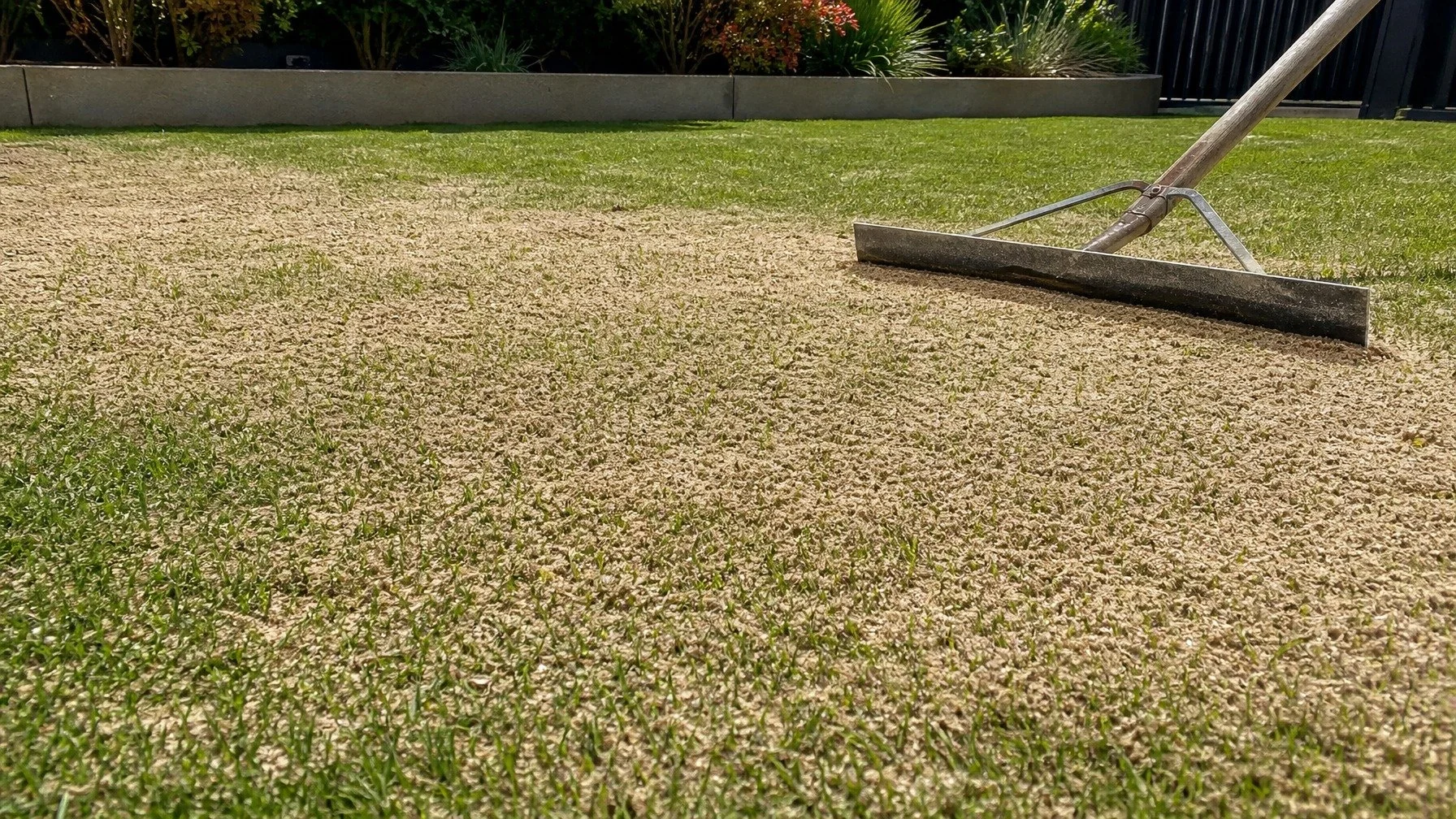
A levelling rake spreading a thin layer of top dressing across a Canberra lawn
The quick answer: what top dressing does for your lawn
Top dressing levels the surface and improves the soil at the same time, without you having to dig up the lawn.
By adding a thin layer of quality material across the top, you fill minor hollows, smooth out bumps, and gradually build a better soil profile that holds moisture and nutrients more evenly. The grass grows up through the new layer, the surface evens out, and the lawn becomes easier to mow and far more pleasant to walk on.
It is not a quick cosmetic trick. It is a slow, structural improvement, and that is exactly why it works so well when it is done properly.
What is lawn top dressing?
Top dressing is the practice of applying a thin layer of soil, sand or a blended mix evenly across the surface of an established lawn.
The material works its way down between the grass blades and into the surface of the soil. Over the following weeks the grass grows up through it, so the new layer effectively becomes part of your lawn's soil profile rather than sitting on top of it.
People top dress for a few reasons: to level an uneven surface, to improve poor or shallow soil, to help break down thatch, and to encourage a denser, healthier sward. It is most powerful when it is part of a maintenance routine rather than a one-off, because each light layer builds on the last.
The golden rule is "thin and even". Top dressing is never about burying the lawn. It is about a light, consistent layer that the grass can grow through without being smothered.
Choosing the best material for Canberra lawns
The right top dressing material depends on your existing soil and what you are trying to achieve.
For levelling and smoothing, a quality washed sand or a sand-based mix is often used because it spreads evenly and does not compact the way heavy soil can.
For improving thin or sandy soil, a loam or a soil-and-compost blend adds organic matter and helps the ground hold moisture and nutrients.
For Canberra's heavy clay lawns, a sandy loam blend is usually the safer choice, because pure heavy soil on top of clay can hold too much water and compact further.
The most common mistake I see is people grabbing whatever cheap soil is available and tipping it on thick. Poor-quality material full of weed seed, or a heavy mix on an already heavy soil, causes more problems than it solves. Matching the material to your lawn and soil is half the job, and it is one of the first things I assess on site.
If you are not sure what your soil needs, soil testing takes the guesswork out of choosing the right blend.
Step-by-step: how to top dress your lawn
Whether you are levelling or improving the soil, the process is the same. Here is how I approach it:
Mow the lawn a little shorter than usual. This makes it easier to spread the material and helps it settle down to the soil rather than sitting on the leaf.
Deal with thatch and compaction first. If there is heavy thatch or the soil is compacted, aeration before top dressing lets the material work into the soil instead of sitting on a hard, choked surface.
Spread the material thinly and evenly. Tip small amounts across the lawn and work in a light layer, usually no more than a centimetre or so at a time. Less is more.
Level it in. Use the back of a rake, a levelling lawn leveller or a stiff broom to work the material into the surface and down between the grass blades, filling the hollows and leaving the high points exposed.
Make sure the grass is still showing through. If you have buried the leaf, you have used too much. The grass tips should still be visible across the whole lawn.
Water it in gently. A light watering settles the material and helps the grass recover and grow up through the new layer.
For a badly uneven lawn, it is far better to top dress lightly a few times over a couple of seasons than to try to fix it all in one heavy go. Thin layers, repeated, give you a smooth lawn without ever smothering the grass.
When is the best time to top dress in Canberra?
Timing matters, because you want the grass actively growing so it can recover and grow up through the new layer quickly.
For the cool-season lawns common in Canberra, such as fescue and ryegrass, the ideal windows are spring and early autumn, when the grass is growing strongly but not under summer heat stress. Warm-season lawns like couch and kikuyu are best top dressed in late spring and through summer, when they are growing hardest.
What I avoid is top dressing in the depths of a frosty Canberra winter, when growth has stalled and the grass cannot recover through the new layer, or in the middle of a brutal summer dry spell when the lawn is already stressed.
Top dressing also pairs beautifully with other recovery work. Doing it just after aeration, or alongside overseeding, means the open soil and new seed get the benefit of the fresh material at the same time.
Get the timing right and the lawn knits the new layer in within a few weeks. Get it wrong and the same material can sit there and smother the grass.
DIY top dressing vs professional help
You can absolutely top dress a small, fairly level lawn yourself. It is hard, fiddly work, but for a light levelling job it is well within reach of a keen homeowner with a wheelbarrow, a rake and a free weekend.
Where it gets harder is on larger lawns, badly uneven surfaces, or lawns that also need aeration, thatch removal or overseeding to get the best result. Getting the material, the depth and the levelling consistent across a big area is genuinely difficult, and the wrong mix or a layer that is too thick can set the lawn back.
A professional top dressing service brings the right material for your soil, spreads and levels it evenly, and times it with the rest of your lawn's needs so every step works together. For a lawn that is more than just slightly bumpy, that is usually the difference between a smooth, healthy result and a patchy one.
If you want it done properly, with the right mix and timing for your lawn, Book a Free Assessment and I'll handle it.
Final word
Top dressing is one of the quietest, most effective things you can do for a Canberra lawn. A thin, even layer of the right material, applied at the right time of year, levels the surface, improves the soil and helps the grass thicken up.
The keys are simple: match the material to your soil, keep every layer thin and even, do it when the grass is growing, and pair it with aeration or overseeding where the lawn needs it. Rushed or done too thick, it can smother the lawn, which is why timing and technique matter so much.
If your lawn is bumpy, tired or sitting on poor soil, Book a Free Assessment and I'll work out whether top dressing is the answer and get it done at the right time for the best result.
Key points I get asked on a regular basis
What is the best time to top dress a lawn in Canberra?
Top dress when the grass is actively growing so it can recover quickly. For cool-season lawns like fescue and ryegrass, spring and early autumn are ideal. Warm-season couch and kikuyu lawns are best done in late spring and summer. Avoid frosty winters and peak summer dry spells.
How thick should top dressing be?
Thin and even is the rule. Keep each layer to around a centimetre or less, and make sure the grass tips are still showing through afterwards. If you have buried the leaf, it is too thick. For very uneven lawns, several thin layers over a couple of seasons beats one heavy application.
Can you top dress a lawn without aerating first?
You can, but if the lawn is compacted or has heavy thatch, aerating first lets the material work into the soil rather than sitting on a hard surface. On a healthy, free-draining lawn you can top dress on its own, but aeration beforehand usually gives a better result.
What should I use to top dress my lawn?
It depends on your soil and goal. Washed sand or a sandy mix is good for levelling, while a loam or soil-and-compost blend improves thin soil. On Canberra's heavy clay, a sandy loam blend is usually safest, as a heavy mix on clay can hold too much water and compact further.
Will top dressing fix an uneven lawn?
Yes, top dressing is one of the best ways to level minor bumps and hollows. For a badly uneven lawn it is best done as light layers over a couple of seasons, filling the low spots gradually, rather than one thick application that risks smothering the grass.
How do I book lawn top dressing in Canberra?
Book a Free Assessment and I'll check your soil and surface, recommend the right material and timing, and handle the top dressing as part of getting your lawn smooth and healthy.

Looking for the perfect gift for the lawn enthusiast in your life? The Lawn Firm Gift Cards are the ideal solution. Redeemable for any of our professional lawn care services, these gift cards make it easy to give the gift of a greener, healthier lawn. From fertilisation to weed control and pest management, there’s something for every lawn need.
Why Choose a Lawn Firm Gift Card?
Versatility: Can be used for any service offered by The Lawn Firm.
Thoughtful Giving: A practical gift for anyone who values a beautiful outdoor space.
Simple to Use: Purchase online and enjoy easy redemption.
Order your gift card today and let your loved ones experience the professional touch of The Lawn Firm. It’s the perfect way to show you care while helping someone achieve the lawn of their dreams.
This gift card never expires.