
How to Level a Bumpy Lawn in Canberra: Fixing Dips, Hollows and Uneven Ground
G'day, Nikolai here from The Lawn Firm.
If your lawn is a rolling, lumpy mess that turns an ankle when you walk across it and gets scalped every time you mow, you are not alone. Uneven ground is one of the most common complaints I hear in Canberra, and one of the most satisfying to fix, because the improvement is immediate and permanent when it is done properly.
But here is the part most people skip. A bumpy lawn is almost always a symptom of something else. Fill the dips without working out what caused them and you will be filling the same dips again in two years. Before anyone reaches for a bag of sand, I want to know why the ground moved.
If your lawn is uneven and you would rather have it diagnosed than guess, Book a Free Assessment and I'll come and have a look at it.
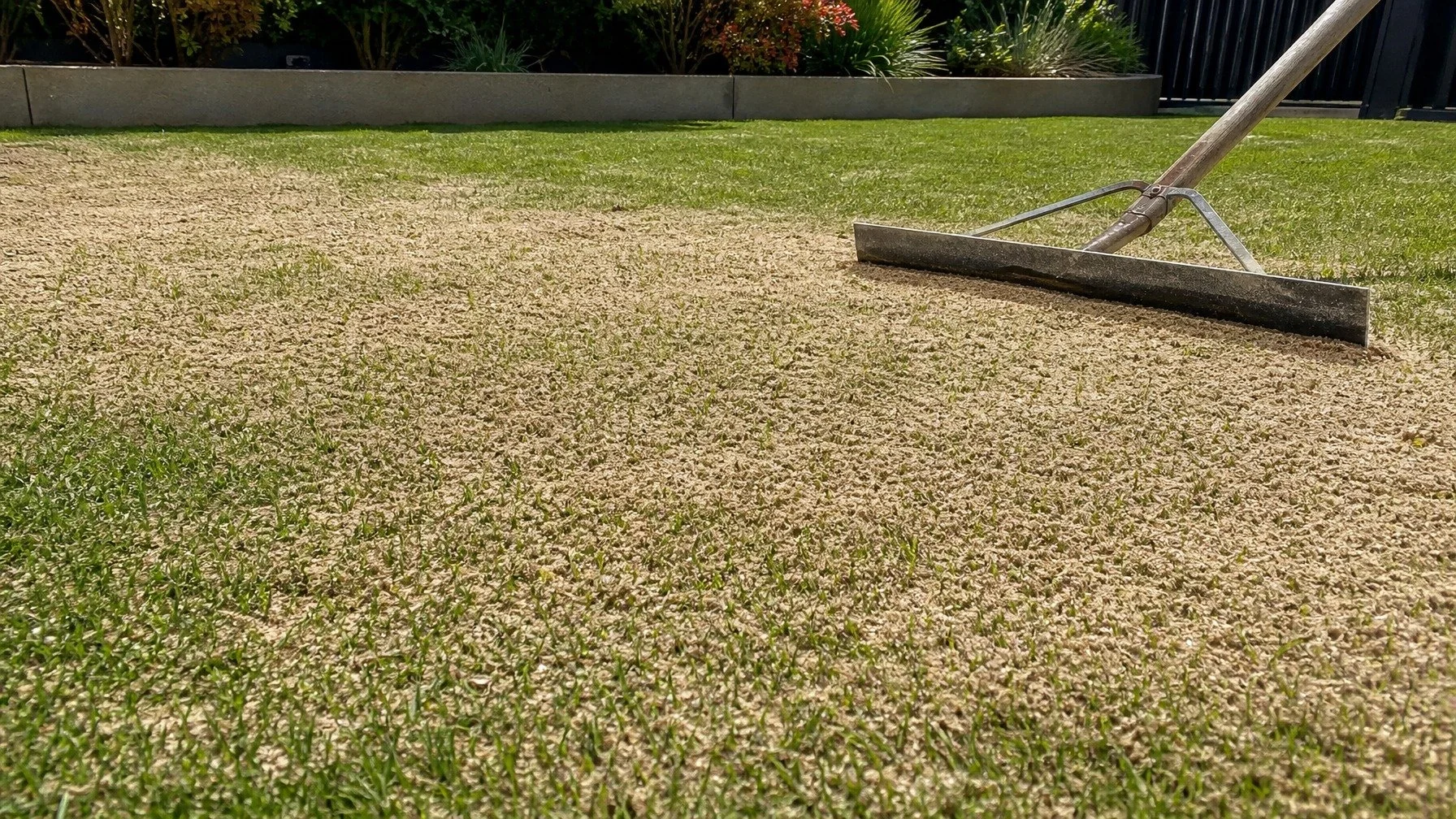
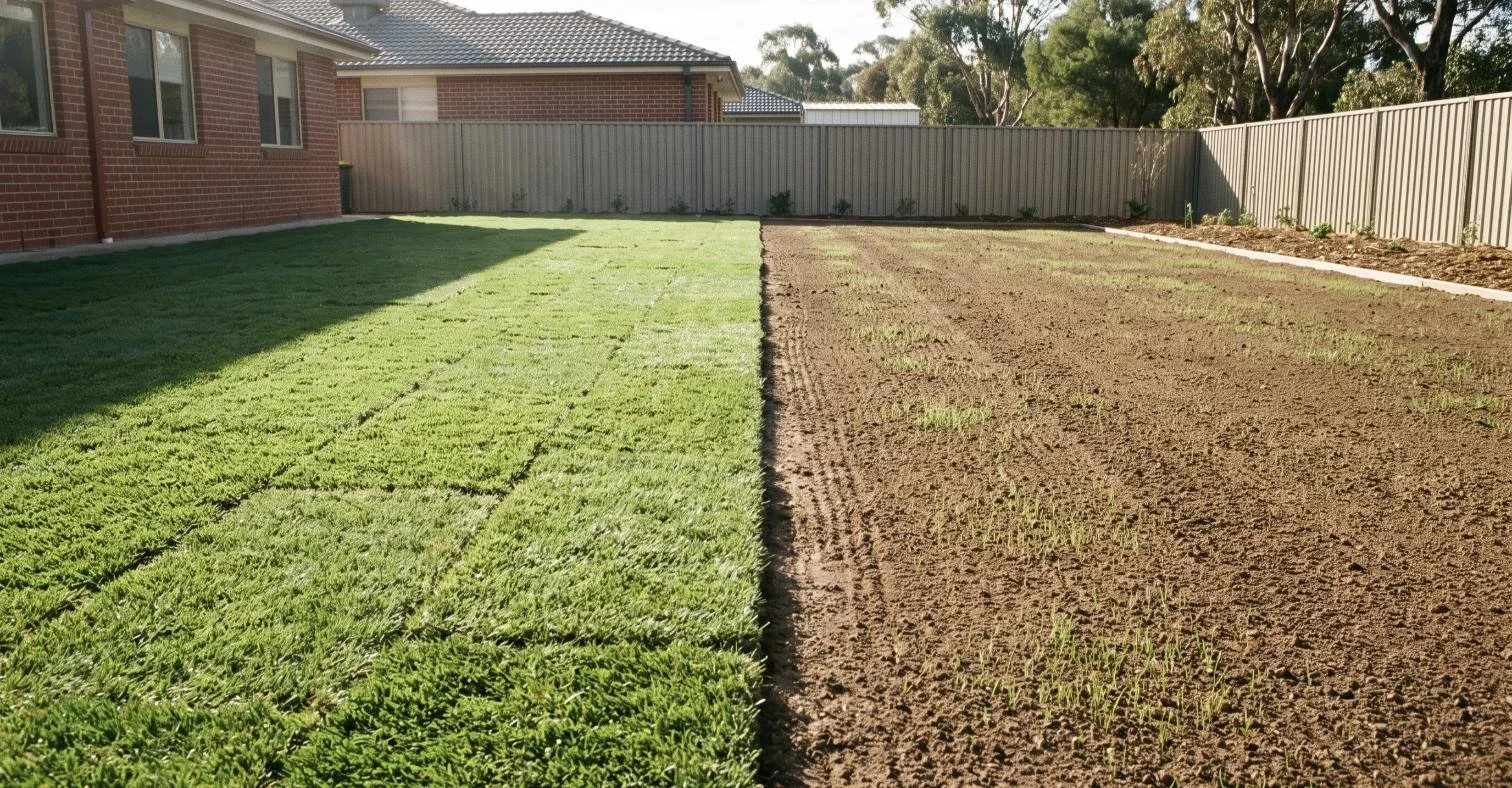
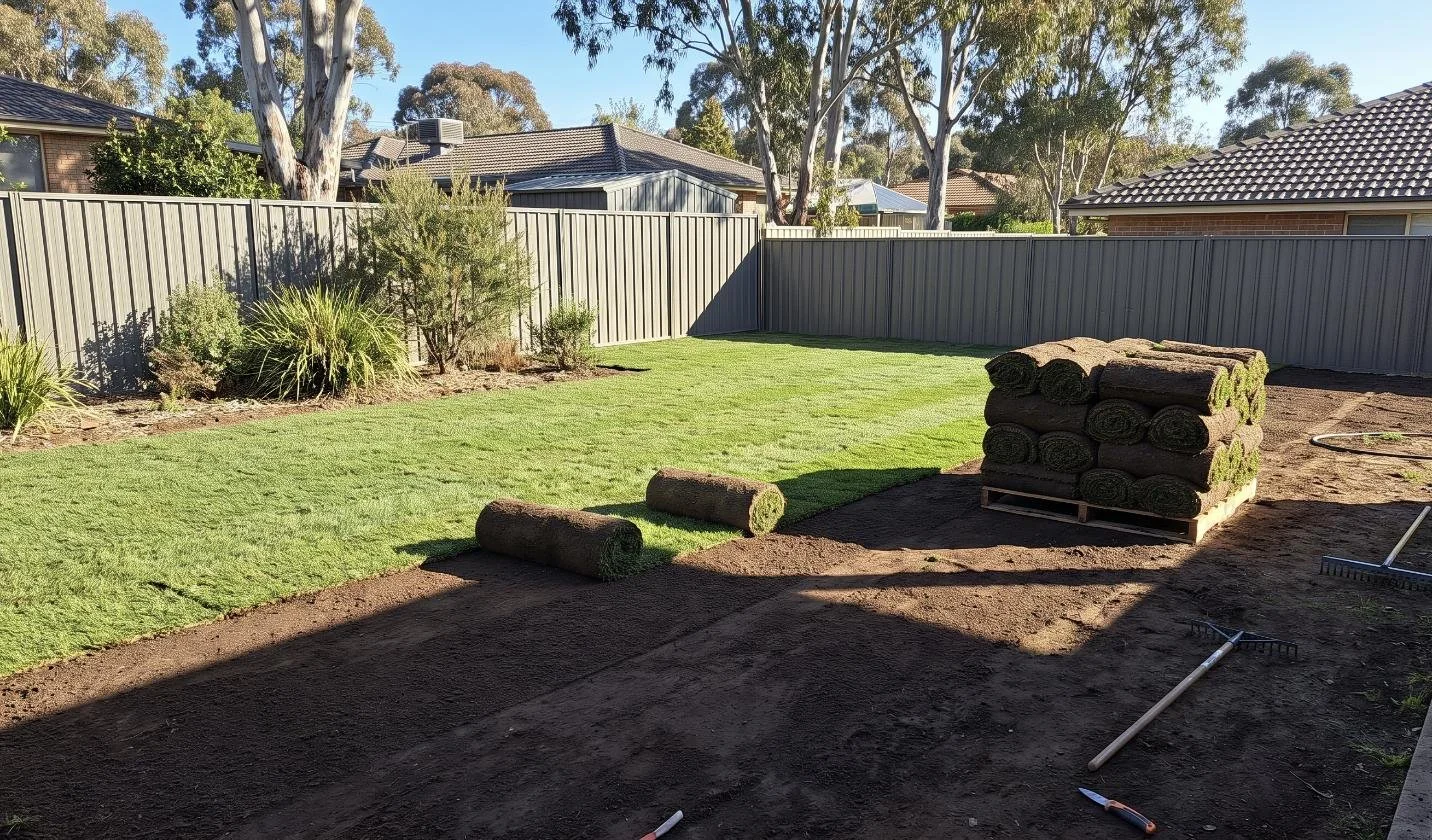
An uneven Canberra backyard lawn part way through a levelling and top dressing job
The quick answer: how to level a bumpy lawn
For shallow unevenness, up to about 25mm deep, top dress the whole lawn with a sandy levelling mix, spread thin so the grass tips still show through, and repeat over two or three growing seasons until the surface is flat. For deeper dips, cut and lift the turf, fill the void underneath with soil, firm it down and lay the turf back.
Two rules matter most. Never bury living grass completely, because grass that cannot photosynthesise dies and you will have created a bare patch where you were trying to fix a bump. And only do this work when the lawn is actively growing, which in Canberra means late spring through to early autumn.
Before any of that, find the cause. Settling trenches, decomposed tree roots, ant and worm activity, thatch, poor drainage and heavy traffic all create different patterns of unevenness, and some will simply come back if you only treat the surface.
Why Canberra lawns go bumpy in the first place
Working out the cause takes ten minutes and saves you doing the job twice. These are the ones I see most often.
Settling backfill. New builds and any lawn over a trench line are the usual culprits. The trench was backfilled when services went in and never compacted properly, so it settles over a few years and leaves a long, straight depression. If your dip is suspiciously linear, that is what you are looking at.
Clay shrinking and swelling. Canberra's heavy clay expands when wet and contracts when dry, and over enough cycles that movement shows as broad, gentle undulation rather than sharp dips.
Decomposed organic matter. Old tree roots, a stump ground out years ago, or buried timber offcuts rot down slowly and leave a void the surface collapses into. These dips are roughly circular and appear years after the fact.
Ant nests and worm castings. Ants pile excavated soil at the surface and earthworms leave castings the mower smears. Both produce small scattered lumps rather than dips. Worms are doing you a favour underneath, so I would not treat them, but the castings need managing.
Thatch. A thick, spongy thatch layer creates a soft feel people mistake for uneven ground. If the lawn feels springy rather than lumpy, the fix is dethatching, not levelling. Push a screwdriver in and look at what sits between the green leaf and the soil first.
Waterlogging and traffic. Soft, saturated ground compresses under foot traffic, wheelbarrows and trailers and stays deformed. If your low spots hold water after rain, drainage is the root problem, and my guide to fixing waterlogged and slow-draining clay lawns is the place to start.
Pest damage. Curl grubs and other root-feeding pests destroy the root mass under a patch and the turf collapses. If a bumpy area also pulls up like a loose carpet, that is a pest signature rather than a soil one, and my lawn pest control guide explains how I confirm it.
That is the difference between guessing and diagnosing. Filling a dip caused by a rotting stump is a waste of a weekend, because it will sink again.
What to use: the levelling mix
The mix matters more than most people expect.
For general levelling I use a sandy loam, or a washed river sand and screened soil blend. Sand-dominant mixes are the standard choice for a reason. They flow easily into hollows, they will not compact into a hard cap over the crowns of the grass, and they do not slump after watering the way a heavy soil mix does.
What I avoid is straight garden soil, potting mix or anything heavy with compost. Those hold too much water, they compact, they keep breaking down and settling further, and they frequently bring weed seed into a lawn you have just opened up.
Matching the mix to the soil underneath matters too. A deep layer of pure sand over heavy clay can create an interface where water perches instead of draining through, which is one reason I favour thin applications built up over seasons rather than one thick fill. On a buffalo lawn keep applications thinner again, because buffalo grows from above-ground runners and buries more easily than couch or kikuyu.
Method one: top dressing for shallow unevenness
This is the right approach for anything up to roughly 25mm deep, and for a lawn that is generally undulating rather than pitted.
Mow first, a little lower than usual. Not a scalp, but taking the lawn down means the mix has less leaf to sit on and the grass finds daylight sooner. Remove the clippings.
Deal with thatch and compaction before you add anything. If the lawn is thatchy or the soil is hard, aerate and core it first. Top dressing over a compacted, thatchy lawn just adds a layer to a problem already there, whereas top dressing straight after coring lets the mix fall into the holes.
Spread the mix thin. Tip small piles across the lawn and work them out with the back of a landscape rake or a levelling lute, pushing mix into hollows and pulling it off high points. Step back and you should still see grass tips through the mix everywhere. If an area looks like bare sand, pull some back.
Work it in and water. A stiff broom or drag mat settles the mix among the leaf blades rather than leaving it on top, then water gently to bed it into the profile and wash the leaf clean.
Repeat, do not rush. A properly bumpy lawn takes two or three rounds across two or three growing seasons to come genuinely flat, and trying to do it in one hit will cost you the lawn. My full top dressing guide covers the technique in more detail.
Method two: cut and fill for deeper dips
For a hollow deeper than about 25mm, adding sand on top will not work, because the depth of mix needed would smother the grass. Cut the turf instead.
Slice a straight-sided H shape or a square through the turf across the dip with a spade or edger, cutting deep enough to get under the root zone, then peel the turf back like opening a book, keeping it attached along one edge so it goes back the same way.
Fill and firm the void underneath with soil that matches what is already there, not pure sand. Build it slightly proud of the surrounding level, then tread or tamp it down firmly. Firming is the step people skip, and it is why refilled dips reappear the following winter.
Fold the turf back, check the level against the surrounding lawn, and adjust underneath until it sits flush or a couple of millimetres high. Water it in well and keep it damp for a fortnight while the roots re-establish. For long trench depressions, work in sections rather than lifting the whole run at once.
Timing: when to level a lawn in Canberra
Timing is not a detail here. It decides whether the lawn recovers or not.
Level when the grass is actively growing, because the method depends on grass growing up through the mix. For warm-season lawns in Canberra, which covers most of us with buffalo, couch, kikuyu and zoysia, that means late October to early March, with late spring and early summer the sweet spot.
Do not level a dormant lawn. A warm-season lawn top dressed in May or June sits under that mix all winter without growing through it, and you will find bare patches in spring. Zoysia is the least forgiving because it repairs so slowly, as I explain in my zoysia lawn care guide. Cool-season lawns like tall fescue have useful windows in both spring and early autumn, though even then the work needs enough warmth left for recovery.
After levelling: closing the gaps
Once the surface is right, the lawn needs to knit back over it.
Where levelling has left thin patches, overseeding is worth considering for cool-season lawns. Warm-season lawns repair by running across the gap instead, which is slower but effective if the lawn is healthy and fed. Feed after levelling, because the lawn has recovery to pay for, and my complete guide to lawn fertilisation in Canberra covers the timing. Keep the water up while it re-establishes, then return to deep, infrequent watering once it has closed over.
Watch for weeds, because levelling briefly opens the canopy and open ground is an invitation. This is a good moment for a pre-emergent, though timing needs care if you have also overseeded, since a pre-emergent stops your new seed germinating just as effectively as it stops weeds. That is a genuine conflict and worth advice rather than guesswork.
Finally, raise the mowing height slightly while the lawn recovers, which reduces the risk of scalping the newly adjusted surface.
Final word
Levelling a lawn is a job where the technique is straightforward and the judgement is everything. Choose the right mix, go thin enough that the grass still sees light, work in the right season, and above all understand why the ground moved.
If the cause was a settling trench, one or two rounds of top dressing will sort it for good. If the cause is drainage, compaction, thatch or grubs, levelling alone looks good for a season and then you are back where you started.
If your lawn is uneven and you want it assessed before anyone starts shifting soil, Book a Free Assessment and I'll check the surface, the soil and the drainage, work out what caused it, and build a plan to fix it for good.
Key points I get asked on a regular basis
What is the best mix for levelling a lawn?
A sandy loam, or washed river sand blended with screened soil, is the standard choice and what I use on most Canberra lawns. Sand-dominant mixes flow into hollows easily, do not cap over the crowns of the grass, and hold their level once watered in. Avoid straight garden soil, potting mix or compost-heavy blends, because they compact, keep settling, and often bring weed seed into a lawn you have just opened up.
How much sand can I put on a lawn at once?
Not much, and this is the mistake that costs people their lawn. Keep each application thin enough that the grass tips are still visible through the mix everywhere, which is around 10mm to 15mm at most, and less again on buffalo. Grass that is completely covered cannot photosynthesise and will die, leaving a bare patch exactly where you were trying to fix a bump.
How long does it take to level a bumpy lawn?
Expect two or three applications across two or three growing seasons, each taking the surface closer to flat while the lawn grows up through the mix in between. Slower than people want to hear, but one thick fill kills the grass and turns a levelling job into a returfing job. Individual deeper dips can be cut and filled in a single afternoon.
When is the best time to level a lawn in Canberra?
When the lawn is actively growing, because the method relies on grass growing up through the mix. For warm-season lawns like buffalo, couch, kikuyu and zoysia that means late spring to early summer, leaving a full season for recovery. Do not top dress a dormant lawn over winter, because the mix sits there for months without the grass growing through it and you will find bare patches in spring.
Why does my lawn keep getting bumpy again after I fix it?
Because the cause was never addressed. Recurring unevenness usually means fill that was never firmed properly, organic matter such as an old stump or buried timber still rotting underneath, drainage problems softening the ground, or root-feeding pests like curl grubs collapsing the turf. Levelling treats the symptom. If the dip returns within a season or two, the ground is still moving and the cause needs diagnosing.
How do I book lawn levelling and top dressing in Canberra?
Book a Free Assessment and I'll inspect the uneven areas, check the soil, drainage and thatch underneath, work out what caused the movement, and recommend whether top dressing, cut and fill, or fixing the underlying cause is the right first step.

Looking for the perfect gift for the lawn enthusiast in your life? The Lawn Firm Gift Cards are the ideal solution. Redeemable for any of our professional lawn care services, these gift cards make it easy to give the gift of a greener, healthier lawn. From fertilisation to weed control and pest management, there’s something for every lawn need.
Why Choose a Lawn Firm Gift Card?
Versatility: Can be used for any service offered by The Lawn Firm.
Thoughtful Giving: A practical gift for anyone who values a beautiful outdoor space.
Simple to Use: Purchase online and enjoy easy redemption.
Order your gift card today and let your loved ones experience the professional touch of The Lawn Firm. It’s the perfect way to show you care while helping someone achieve the lawn of their dreams.
This gift card never expires.