
G'day, Nikolai here from The Lawn Firm. If you have walked out one morning to find your lawn pocked with holes or the turf peeled back in strips, you are not alone. Birds are very good at finding what is wrong with a lawn, and in Canberra the usual suspects are sulphur-crested cockatoos, magpies, currawongs and ravens. The birds are not the problem. They are telling you something about what is living in the soil.
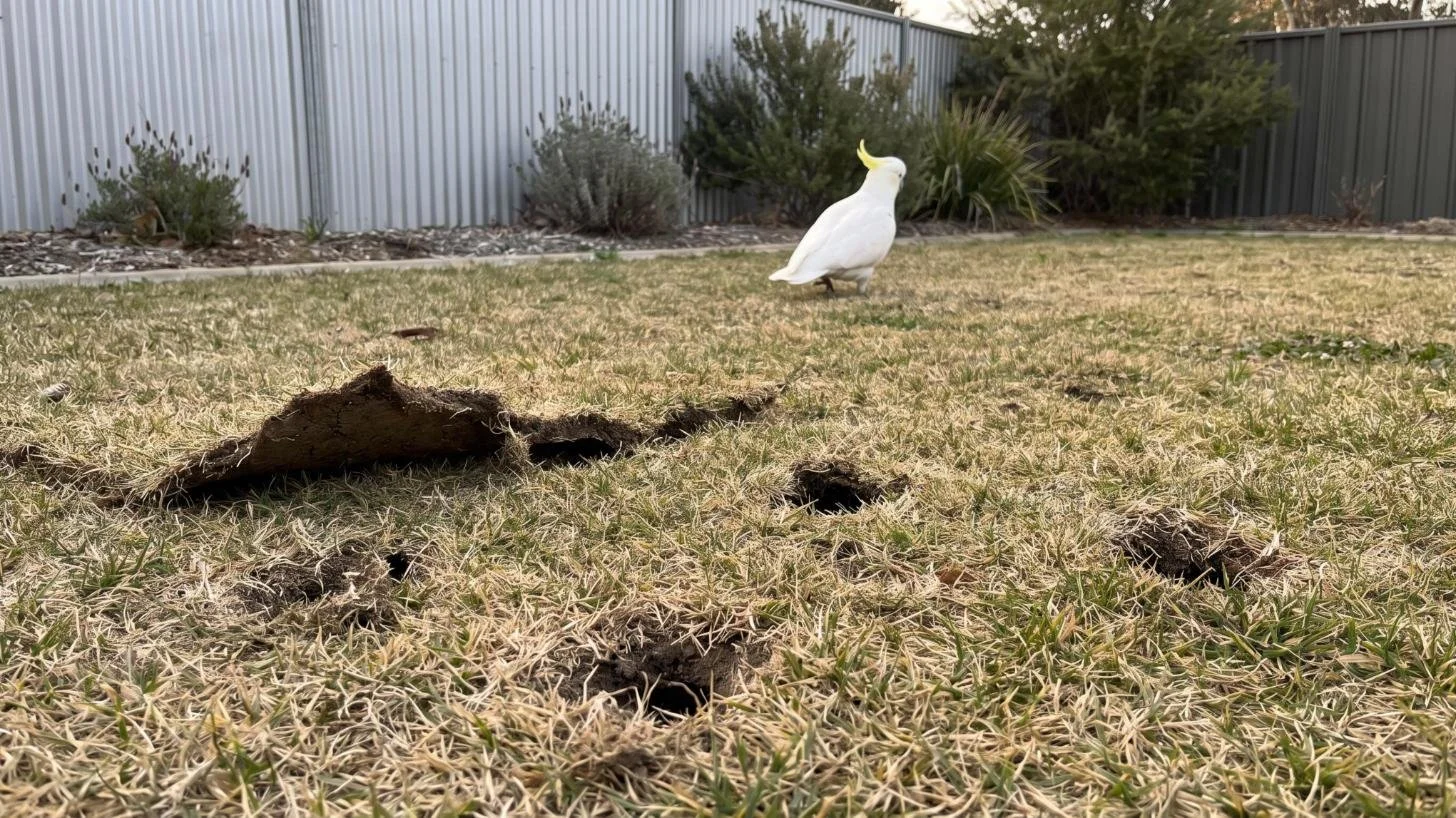
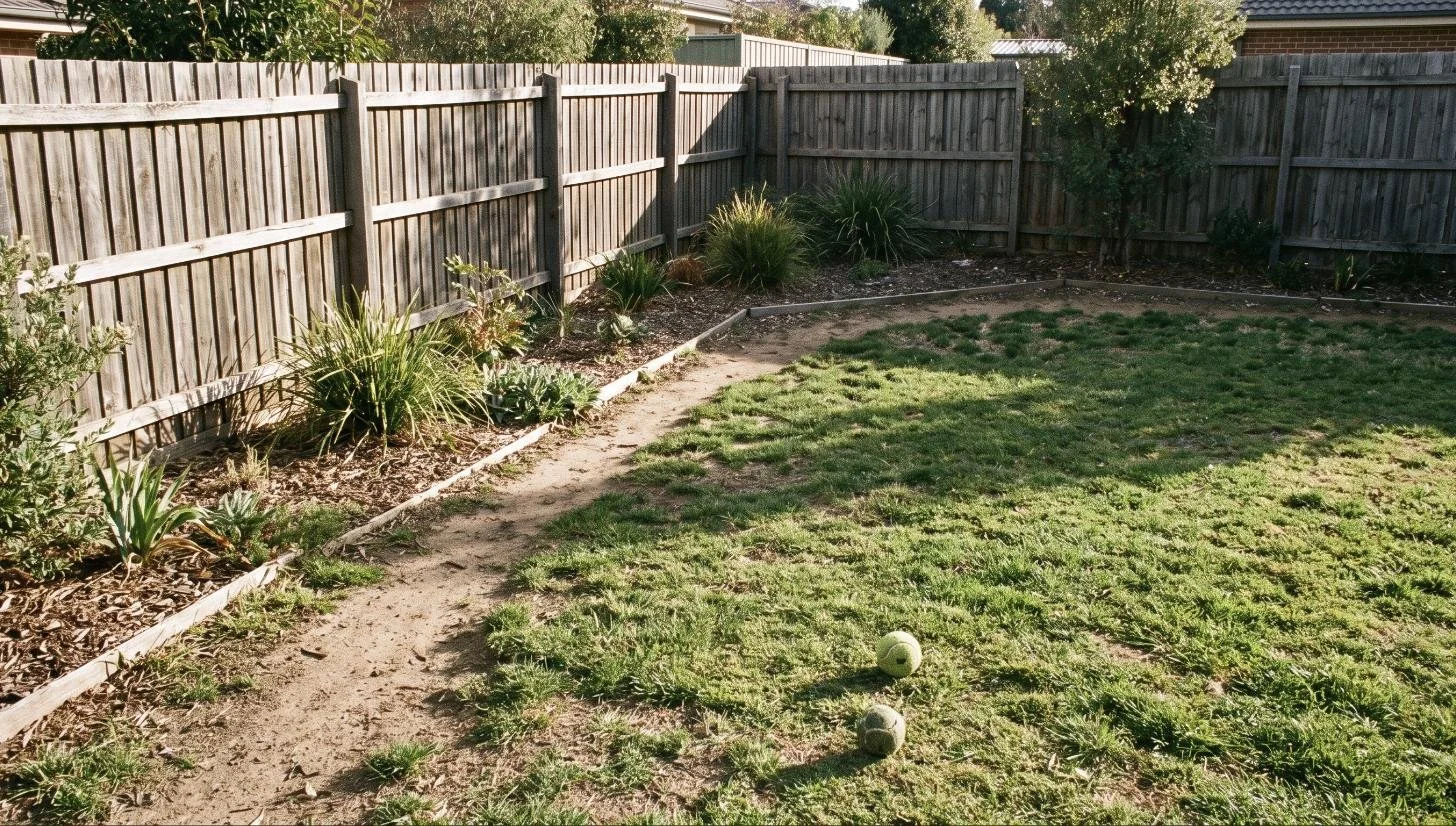
Small holes and lifted turf across a Canberra lawn, a common sign that birds are feeding on something below the surface.
The quick answer:
Birds dig up lawns because they are feeding on something underneath, most often root-feeding grubs such as curl grubs and black beetle larvae, or on bulbs, tubers and roots of weeds such as onion weed and clover. The digging is a symptom. If you remove the food source, the birds usually move on. Netting or scaring the birds rarely works for long, and native birds are protected, so the lasting fix is to find and deal with what they are hunting and then repair the damaged turf.
What are they actually after?
I have seen four main reasons, and each leaves a slightly different mark.
Grubs and larvae
Curl grubs (the larvae of scarab beetles) and African black beetle larvae feed on grass roots just below the surface. Magpies and ravens probe the lawn with their beaks, leaving small neat holes. Cockatoos and currawongs go further and flip up sections of turf to get to the grubs underneath. If the turf has been peeled back and you can see white, C-shaped grubs in the soil, that is your answer. I cover these pests in my guides to grubs, beetles and armyworms and African black beetle.
Bulbs, tubers and roots of weeds
Cockatoos in particular dig for the underground parts of plants. Onion weed bulbs, clover roots and other weed storage organs are all fair game. If the digging is concentrated where you have weeds, the weeds may be the draw. My guides on onion weed and common lawn weeds help you work out what you have.
Earthworms and soil insects
After rain or irrigation, worms come up near the surface and birds follow. This causes little real harm, usually small holes and scattered soil, and often means the soil biology is healthy. It is rarely worth treating.
Sod webworm and armyworm
These caterpillars feed on the grass blades, often at night, and chew the lawn down in patches. Birds feed on the caterpillars and can tear up a patch while doing it. If you see chewed, ragged blades and moths flying up when you walk across the lawn at dusk, read my guide to sod webworm.
How to read the damage
Small, neat holes scattered across the lawn, about the size of a finger: likely magpies or ravens probing for grubs or worms.
Turf peeled back in flaps or strips, soil exposed: likely cockatoos or currawongs after grubs, bulbs or roots.
Damage that follows a patch of weeds: the weeds may be the target.
Damage that is worse in one corner or along one edge: grubs and beetles often concentrate in specific areas, such as warm, well watered or well lit patches.
How to confirm what is underneath
Do not guess. Cut a small square of turf about 20 centimetres across, in an area next to the damage, and peel it back. Look at the top 5 centimetres of soil and the root zone.
Several pale grubs per square, with a brown head and a C shape, suggest curl grubs.
Dark, hard-shelled adult beetles or their larvae at the base of the grass suggest black beetle.
A healthy root system with no pests suggests the birds are after worms or something other than root-feeders.
A few grubs in a square are normal, and a healthy lawn can carry them without harm. Damage becomes serious when the numbers are high enough to strip the roots, and that is when the birds, and the lawn, suffer. My lawn pest control guide explains thresholds and timing in more detail.
What does not work
I get asked about deterrents a lot, so here is what I have seen.
Reflective tape, fake owls and spinning gadgets: birds often get used to them within days.
Netting over a whole lawn: impractical, and birds and other wildlife can get tangled.
Chasing birds off: they come back because the food is still there.
Treating the lawn without confirming a pest first: if the birds are after worms or bulbs, pest treatment achieves nothing.
Native birds are protected, so the sensible path is to fix what is attracting them rather than trying to harm or remove them.
My process for stopping the digging
I identify the target. I check the soil, the roots and the weed load to see what the birds are feeding on.
If grubs or larvae are the cause, I confirm numbers and timing, because treatment is only worth doing when the pest is active and above a damaging level. Chemical choices are made after assessment, not off a shelf.
If weeds are the draw, I plan a weed control programme for the right season, taking care with sensitive grasses such as buffalo.
I repair the damage, which usually means pressing turf back, filling and levelling hollows and overseeding or patching where the grass has died.
I look at the underlying lawn health, because a thick, well fed lawn with deep roots tolerates grubs far better than a thin, stressed one.
Repairing the damage
Turf that has been flipped but not torn can often be pressed back into place, watered in and left to re-root in a couple of weeks. Where roots have been eaten away or the grass is dead, you will need to fill the hollows with a suitable soil mix, level, and then overseed or lay patches of matching turf. Match the grass type, because patching kikuyu into a buffalo lawn creates its own problems. My overseeding guide and lawn levelling guide explain the steps.
Keep the repaired area watered, and avoid heavy traffic while it re-establishes. If the birds come straight back to the same spot, the underlying cause is still there.
Final word
Birds digging up your lawn is annoying, but it is useful information. They are pointing at a pest, a weed or a soil condition that deserves attention. Find what they are after, fix it properly and repair the damage, and in most cases the digging stops on its own. No result is guaranteed, and the right plan depends on what is actually in your soil. Book a Free Assessment
Key points I get asked on a regular basis
Why are cockatoos tearing up my lawn?
Cockatoos usually dig for grubs or for the bulbs and roots of weeds such as onion weed. They also pull at turf out of habit when it is loose or the soil is soft. Checking under a section of turf for grubs and looking at the weed load will usually tell you what is attracting them.
Do I have grubs if birds are digging?
Possibly, but not always. Birds dig for worms and other soil insects too. The only way to be sure is to peel back a patch of turf next to the damage and count what you find. A few grubs are normal, and treatment is only worth considering when numbers are high enough to damage the roots.
Will birds go away if I treat the lawn?
If grubs or larvae were the draw and treatment reduces them, the birds usually lose interest within a few weeks. If they were digging for weeds or worms, treating for grubs will not help, which is why confirming the cause comes first.
Can I stop birds without harming them?
Yes, and that is the right approach. Native birds are protected, and in any case removing the food source works better than trying to move the birds. Fix the pest or weed problem, repair the lawn and keep the grass thick and healthy.
How do I repair a lawn the birds have torn up?
Press back any loose turf and water it in. Fill hollows with a suitable soil mix, level them and overseed or patch with matching turf. Keep the area moist, and do not walk on it while it re-roots.
How do I book a lawn pest assessment in Canberra?
Use the booking link and I will check the soil and roots, identify what the birds are after and give you a plain recommendation. Book a Free Assessment

Looking for the perfect gift for the lawn enthusiast in your life? The Lawn Firm Gift Cards are the ideal solution. Redeemable for any of our professional lawn care services, these gift cards make it easy to give the gift of a greener, healthier lawn. From fertilisation to weed control and pest management, there’s something for every lawn need.
Why Choose a Lawn Firm Gift Card?
Versatility: Can be used for any service offered by The Lawn Firm.
Thoughtful Giving: A practical gift for anyone who values a beautiful outdoor space.
Simple to Use: Purchase online and enjoy easy redemption.
Order your gift card today and let your loved ones experience the professional touch of The Lawn Firm. It’s the perfect way to show you care while helping someone achieve the lawn of their dreams.
This gift card never expires.