
G'day, Nikolai here from The Lawn Firm. If you have just been handed a photography date or a vacate notice, the question you are really asking is not "how do I get a perfect lawn", it is "how good can this lawn look by a date I cannot move". That deserves a straight answer, because the worst thing you can do here is guess, throw three products at the lawn in a fortnight, and end up with something that looks worse on the day than when you started.
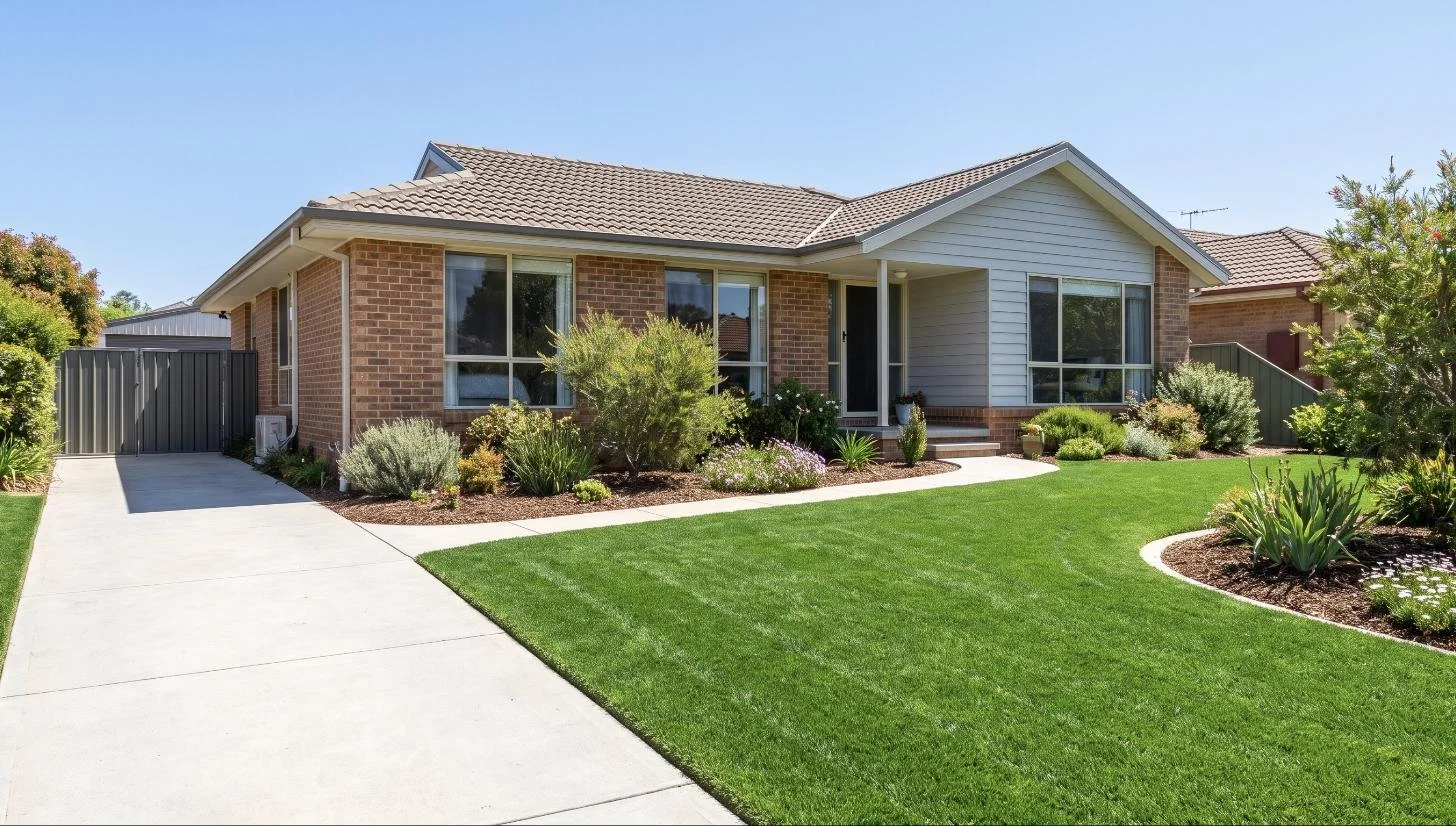
A crisply edged Canberra front lawn on listing day, where tidiness matters more than perfection.
The quick answer:
With about two weeks you can improve colour and tidiness but not density, so feed for colour, water properly, edge crisply and remove weeds by hand. With about six weeks you can genuinely thicken a lawn, let weed control work, let the dead weeds disappear, and let small repairs knit in. Three months or more is the only window where real renovation, overseeding and levelling will look finished by inspection day. Bare patches in cold weather, dormant warm-season grass in winter and severe compaction cannot be rushed, no matter what you spend.
Work out your real deadline first
Most people get this wrong, and it costs them the one thing they cannot buy back.
If you are selling, your real deadline is photography day, not the auction or the final open home. The photos get taken once and carry the whole campaign even if the lawn improves later, so count backwards from the photographer.
If you are leaving a rental, your deadline is the final inspection, and the standard you are measured against is the condition report from when you moved in. That is a comparison, not a beauty contest.
If you are listing a tenanted property you have both deadlines stacked on each other, so talk to your property manager early about access. A programme needing three visits over six weeks is useless if nobody can get on site.
Once you know the date, pick the honest window below and work inside it. Do not try to run the six week plan in two weeks, because it does not compress.
The realistic timeline
Time availableWhat you can genuinely achieveWhat to leave aloneAbout 2 weeksColour from a feed, correct watering, crisp edges, hand weeding, debris clearedSeeding, coring, top dressing, levelling, weed sprayingAbout 6 weeksReal density improvement, weed control with time for dead weeds to break down, minor repairs, coring and light top dressingFull renovation, major levelling, soil correction3 months or moreRenovation, overseeding, levelling, soil correction, a programme that compoundsNot much, this is where you have options
About two weeks out: colour and tidiness only
In a fortnight, the lawn you have is the lawn you are presenting. What you can change is how cared for it reads.
Feed for a colour response rather than a growth surge, so the grass greens up without going soft and floppy before the photos.
Water deeply and less often. Light daily sprinkles give you shallow roots and uneven colour.
Get the edges cut hard and clean along paths, driveways and beds. Crisp edges are the biggest visual lift available in two weeks.
Pull obvious broadleaf weeds out by hand rather than spraying.
Clear everything that is not lawn, so leaves, sticks, pet mess, hoses and the rogue trampoline.
Arrange for the lawn to be mown and edged a day or two before photography rather than the morning of, so you avoid fresh clipping lines in the images. We do not mow, so that one is for your mowing contractor.
If you want to know what a sensible feed looks like in our climate instead of guessing at a bag from the hardware store, that is set out in my guide to lawn fertilisation in Canberra.
About six weeks out: where things get interesting
Six weeks is the first window where I can honestly expect a change in the lawn itself rather than its presentation.
Selective weed control has time to work and, just as importantly, the dead weeds have time to break down and the grass to grow over the gaps. Knowing what you have matters here, which is why I wrote up the common lawn weeds in Canberra.
Minor patch repairs can knit in, so small thin areas, a dog toilet corner, a worn track to the clothesline.
Coring and a light top dressing can settle, so the surface reads even rather than freshly disturbed. Give it the full six weeks, because a cored lawn in week one looks like birds have been at it. See my guide to aeration and coring.
Two or three feeds spaced properly do far more for density than one heavy application.
Sequence matters as much as the work, so weeds first, then feed, then mechanical work, then recovery time.
Three months or more: real renovation
With a quarter of a year you are no longer managing appearances, you are fixing the lawn. Overseeding has time to establish and blend, and the calendar drives that more than anything else, which is covered in seeding and overseeding in Canberra. Levelling becomes realistic, with time for grass to grow back through the sand. Compaction, thatch and soil problems can be analysed and corrected rather than worked around, which is the point of my renovation guide.
What cannot be rushed, no matter the budget
This is the part people do not want to hear, so I will be plain.
Bare patch establishment in cold weather. Seed needs soil warmth. Sown into cold Canberra ground it either sits there or germinates so slowly that your patch is still a patch on inspection day. Turf can be laid in cooler months but will not knit quickly, and a fresh join reads as a repair in photographs.
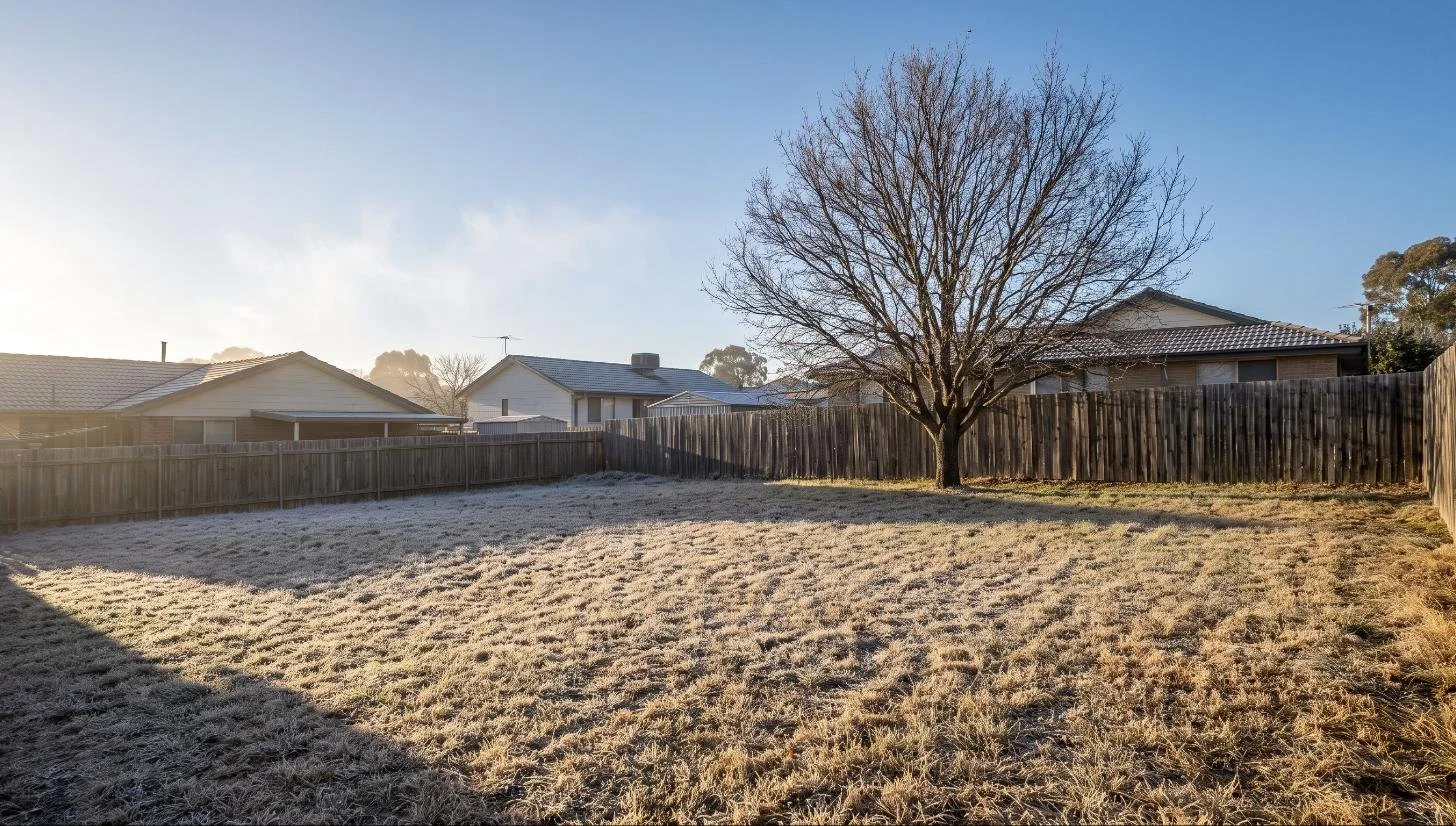
Dormant warm-season grass in winter. Couch and kikuyu go straw coloured when the soil cools and will not green up on demand. It is biology, not neglect.
Severe compaction. A lawn that has had a caravan or trailer parked on it needs mechanical work and months of recovery. Coring in the last fortnight makes it look worse.
Dead weeds. This is the mistake I see most often. Someone sprays three days before an open home, and on the day the lawn is covered in brown, curling weed carcasses that draw the eye far more than green weeds ever did.
Thatch removal. Dethatching exposes soil and takes weeks to recover. Three month job, not a two week one.
If your deadline sits inside those constraints, the honest strategy shifts from improving the lawn to presenting it well. Agents here are used to that.
Selling: photography day is the real deadline
For a sale the lawn has one job, which is to make the property read as cared for. A uniformly coloured, crisply edged, debris free lawn presents as well maintained even if it is not especially dense. Things that matter more than people expect:
Edges. A fuzzy edge where lawn meets concrete makes the whole yard look unmaintained. A sharp one makes a thin lawn look deliberate.
Light. Morning or late afternoon light is kinder to patchy grass than harsh midday sun.
Pet damage. Urine spots will not recover in two weeks. Clean up, water heavily and accept it.
End of lease: a comparison, not a competition
I should say plainly that I am a lawn professional, not a tenancy adviser. Check your own lease and entry condition report, and talk to your property manager if you are unsure what is expected. What I can tell you is what agents look at when they walk a yard.
The condition report comparison. They are checking whether the lawn is in similar condition to when you took the keys, allowing for ordinary wear. A lawn that was thin on arrival is not expected to be lush on departure.
Tidiness. Mown, edged, leaves cleared, beds not swallowed by grass, no dead circle from a paddling pool left out over summer.
Neglect versus season. A dormant couch lawn in July is seasonal. A metre of seeded winter grass through the beds is neglect, and people here know the difference. So does damage you caused, such as dead rings from a car parked on the lawn. Reasonable wear is generally understood as the effect of ordinary living rather than damage or neglect, but the specifics are between you, your lease and your property manager. If you want the lawn brought back to a defensible condition, start early rather than in the final week.
The Canberra seasonality problem
Here is what nobody selling in winter wants to be told. If you have a warm-season lawn, which locally usually means couch or kikuyu, and you are listing between about May and early October, that lawn will be dormant and straw coloured. It cannot be made green, and feeding it will not help because you are pushing a plant that is not actively growing.
This is normal and understood locally. Buyers at a July open home are not expecting emerald turf and agents do not treat a dormant lawn as a defect. What they notice is an untidy dormant lawn, so the work shifts to edges, levelness, debris, and winter weeds standing bright green against the dormant grass, which is exactly when they are most worth removing if you have the weeks for it.
Cool-season lawns behave the other way around, so a February sale with fescue is a watering exercise rather than a renovation one. If you want the lawn to peak at a particular time of year, that is where a proper maintenance programme earns its keep, because it is the only way to aim a lawn at a date months out.
Final word
The most useful thing I can give you is an honest read on what your deadline allows, because that is the difference between money well spent and money wasted on a product that was never going to work in time. Two weeks buys you colour and tidiness. Six weeks buys you a better lawn. Three months buys you a fixed one. Anything outside those boundaries is guessing, and guessing in a short window usually makes the lawn look worse on the only day that counts.
If you are not sure which window you are in, get me out to look at it. If you are better off presenting the lawn as it is and saving your money, I will tell you that too.
Key points I get asked on a regular basis
Can you make my lawn green in two weeks?
Greener, usually. Green, it depends on what you are starting with and the time of year. An actively growing lawn that is simply hungry can lift noticeably within one to two weeks of a feed. A dormant warm-season lawn in a Canberra winter will not, and a lawn that is thin from compaction or shade will get better colour with the same thin coverage. Colour and density are different problems on different timeframes.
Should I spray weeds before an open home?
Only if you have at least four weeks, and ideally six. Herbicides take time to work and the dead material takes longer again to break down and be grown over. Spraying a few days before an inspection leaves a lawn full of brown, twisted dead plants, far more noticeable than the green weeds were. Inside a fortnight, pull the obvious ones by hand.
Will laying new turf fix a bad lawn before sale?
Sometimes, but rarely as the quick fix people hope for. Fresh turf has to knit into the soil below it, and in cool months that takes a long time. Visible joins and a colour difference against the existing lawn show up clearly in photographs, and patching one section can draw more attention than the original problem did.
How short should the lawn be for photos?
Not as short as most people think. A slightly longer cut hides unevenness, holds colour better and does not risk scalping high spots. Have it mown and edged a day or two before the photographer arrives so the clipping lines have settled, and make sure the edges are done properly.
What do agents actually notice in a yard?
Edges, debris and anything that looks like damage rather than season. In my experience a thin but tidy lawn with sharp edges reads better than a denser lawn with fuzzy edges and grass creeping over the paths. Dead rings from a parked car, trenches, and weeds standing taller than the grass get written down. Dormant winter colour generally does not.
How do I book a lawn assessment before a sale or inspection in Canberra?
Get in touch as early as you can, because the advice I give depends almost entirely on how many weeks you have. I will come out, work out what grass you have and what is holding it back, then give you a realistic plan for your deadline rather than a wish list. If the timeframe does not allow meaningful improvement I will say so plainly. You can book here: Book a Free Assessment
Looking for the perfect gift for the lawn enthusiast in your life? The Lawn Firm Gift Cards are the ideal solution. Redeemable for any of our professional lawn care services, these gift cards make it easy to give the gift of a greener, healthier lawn. From fertilisation to weed control and pest management, there’s something for every lawn need.
Why Choose a Lawn Firm Gift Card?
Versatility: Can be used for any service offered by The Lawn Firm.
Thoughtful Giving: A practical gift for anyone who values a beautiful outdoor space.
Simple to Use: Purchase online and enjoy easy redemption.
Order your gift card today and let your loved ones experience the professional touch of The Lawn Firm. It’s the perfect way to show you care while helping someone achieve the lawn of their dreams.
This gift card never expires.