
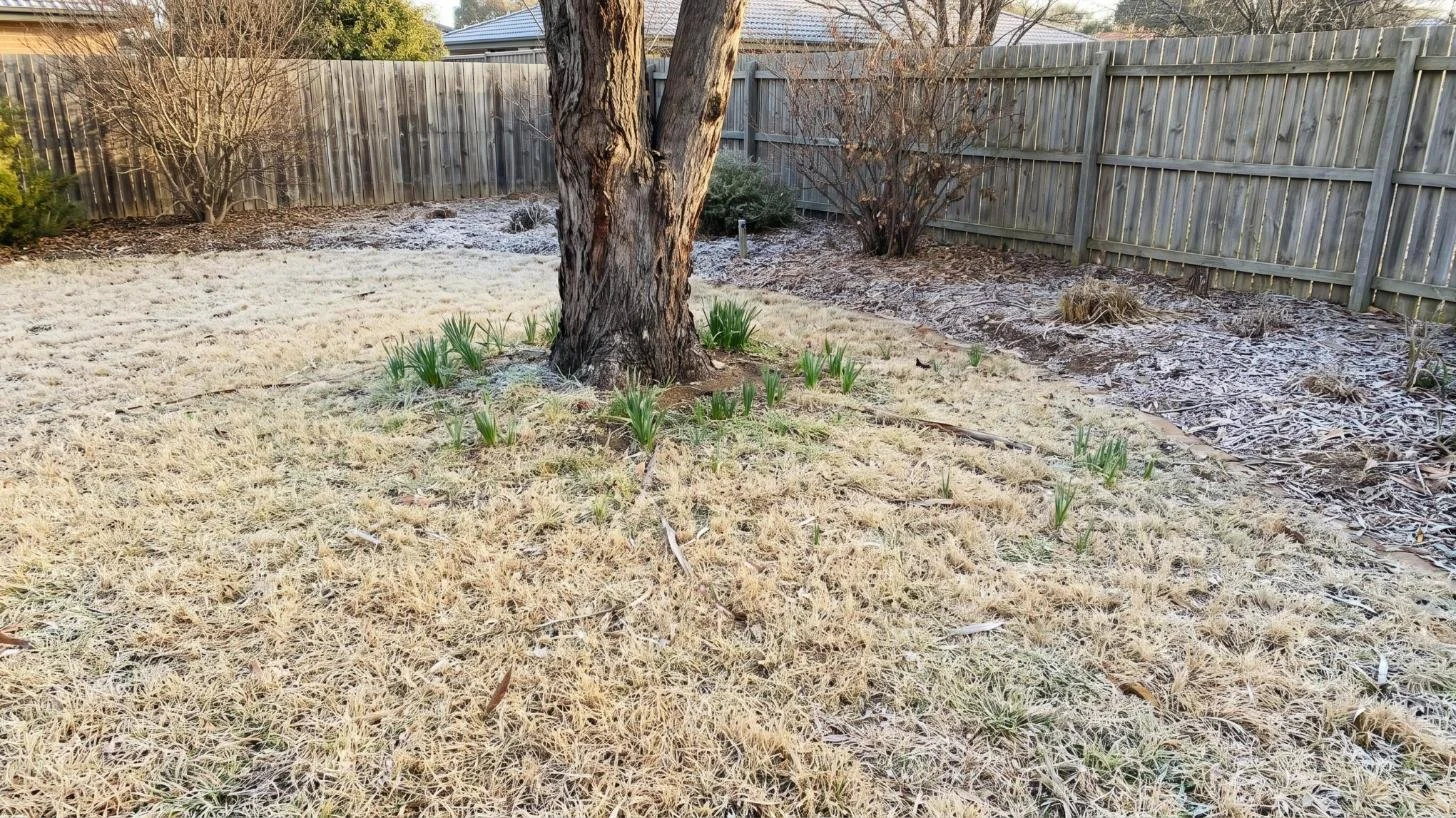
G'day, Nikolai here from The Lawn Firm. One of the most common sights I see on Canberra properties is a big, beautiful established tree surrounded by a thin, patchy circle of struggling grass. Owners often assume they have done something wrong. Usually they have not. A tree and a lawn are competing for the same water, nutrients and light, and the tree almost always wins.
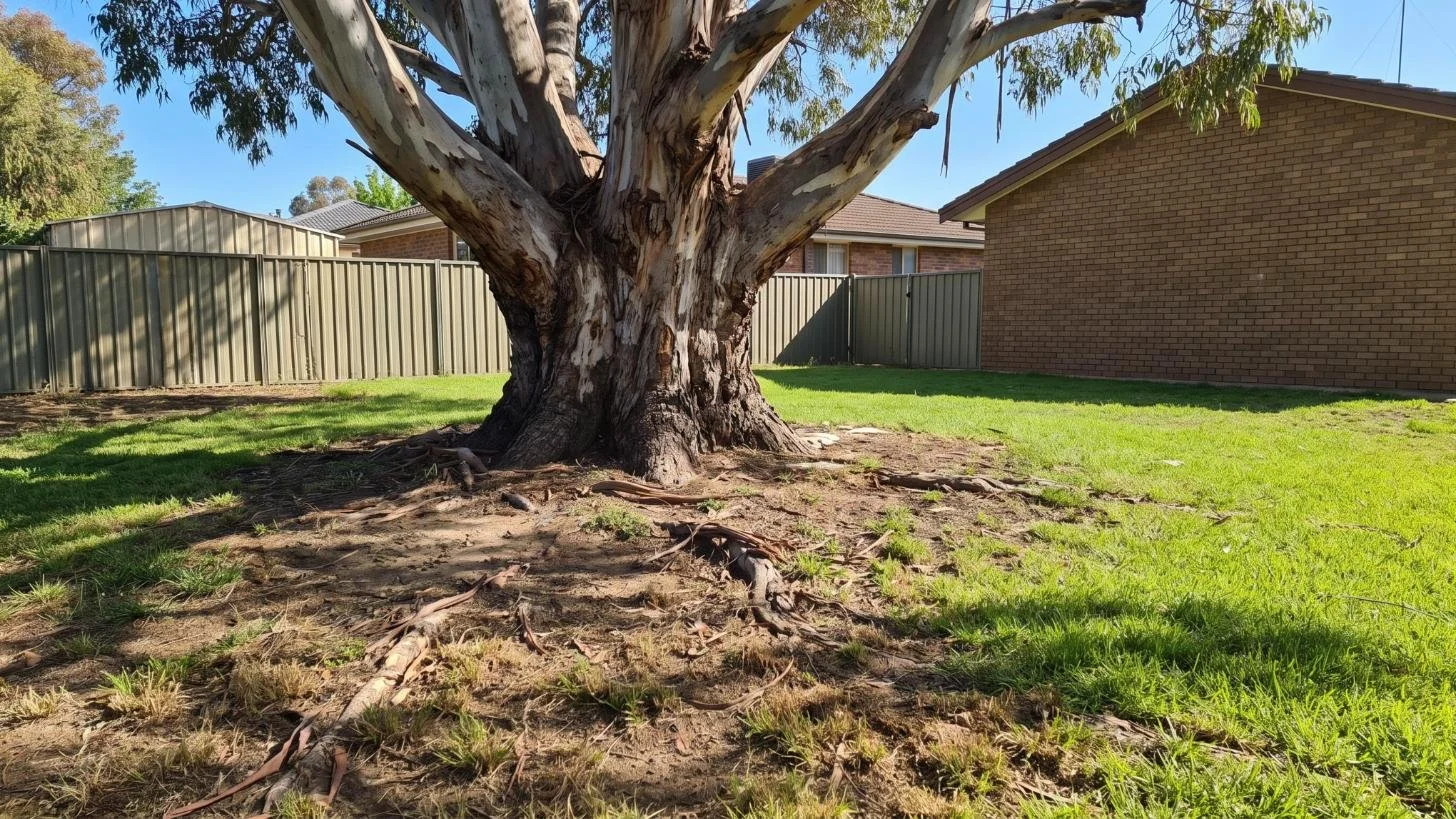
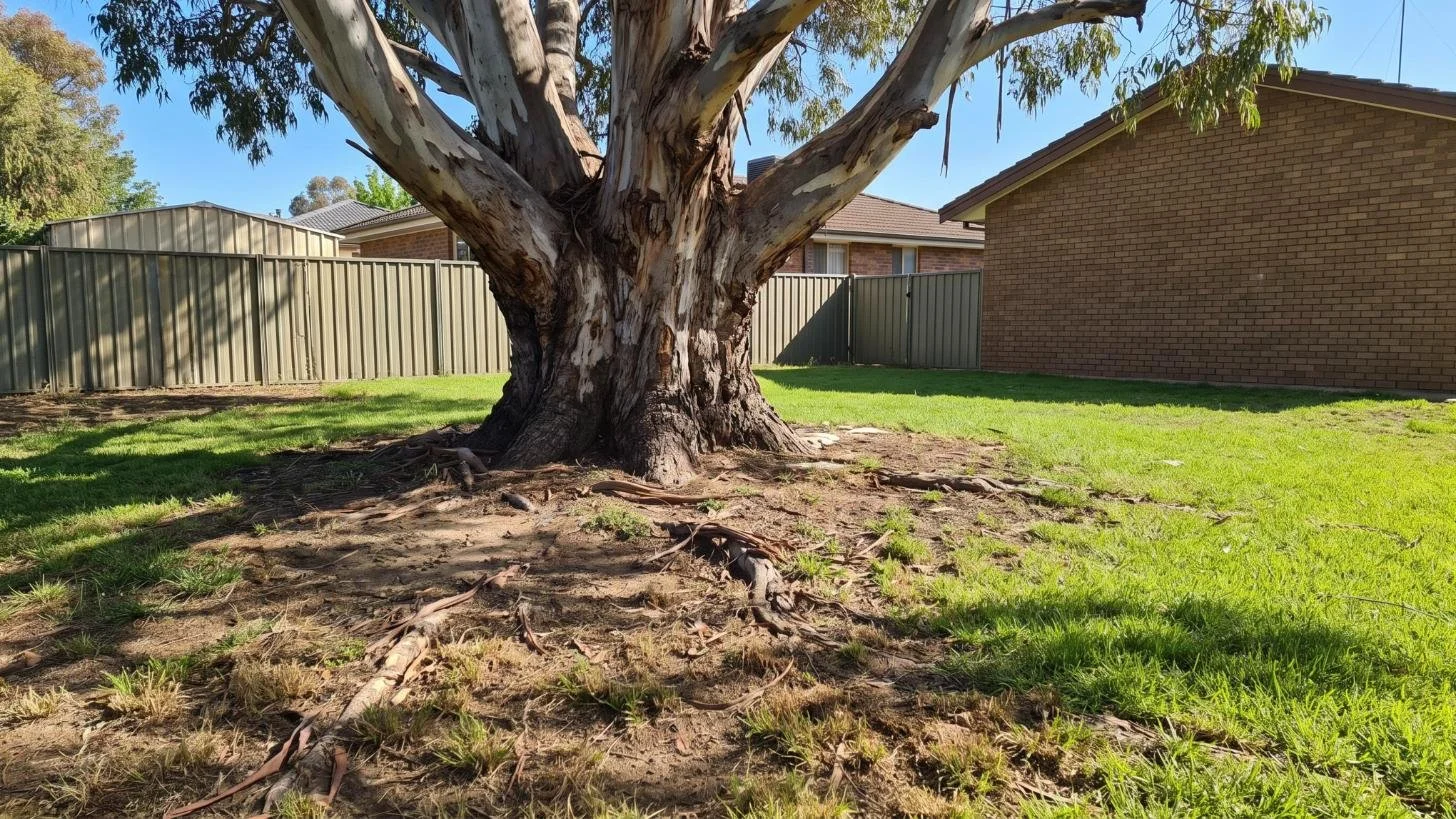
A Canberra backyard lawn thinning out around the base of a large established tree, with surface roots showing through the grass.
The quick answer: why does grass struggle around trees?
Grass struggles around trees because the tree roots take most of the water and nutrients from the top layer of soil, the canopy blocks sunlight, and the soil in that zone is often dry, compacted and shaded. You can improve things by watering deeply, feeding the lawn sensibly, choosing a shade tolerant grass, keeping foot traffic off and never burying the trunk or major roots under soil. In some cases the better answer is mulch or a garden bed instead of grass. A free assessment is the quickest way to work out which approach suits your yard.
What is going on under the surface
Most tree roots that matter to a lawn sit in the top 30 to 60 centimetres of soil, exactly where grass roots live. Mature trees are very efficient at pulling moisture and nutrients from this layer, particularly in a dry climate like ours. Add shade from the canopy, leaf litter, and in some cases natural chemicals from certain species that discourage other plants, and you have a hard environment for turf.
Surface roots add a second problem. Once roots rise near the surface, they make the ground lumpy and uneven, and mowing or walking over them damages both the grass and the root.
Check the light first
Before you blame the roots, check how much sun the area gets. Most lawn grasses need several hours of direct sun a day. Warm season grasses such as kikuyu, couch and buffalo need more sun than many people expect, while some buffalo and zoysia varieties tolerate partial shade better. My guide to lawn care for shady Canberra yards covers this in detail, and my grass type identification guide will help you work out what you are growing.
Watering lawns near trees
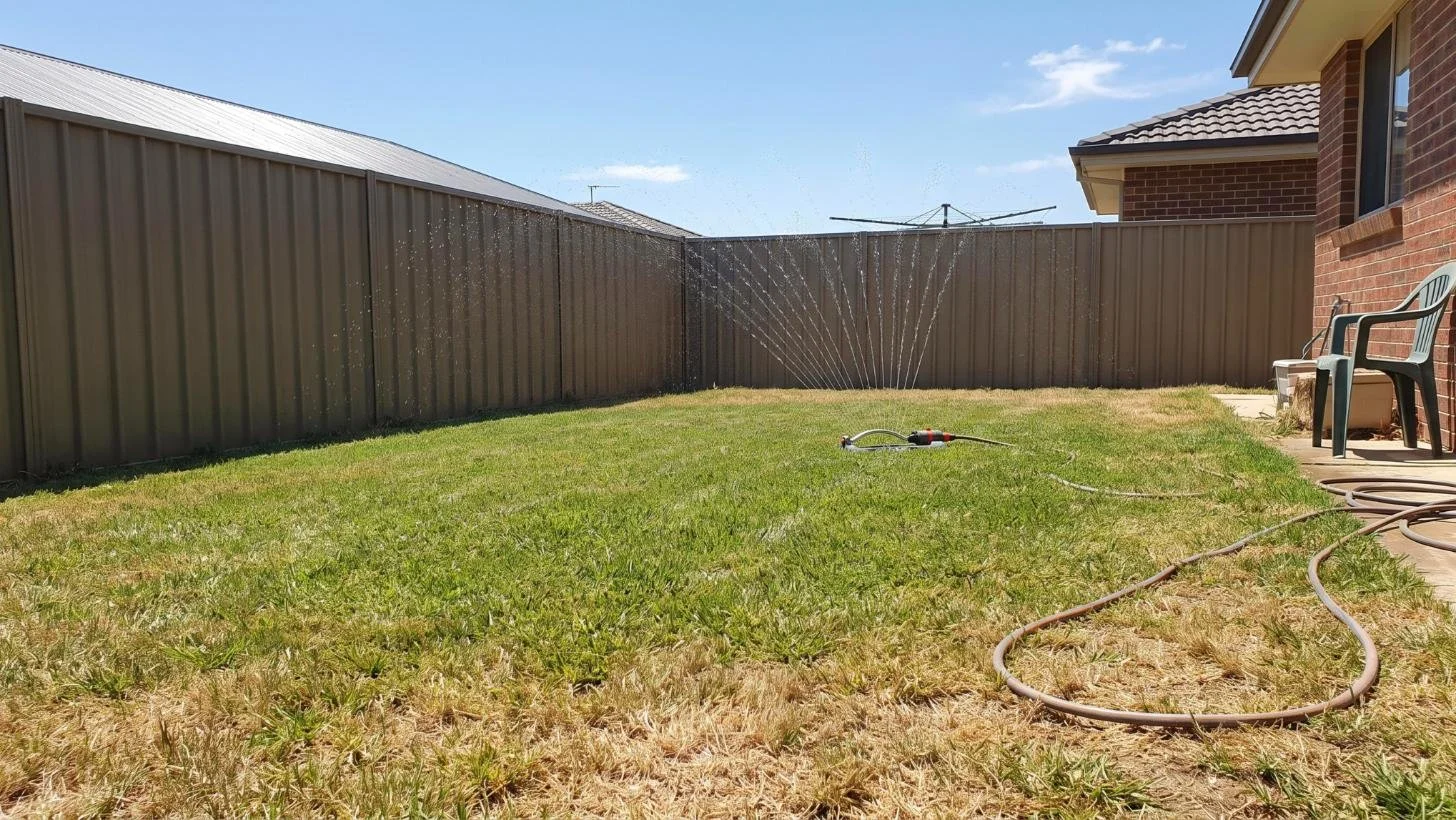
Trees and lawn want water in different ways. A tree benefits from deep, infrequent watering, while many lawns do better with regular, moderate watering. In the zone around a tree you need to cover both.
Water deeply rather than in short bursts, so water gets below the grass roots.
Water early in the morning, within local water rules.
Check that water is actually soaking in. If it runs off, the soil may be compacted or water repellent. My guides on hydrophobic soil and wetting agents explain the signs.
Keep sprinklers off the trunk itself, as constantly wet bark can invite problems.
My article on lawn watering under Canberra's water restrictions is a handy reference for schedules.
Feeding without feeding the wrong thing
Fertiliser applied to the lawn also reaches the tree roots, and that is fine in moderation. The mistake is over-feeding in an attempt to force the grass to grow in a hard spot. Too much nitrogen on stressed turf can burn it, as I explain in my guide to fertiliser burn. A soil test tells you what is actually missing, and my complete guide to lawn fertilisation covers timing and approach.
Do not bury the roots
A common instinct is to top up low spots under a tree with soil to help grass establish. A thick layer of soil over tree roots can suffocate them and damage the tree over time. If you want to level the area, keep any addition very thin and spread it lightly through the grass, as I describe in my guide to top dressing. For larger root humps, the honest answer is often to leave them or to change the design of the area.
Aeration and compaction
Soil under trees is often compacted by foot traffic and leaf litter, which makes it harder for water and air to reach any roots. Aeration and coring can help, but take care not to cut major tree roots. Shallow coring is generally safer than deep spiking near a trunk. If you are unsure, ask before you aerate.
Overseeding and shade tolerance
If your lawn is thin but still alive, overseeding with a variety suited to partial shade can help, provided the grass type is compatible with what is already there. Seed needs consistent moisture to germinate, and that is hard to achieve in root-dense soil, so expect to be patient and to repeat the job. Results vary by tree, soil and light.
When grass is not the right answer
Sometimes the best fix is to stop fighting. Mulch under a tree, a garden bed around the trunk or a simple ring of groundcover can look better, protect the tree and cut your maintenance. A defined mulch ring also keeps equipment away from the trunk. If you decide on this route, make sure the mulch is not piled against the bark.
Pruning, roots and professional advice
Cutting tree roots can harm or destabilise the tree, so I do not recommend removing large roots yourself. If surface roots are a safety hazard or you are worried about the tree, speak to a qualified arborist. For the lawn itself, I can help you work out a realistic plan.
Which trees cause the most trouble
Some trees are far harder on a lawn than others. Large eucalypts are the classic Canberra example. They have wide, shallow, hungry root systems and drop a steady stream of leaves, bark and twigs. Many exotic street and garden trees, such as elms, ashes, poplars and some maples, also send roots well beyond the edge of the canopy. Deciduous trees at least let winter sun through once their leaves drop, which can help cool season grass in particular, but their autumn leaf fall can smother the lawn if it is left lying for weeks.
As a rough guide, the root zone of a mature tree can extend well past the drip line, so a lawn struggling several metres away from the trunk may still be competing with that tree. If you are planting a new tree, think about where its roots and shade will be in ten or twenty years, not just this season.
Leaf litter, bark and seasonal clean-ups
Leaves sitting on a lawn block light and hold moisture against the grass, which can lead to yellowing and disease. A regular light rake or blow-off, especially through autumn, makes a real difference to grass under deciduous trees. Under eucalypts, keep on top of bark and twig drop so the grass is not shaded by debris. If you see spots, rings or slimy patches in shaded, damp areas, my lawn fungus and disease guide is a good place to start, and I am happy to diagnose it properly before anything is applied.
Weeds and moss in the shade
Thin grass under trees leaves gaps, and gaps fill with whatever grows best in those conditions. In shaded, damp patches that is often moss, while in drier root zones you may see creeping oxalis, winter grass or other opportunists. Treating the weed alone rarely solves the problem, because the conditions that favour it remain. Look at shade, drainage and grass density first. My guides to moss in Canberra lawns and common lawn weeds cover identification. If you have buffalo grass, please check that any herbicide is labelled safe for buffalo before using it, as some products can damage it.
A realistic plan for your yard
Check sunlight and identify your grass type.
Test the soil and look at drainage and compaction.
Improve watering depth and sprinkler coverage.
Feed according to need, not guesswork.
Reduce traffic and avoid burying roots.
Decide whether grass, mulch or a bed suits that spot.
Following a regular lawn maintenance programme is the best way to keep the rest of your lawn strong while you work on the tricky patch around the tree.
Key points I get asked on a regular basis
Why won't grass grow under my tree?
Usually a mix of shade, dry soil and root competition. The tree takes most of the water and nutrients near the surface, so the grass gets what is left. Improving watering depth and choosing a shade tolerant grass can help, but results vary.
Can I put soil over tree roots to grow grass?
I would avoid thick layers. Burying roots can suffocate them and harm the tree. If you need to fill low spots, keep any soil very thin and work it through the grass.
Should I cut the tree roots coming up through my lawn?
I do not recommend cutting major roots yourself, as it can damage or destabilise the tree. For safety concerns, speak to a qualified arborist.
What grass grows best in shade in Canberra?
It depends on how much shade you get. Some buffalo and zoysia varieties and some cool season types tolerate partial shade better than others, but no lawn grass thrives in deep shade. An assessment will confirm what suits your yard.
Is fertiliser or aeration worth it under trees?
Both can help when used carefully. A soil test shows what is needed, and shallow aeration is safer than deep spiking near roots. Avoid heavy feeding, which can burn stressed grass.
How do I book a lawn assessment for tree-affected areas in Canberra?
Easy. Book a Free Assessment and I will look at your light, soil, watering and grass type and give you a clear plan for the patchy areas.
Looking for the perfect gift for the lawn enthusiast in your life? The Lawn Firm Gift Cards are the ideal solution. Redeemable for any of our professional lawn care services, these gift cards make it easy to give the gift of a greener, healthier lawn. From fertilisation to weed control and pest management, there’s something for every lawn need.
Why Choose a Lawn Firm Gift Card?
Versatility: Can be used for any service offered by The Lawn Firm.
Thoughtful Giving: A practical gift for anyone who values a beautiful outdoor space.
Simple to Use: Purchase online and enjoy easy redemption.
Order your gift card today and let your loved ones experience the professional touch of The Lawn Firm. It’s the perfect way to show you care while helping someone achieve the lawn of their dreams.
This gift card never expires.