
Soil Testing for Canberra Lawns: Why It Matters (And What to Do With the Results)
G’day, Nikolai here from The Lawn Firm. If a lawn keeps struggling no matter what you do, I always want to know what is happening underneath it.
A lot of homeowners focus on what they can see: yellowing grass, thin patches, weeds, poor recovery, dry areas or sections that never seem to thicken. Those symptoms matter, but they are often only the surface-level signs of a deeper soil issue.
That is why soil testing is so important.
A soil test helps show what the lawn is actually working with. It can reveal pH problems, nutrient deficiencies, soil imbalance and other issues that can stop fertilisation, aeration and overseeding from delivering the results you expect.
In Canberra, this matters even more because our local soil conditions are not always easy. ACT Government guidance notes that heavy clay soils have been part of Canberra from the beginning, and that they can be hard to wet in winter, dry in summer, and difficult for many plants to grow in.
So if your lawn is not responding to treatment, soil imbalance is often the reason. Click here to Book a Free Assessment, and I’ll help you work out what your lawn is really missing.
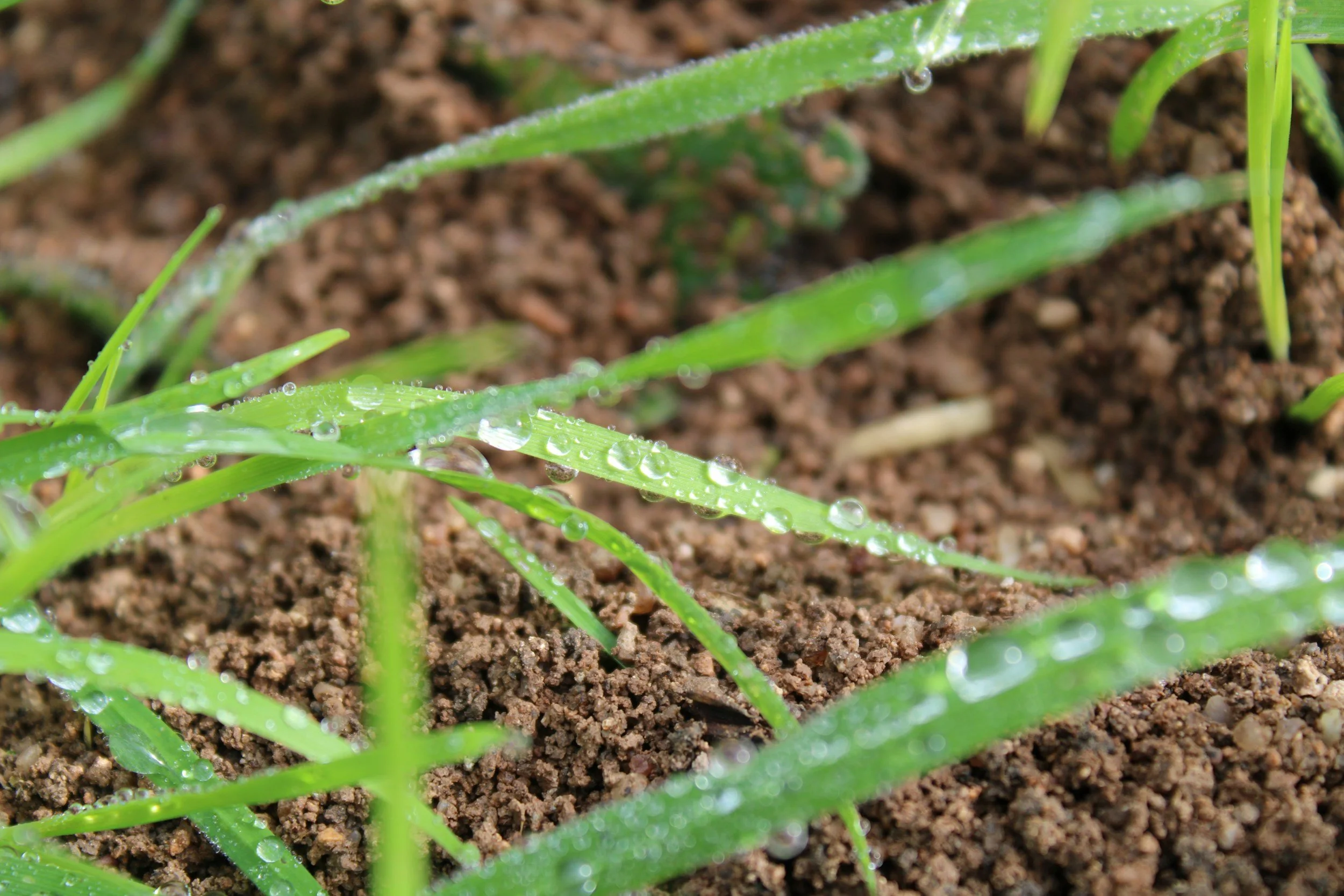
Why Canberra’s soil is different from the rest of Australia
Canberra lawns need a local approach. What works in coastal sandy soil or softer loam does not always translate here.
Across Canberra, I regularly see lawns dealing with heavy clay, compaction, poor drainage, dry patch, uneven moisture and nutrient lock-up. These issues can show up in Belconnen, Tuggeranong, Gungahlin, Woden, Weston Creek and older inner suburbs. The exact condition changes from property to property, but the pattern is familiar: the grass struggles because the soil underneath is not giving the roots what they need.
The clay soil problem
Clay soil is not all bad. In fact, clay can hold minerals and moisture well. The problem is structure.
When clay becomes compacted, it can stop air, water and nutrients from moving properly through the root zone. ACT water-sensitive urban design guidance also notes that Canberra soils are generally clay-based, do not absorb water quickly, and can have fine particles that erode easily.
For lawns, that can mean:
water sitting on the surface
roots staying shallow
fertiliser not moving evenly into the soil
patchy growth
poor recovery after heat or frost
weak areas becoming weed-prone
Gypsum can help with some clay-structure issues, but it should not be thrown around blindly. Canberra clay guidance notes gypsum can be added with organic materials to help improve clay soil structure, but the rate and timing matter.
That is where testing and proper assessment come in. I want to know whether the lawn needs gypsum, organic matter, aeration, wetting agents, pH correction, fertilisation, or a combination of these.
Canberra’s pH challenges
Soil pH is one of the biggest hidden variables in lawn care.
The pH scale tells us how acidic or alkaline the soil is. A pH of 7 is neutral. Below 7 is acidic, and above 7 is alkaline. For turf, Lawn Solutions Australia gives a general ideal pH range of about 6 to 7.5, because outside that range it can become difficult, or almost impossible, for grass to absorb nutrients properly.
That is why I do not want to guess.
If the pH drops too low, some nutrients may be sitting in the soil but still be hard for the grass to use. University of Maryland Extension explains that phosphorus can become less available when soil pH is low, below 6.0, or high, above 7.3.
That is the part many homeowners miss. You can keep adding fertiliser, but if the pH is wrong, the lawn may still underperform.
Seasonal extremes
Canberra’s seasons add another layer.
Hot, dry summers, frosty winters and shifting moisture levels all affect how soil behaves. Clay can bake hard in summer and hold too much moisture in cooler periods. Warm-season grasses slow down through winter, and weak areas often become more obvious when the lawn is not actively growing.
This is why I look at soil testing as a multiplier. It makes the rest of the lawn care plan smarter. It helps fertilisation, aeration, weed control and repair work line up with the real cause of the problem.
What does a soil test actually measure?
A good soil test is not just about one number. It gives a clearer picture of what is happening below the grass.
pH level
pH is the master variable.
If the pH is too low or too high, nutrient availability changes. That means the lawn may not respond properly even if you are applying fertiliser at the right time.
For many Canberra lawns, I want to see whether the soil is sitting in a range that suits the grass type. Buffalo and kikuyu generally perform best around a slightly acidic to neutral range. Couch can usually tolerate a slightly wider range, but it still needs the soil to be balanced enough for nutrients to stay available.
The key point is simple: pH tells us whether the lawn can actually use what is already in the soil.
Macronutrients: nitrogen, phosphorus and potassium
The big three nutrients are nitrogen, phosphorus and potassium, often called NPK.
Nitrogen supports green leaf growth. Phosphorus supports root development. Potassium helps with strength, stress tolerance and overall plant health.
A soil test helps show whether the lawn is short, balanced or overloaded in any of these areas. That matters because the wrong fertiliser can make the problem worse.
If your lawn already has plenty of one nutrient but is missing another, applying a generic fertiliser may not be the smartest move. That is why I prefer to match the fertiliser to the soil, not just the season.
Secondary nutrients and soil structure
A better soil analysis can also give clues about calcium, magnesium and the overall condition of the soil.
Calcium and magnesium matter because they influence plant health and soil structure. In clay-heavy lawns, this can be especially important because the lawn may need more than a standard fertiliser application. It may need a plan that supports soil structure, water movement and root access.
That is why I do not see soil testing as separate from lawn care. It is the starting point for better lawn care.
The real cost of skipping soil testing
Skipping soil testing often costs more than people realise.
Wasted fertiliser and money
The most obvious cost is wasted fertiliser.
If the soil pH is wrong, the lawn may not use nutrients properly. If the nutrient balance is already off, the wrong fertiliser can push the lawn further out of balance. And if the real issue is compaction or dry patch, fertiliser alone will not fix it.
In my fertilisation guide, I talk about choosing the right fertiliser for the right lawn at the right time. Soil testing makes that much easier because it removes a lot of the guesswork.
Persistent lawn problems
If the same problems keep coming back, I always look below the surface.
Yellowing, patchiness, thin growth and weeds can all be connected to soil health. Sometimes the lawn is not failing because you have ignored it. It is failing because the soil is not supporting strong root growth.
That is why a lawn can look good for a short time after treatment, then slip backwards again.
Underperforming aeration
Aeration is one of the best tools for Canberra lawns, especially where clay and compaction are involved. But aeration is still a physical fix. It opens the soil, improves air and water movement, and helps the root zone breathe.
If the soil chemistry is still out of balance, aeration may not deliver its full result.
That is why I like to link soil testing, lawn aeration and lawn fertilisation together. Aeration helps the soil open up. Fertilisation feeds the lawn. Soil testing tells us what the soil actually needs.
If your lawn has had aeration or fertiliser and still has not improved, Book a Free Assessment and I’ll help you work out what is being missed.
How my professional soil testing approach works
When I assess a lawn, I am not just looking for a quick pH reading. I am trying to understand the whole lawn system.
Step 1: Sampling across multiple zones
One of the mistakes with soil testing is taking one sample from one spot and assuming it represents the whole lawn.
Most lawns have different zones. One area may be shaded. Another may be compacted. Another may be dry, wet, high-traffic or affected by pets. Lawn Solutions Australia also recommends collecting several samples from different parts of the lawn and mixing them to get a more useful average reading.
For a professional assessment, I want to understand those differences before making recommendations.
Step 2: Home testing versus lab analysis
Home pH kits can be useful as a starting point. They can give you a rough idea of whether your soil is acidic, neutral or alkaline. Lawn Solutions Australia notes that pH testing kits are widely available and can be simple to use.
But a home kit has limits.
It will not always show the full nutrient picture. It may not explain why the lawn is struggling. And it will not tell you how to connect the result to fertilisation, aeration, gypsum, lime, wetting agents or a broader lawn care plan.
Where the lawn is underperforming, lab-grade analysis or a professional soil assessment can give a much clearer path forward.
Step 3: Turning the results into a treatment plan
The result itself is only useful if you know what to do with it.
If pH is low, lime may be part of the solution, but only at the right rate. Purdue Extension warns not to apply lime unless it is recommended, and notes that lime is slow acting and does not replace a sound fertilisation programme.
If clay structure is the issue, gypsum, organic matter, aeration or wetting agents may be more useful.
If nutrients are out of balance, the fertiliser plan needs to change.
This is why soil testing becomes the foundation of my annual lawn care programmes. It helps me build the plan around the lawn’s actual needs, not assumptions.
DIY soil test kits versus professional analysis
DIY soil testing has a place. Professional analysis has a different role.
What home kits can tell you
A home test kit can often give you a basic pH reading. That can be useful, especially if your lawn is clearly not responding and you want a starting point.
But home kits can be inconsistent if the sample is poor, the test is done incorrectly, or the lawn has different zones with different soil conditions.
They can tell you something is off. They may not tell you the full reason why.
Why professional analysis gives better value
Professional soil testing is not about making lawn care more complicated. It is about making it more accurate.
The real value is not just the test. It is the interpretation.
A good assessment connects the result to the lawn’s symptoms. That means looking at the pH, nutrient levels, soil structure, water movement, compaction, grass type and season. From there, the treatment plan becomes much clearer.
That is how you avoid wasting money on the wrong fertiliser, the wrong amendment or the wrong timing.
What to do with soil test results
Once we have the results, the next step is to act carefully.
If the pH is low, the lawn may need lime. If the soil is compacted clay, it may need aeration and structure support. If the soil is dry and water-repellent, wetting agents may be needed before fertiliser can work properly. If the nutrient balance is wrong, the fertiliser choice needs to be adjusted.
The goal is not to chase perfect numbers. The goal is to create a soil environment where the lawn can grow strongly and respond to treatment.
That is why soil testing supports:
lawn fertilisation in Canberra
lawn aeration
weed control
patch repair
overseeding
renovation work
annual lawn care programmes
It is the diagnostic layer that makes the rest of the work more effective.
Ready to find out what your lawn is really missing?
If your lawn is not responding to fertiliser, aeration, weed control or regular care, the problem may be under the surface.
Soil testing helps reveal what is actually happening so the next treatment is based on evidence, not guesswork.
Get in touch, and I’ll help you understand what your lawn needs, what it does not need, and how to build a stronger plan from the soil up.
FAQs
How often should I test my lawn soil?
For most lawns, testing every couple of years is a good starting point. I would test sooner if the lawn is not responding to fertiliser, has recurring patches, has had major soil amendments applied, or is part of a renovation or recovery plan. Purdue Extension notes that turf areas may be retested after pH correction over a longer period, because pH changes slowly.
What time of year is best for soil testing in Canberra?
I like soil testing before major treatment windows. Autumn can be useful because it gives time to plan soil correction before winter and prepare for spring recovery. Early spring can also work well if the lawn is about to move into active growth. The main thing is to test before you spend money on major fertilisation, renovation or amendment work.
Can soil testing help with weeds?
Yes, indirectly. A soil test does not kill weeds, but it can help explain why weeds are getting the upper hand. Thin, weak turf gives weeds more room to move in. If soil pH, nutrients, compaction or drainage are holding the lawn back, fixing those issues can help the grass become denser and more competitive.
Can soil testing help a patchy lawn?
Yes, if the patchiness is connected to soil imbalance, compaction, poor nutrient availability or water movement. It will not solve the patch by itself, but it can tell us why the patch keeps coming back.
Is a home soil test kit enough?
A home kit can be useful for a basic pH check, but it usually will not give the full picture. If the lawn is struggling, a professional assessment is more useful because it connects the result to a treatment plan.
Does low pH mean I should add lime?
Not automatically. Lime can raise pH, but it should be used at the right rate and only when the lawn actually needs it. Applying lime without understanding the soil can create new problems.
Does clay soil always need gypsum?
No. Gypsum can help some clay soils, but it is not a universal fix. The right approach depends on the soil structure, drainage, compaction and test results.




Looking for the perfect gift for the lawn enthusiast in your life? The Lawn Firm Gift Cards are the ideal solution. Redeemable for any of our professional lawn care services, these gift cards make it easy to give the gift of a greener, healthier lawn. From fertilisation to weed control and pest management, there’s something for every lawn need.
Why Choose a Lawn Firm Gift Card?
Versatility: Can be used for any service offered by The Lawn Firm.
Thoughtful Giving: A practical gift for anyone who values a beautiful outdoor space.
Simple to Use: Purchase online and enjoy easy redemption.
Order your gift card today and let your loved ones experience the professional touch of The Lawn Firm. It’s the perfect way to show you care while helping someone achieve the lawn of their dreams.
This gift card never expires.