
G'day, Nikolai here from The Lawn Firm. A brown lawn makes most people think the worst. Is it dead? Do I need to rip it out and start again? In my experience, a surprising number of brown lawns are not dead at all, and a fair few lawns that look like they are only resting have actually died. The good news is there are a few simple tests that tell you which one you have, and you can do them in about ten minutes.
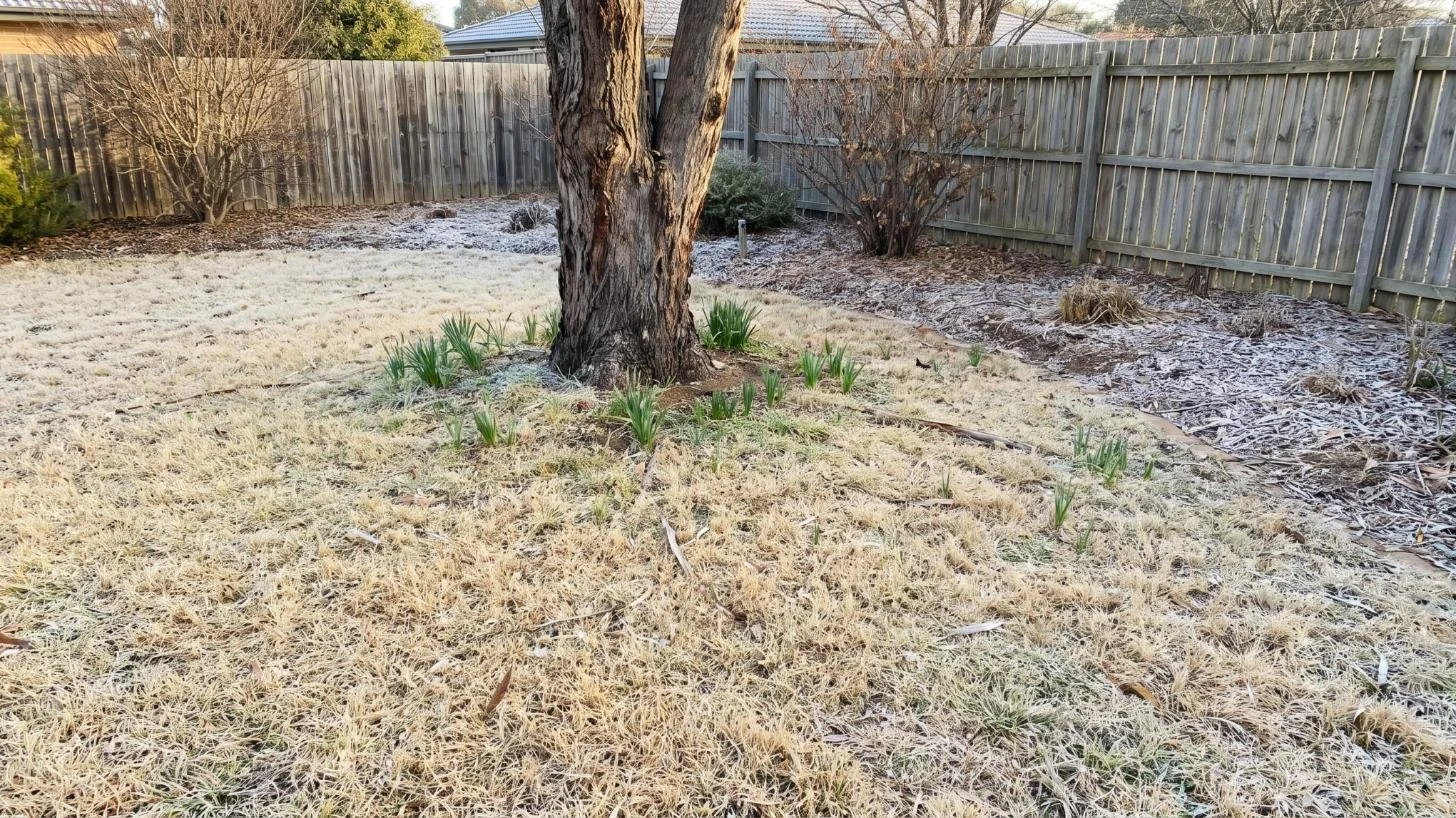
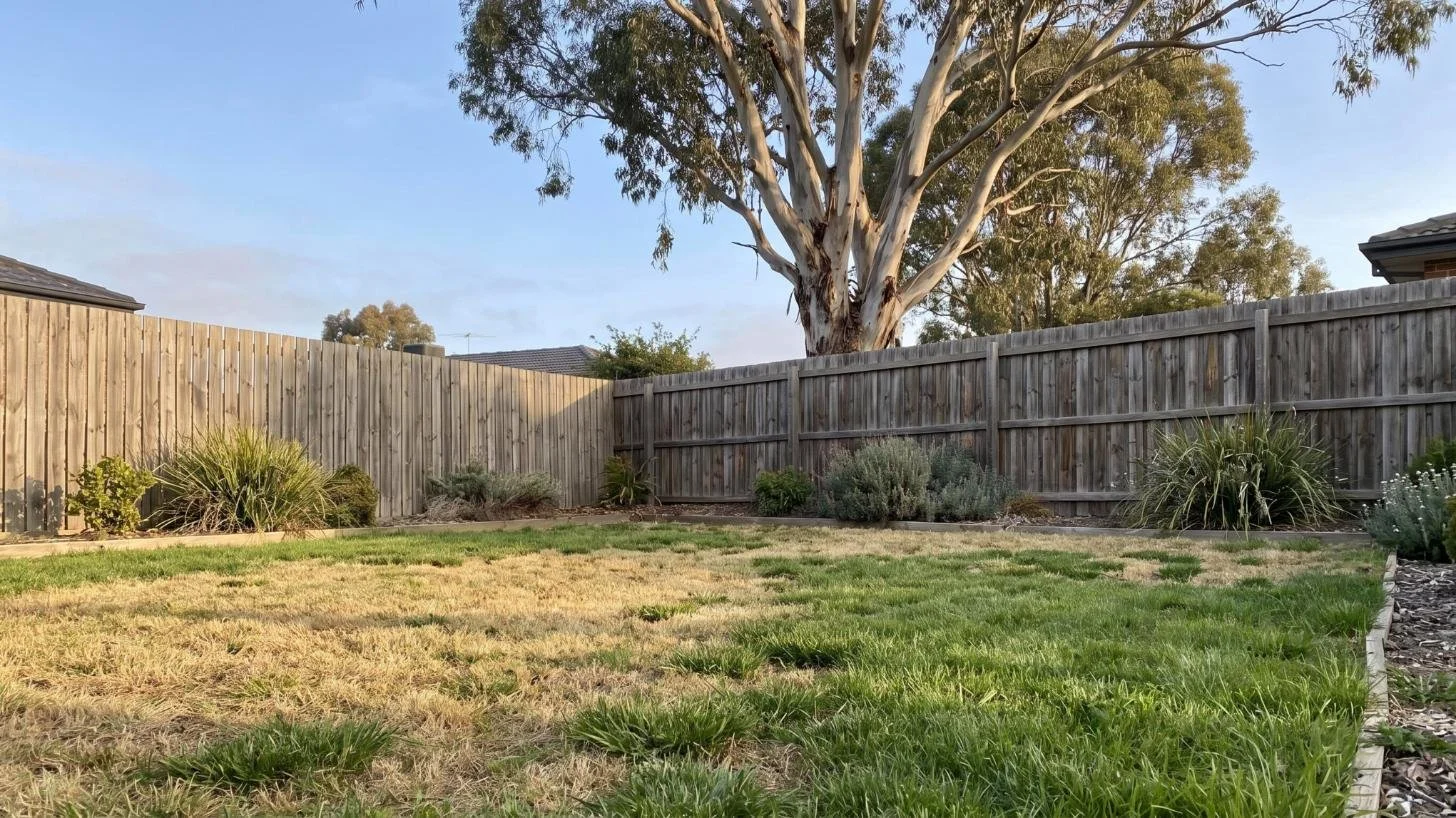
A brown, dormant-looking lawn in a Canberra backyard, with green growth starting to return near the base of a tree.
The quick answer:
A dormant lawn is alive but paused. The leaves are brown or straw-coloured, but the crowns and roots are still alive, and the grass will green up again when conditions improve. A dead lawn has lost its crowns and roots and will not return without repair. To tell them apart, give a patch a gentle tug, look at the base of the plant, scratch the crown with your fingernail and, if you can, water a small test area for two weeks. Firm, pale green or white tissue at the base, roots that hold the soil and fresh green shoots after watering all point to dormancy. Brittle, dry, dark crowns that pull out with no resistance point to dead grass.
Why lawns go brown in Canberra
Canberra gives lawns a hard time at both ends of the year. Frosts, cold soil and short days send warm season grasses such as kikuyu, couch, buffalo and zoysia into winter dormancy. Hot, dry summers, water restrictions and strong winds can push cool season grasses such as tall fescue into summer dormancy. In each case the plant shuts down its top growth to protect the crown and roots.
A lawn can also go brown because something has gone wrong: grubs eating the roots, disease, drowning in poorly drained soil, chemical or fertiliser burn, or weeks of drought with no water at all. That is when brown means dead. The skill is telling the two apart.
Test 1: The tug test
Take a small handful of brown grass and pull upwards.
If the grass resists and the roots hold the soil, the plant is anchored and is probably alive.
If the turf lifts easily like a loose carpet with little or no root, the roots have been eaten or have died. That points to grubs, black beetle or long term root loss, which I cover in my guide to grubs, beetles and armyworms.
Test 2: Look at the crown
Pull a few runners or tillers out and look at the base of the plant, where the leaves meet the roots. This is the crown.
Living crowns are firm and pale green, cream or white inside.
Dead crowns are dry, brown or black, and crumble or feel hollow.
On stoloniferous grasses such as kikuyu and couch, also check the stolons. Green nodes or a bit of green at the joints mean the plant is still alive and ready to regrow.
Test 3: The water test
Choose a small patch about a metre square and water it deeply every second day for two weeks, without feeding it. Mark the spot so you can compare.
Dormant grass will start to put out fresh green leaves, often from the crown, within a couple of weeks if the temperature is right.
Dead grass stays brown and nothing changes.
Warm season grasses need warm soil to respond, so this test does not work well in the middle of winter. Wait for the soil to warm up in spring.
Test 4: Check the soil
Sometimes the soil tells the story better than the leaves.
Push a screwdriver in. If it will not go in more than a few millimetres, the soil is hard and compacted, and roots may have struggled.
If the soil is dry to depth and water runs off, you may have hydrophobic soil, which I cover in my guide to hydrophobic soil.
If the soil is soggy, smelly and waterlogged, drainage is the likely issue, which I explain in my guide to clay soil drainage.
Common situations and what they usually mean
Whole lawn evenly brown in winter, firm crowns: normal winter dormancy in a warm season grass. See my winter lawn care guide.
Whole lawn brown in mid to late summer, particularly tall fescue, with firm crowns: summer dormancy from heat and drought stress.
Irregular brown patches that lift easily: root-feeding pests are a strong suspect.
Brown patches with a defined shape or dark rings: disease. See my lawn fungus and disease guide.
A brown strip or blotches after a fertiliser or chemical application: possible burn. See my post on fertiliser burn.
Brown after a frost with green showing at the base: frost damage that often recovers. See my post on frost damage.
What to do if the lawn is dormant
A dormant lawn mostly needs patience and a few sensible habits.
Keep traffic down. Dormant grass cannot repair itself, so heavy foot traffic and dog patrol routes do more damage than usual.
Water lightly to keep the crowns alive in prolonged dry spells, without trying to force green growth. I cover water use in my guide to watering under Canberra's restrictions.
Do not push it with heavy fertiliser. Feeding a dormant lawn wastes product and can burn it. Wait until active growth returns.
Plan the spring or autumn reset, including weed control, feeding and aeration, so the lawn comes out of dormancy strong. My year-round maintenance programme lays out the timing.
What to do if the lawn is dead
If the tests say the grass is dead, the next step is working out why before you spend money on repair. Replacing dead turf without fixing the cause just means it dies again.
Find the cause: pests, disease, drainage, compaction, burn or drought.
Fix the cause, for example by treating a pest problem, relieving compaction or correcting drainage.
Prepare the soil with coring, levelling or topdressing as needed.
Re-establish the lawn by overseeding, patching with matching turf or, in severe cases, renovating the whole lawn. My guides to overseeding and complete lawn renovation explain the options.
Timing matters. Warm season grasses establish best in the warmer months, and cool season grasses are best sown in autumn. Repair attempted at the wrong time of year can fail and waste your money.
Final word
Before you condemn a brown lawn, test it. A lawn that is dormant needs patience and a plan, and a lawn that is dead needs a diagnosis before a repair. Either way, the cause matters more than the colour. I cannot promise how a given lawn will respond, but I can tell you what I find and what I would do about it. Book a Free Assessment
Key points I get asked on a regular basis
How long does a dormant lawn stay brown?
It depends on the grass and the season. Warm season grasses are typically brown through the coldest months and green up as the soil warms in spring. A summer dormant tall fescue lawn can green up within weeks of cooler weather and rain. Delayed or patchy green-up is worth investigating, which I cover in my post on slow spring green-up.
Can a brown lawn come back to life?
Yes, if the crowns and roots are alive. Dormant grass often recovers on its own once temperature and moisture improve. Grass with dead crowns and no roots will not come back, and the area will need repair.
Should I water a dormant lawn?
A little. Light, occasional watering helps keep the crowns alive through long dry spells, especially in a hot Canberra summer. Heavy watering and feeding will not break dormancy in cold weather and can cause other problems.
Is a brown lawn in winter normal?
For kikuyu, couch, buffalo and zoysia, yes. Colour loss in winter is a normal response to cold and frost. If the lawn also has thin, bare or patchy areas, check for other issues such as weeds, compaction or pests.
Do I need to replace my lawn if it is brown?
Often not. Test it first. If the crowns and roots are alive, the lawn can recover. If it is dead in patches, repairs may be enough. Full replacement is usually only needed when most of the lawn has died or the underlying problem cannot be fixed any other way.
How do I book a lawn assessment in Canberra?
Use the booking link and I will check your grass, soil and roots, tell you whether the lawn is dormant or dead and recommend the next step. Book a Free Assessment
Looking for the perfect gift for the lawn enthusiast in your life? The Lawn Firm Gift Cards are the ideal solution. Redeemable for any of our professional lawn care services, these gift cards make it easy to give the gift of a greener, healthier lawn. From fertilisation to weed control and pest management, there’s something for every lawn need.
Why Choose a Lawn Firm Gift Card?
Versatility: Can be used for any service offered by The Lawn Firm.
Thoughtful Giving: A practical gift for anyone who values a beautiful outdoor space.
Simple to Use: Purchase online and enjoy easy redemption.
Order your gift card today and let your loved ones experience the professional touch of The Lawn Firm. It’s the perfect way to show you care while helping someone achieve the lawn of their dreams.
This gift card never expires.