
Lawn Fungus and Disease: Brown Patch, Dollar Spot and How to Treat Them in Canberra
G'day, Nikolai here from The Lawn Firm.
If your lawn is developing brown patches, yellowing rings or odd discoloured spots that spread and do not green up when you water, there is a real chance you are dealing with lawn fungus rather than a dry-out or a feeding problem.
Lawn diseases are caused by fungal pathogens that live in the soil and thatch. They are usually there all the time, doing no harm, until the right conditions tip them over into active disease: warmth and humidity, a lawn that is too wet, poor airflow, or grass that is stressed and weak. When that happens, the fungus spreads and the damage can move across a lawn surprisingly fast.
The frustrating part is that fungus is easy to mistake for other problems, so people often water more or feed harder, which can actually make it worse. Getting the diagnosis right is the whole battle.
If brown or discoloured patches are spreading across your lawn and watering is not fixing it, Book a Free Assessment and I'll work out whether it is fungal and how to treat it.
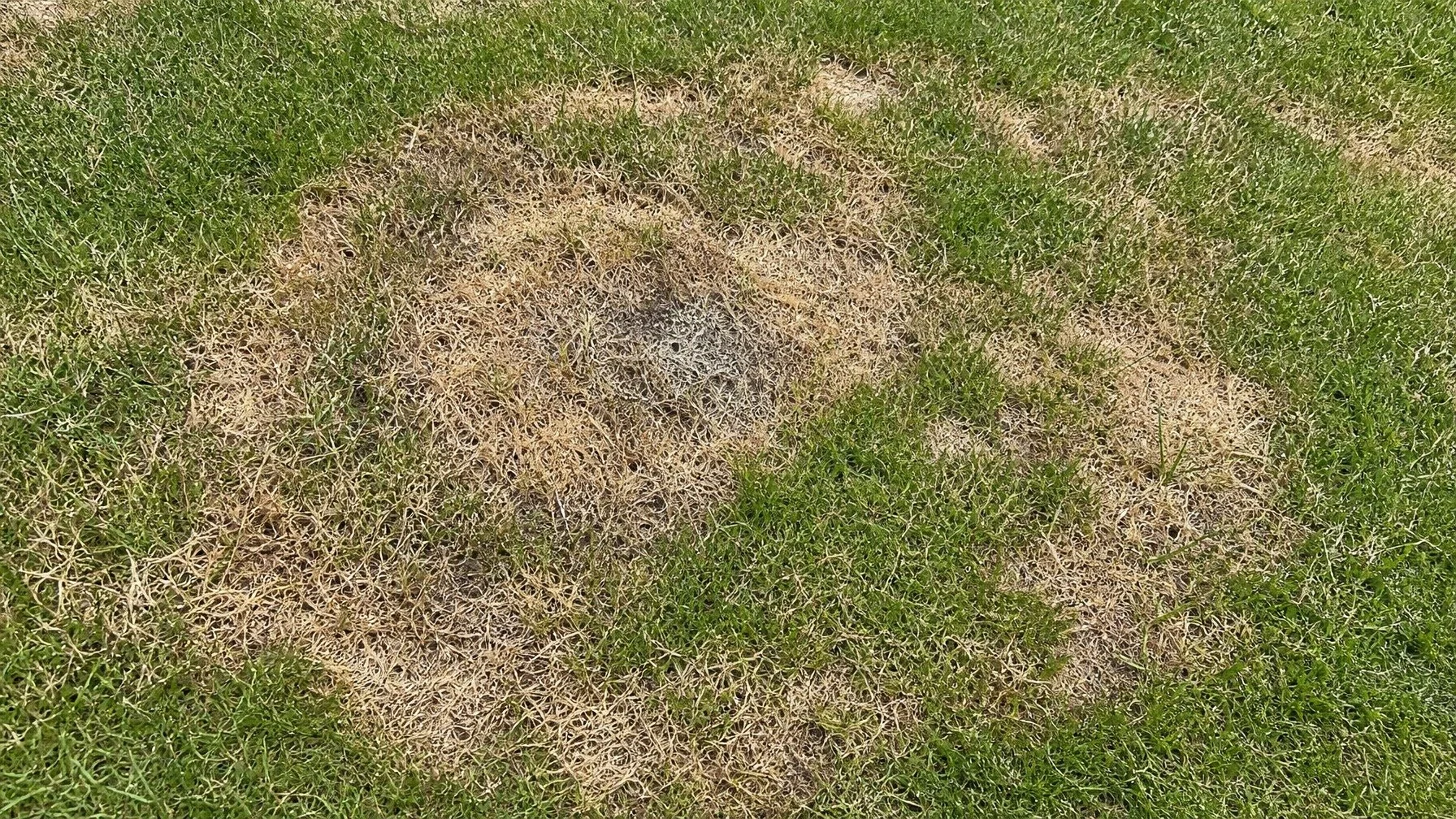
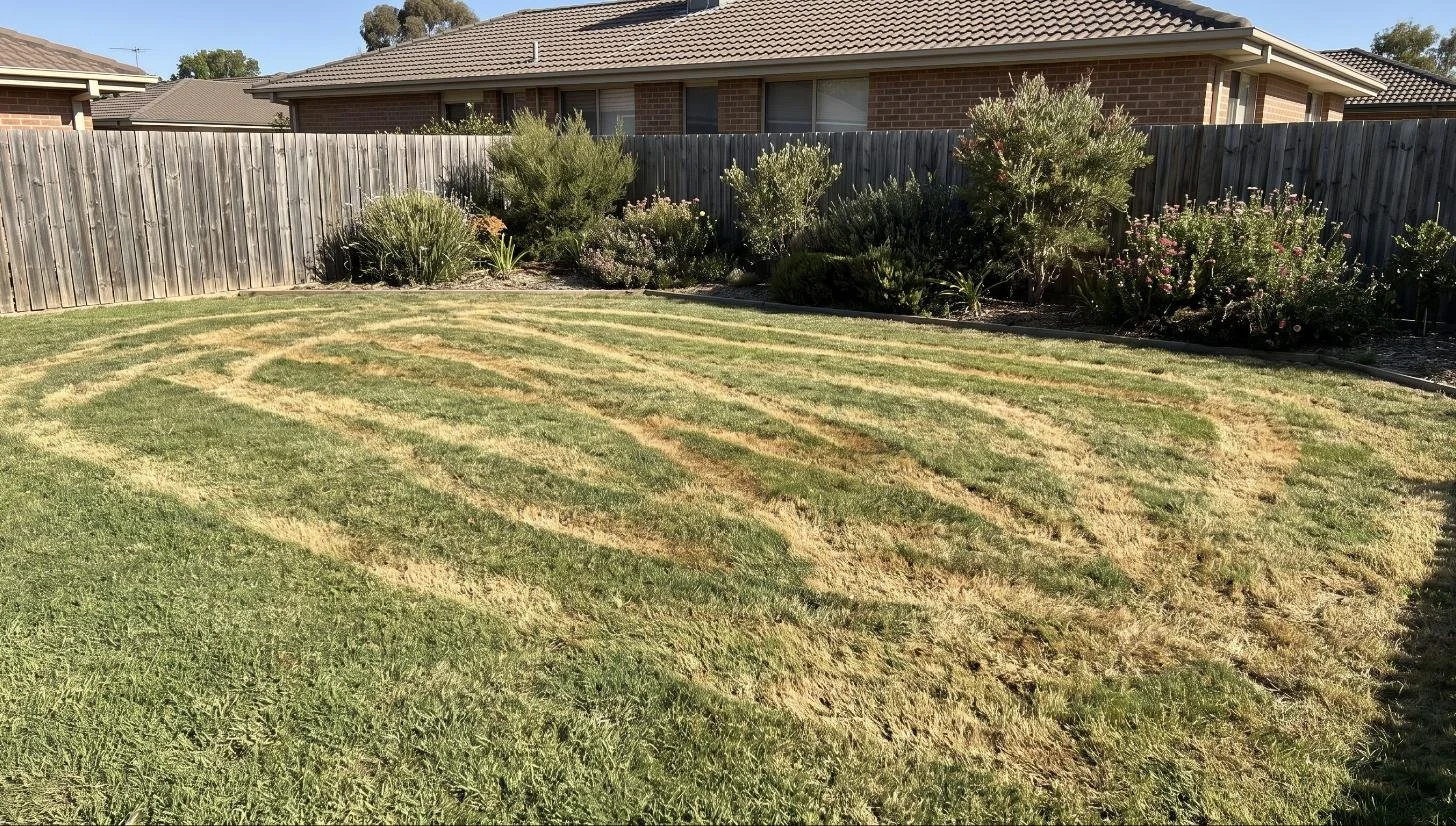
Brown patch fungal disease spreading in rings across a Canberra lawn
The quick answer: is it fungus or something else?
If a patch keeps spreading, has unusual shapes like rings or blotches, or shows odd colours, and watering does not bring it back, it is very likely a fungal disease rather than dry soil or a nutrient problem.
Dry patches tend to stay roughly where they are and green up after a good soak. Fungal disease behaves differently: it spreads outward, often in rings or irregular patches, and you may notice the grass blades themselves discolouring, thinning or developing spots and lesions. Some diseases even show a faint web-like growth in the early morning dew.
The reason it matters is that fungus needs a completely different response to dry soil or hunger. More water on a fungal lawn often feeds the problem. Correct identification is what points you to the right fix.
Common lawn diseases in Canberra and the ACT
A handful of fungal diseases cause most of the lawn damage I see, and they tend to flare when the weather and the lawn give them the conditions they like.
Brown patch. Circular brown or tan patches that can expand quickly, often in warm, humid conditions or when the lawn stays wet. The patches can run from a small spot to large areas.
Dollar spot. Small, silver-dollar-sized straw-coloured spots that can merge into larger patches, typically when the lawn is under stress or low on nutrients.
Fungal leaf spot and other blights. Discoloured spots or lesions on the grass blades that thin the lawn out, often appearing in damp, humid spells.
Damp-weather moulds. In cool, wet conditions you can also see web-like or slimy growth in the thatch, especially in shaded, poorly drained spots.
The common thread is that almost all of these are driven by moisture, poor airflow, and a stressed lawn. Which disease you have determines the exact treatment, but the underlying conditions that invited it are usually similar.
How to identify lawn fungus
Fungal disease shows a different set of signs to dry-out or pest damage. Here is what I look for:
Patches that spread. Damage that grows outwards over days, rather than staying put, and does not recover after watering.
Unusual shapes. Rings, arcs, circles or irregular blotches, rather than the random dry patches you get from uneven watering.
Discoloured or marked blades. Spots, lesions, banding or bleaching on the individual grass blades, not just browning at the tips.
Early-morning clues. A faint white, web-like growth or a slimy film visible in the dew, which often disappears as the lawn dries.
A consistent trigger. Damage that flares in warm, humid weather, after long wet spells, or in shaded, poorly drained areas with little airflow.
Importantly, fungal disease is not the same as lawn pest damage from grubs and beetles. With pests, the grass often lifts away easily because the roots are eaten. With fungus, the roots are usually intact but the blades themselves are diseased. Telling the two apart is essential, because they are treated completely differently.
What causes lawn disease
Lawn diseases are almost always a sign that conditions have tipped in the fungus's favour, rather than something that simply arrives out of nowhere.
The most common drivers I see are:
Too much moisture. Overwatering, watering in the evening so the lawn stays wet overnight, or poor drainage all create the damp conditions fungus loves.
Poor airflow and shade. Still, shaded, enclosed areas dry slowly and stay humid, which favours disease.
A stressed or hungry lawn. Grass that is underfed, scalped, compacted or heat-stressed has weaker defences and gives disease an opening. Both too little and too much nitrogen can play a role.
Heavy thatch. A thick thatch layer holds moisture and harbours fungal pathogens close to the crown of the grass.
Warm, humid weather. Many diseases flare when warmth and humidity combine, which is why they often appear after muggy or wet spells.
This is why treating the fungus alone is rarely enough. If the conditions that caused it are still there, it tends to come straight back. Fixing the watering, drainage, airflow and lawn health is as much a part of the cure as any treatment.
Treatment and prevention
Once I have identified that a problem is fungal and worked out which disease it is, treatment becomes targeted rather than guesswork.
The principles I work to are:
Identify first, treat second. The specific disease and its trigger determine the right approach. Treating blind, or treating a fungal problem as if it were dry or hungry, wastes time and often makes it worse.
Fix the conditions. Correcting overwatering, improving drainage and airflow, reducing thatch and relieving compaction removes the environment the fungus needs. Often this is the most important step.
Treat appropriately and at the right time. Where a fungicide is warranted, it needs to suit the disease, the grass type and the conditions, and be timed correctly to be effective.
Rebuild lawn health. A well-fed, correctly watered, deeply rooted lawn resists disease far better. Sensible fertilisation and good watering habits are a big part of long-term prevention.
Day to day, the best prevention is simple: water deeply but less often and in the morning so the lawn dries through the day, keep the lawn fed and mown at a healthy height, improve airflow and drainage in problem areas, and stay on top of thatch and compaction. A healthy lawn simply does not give disease the opening it needs.
If disease is spreading and you want it diagnosed and dealt with properly, Book a Free Assessment and I'll identify it and recommend the right plan.
Final word
Brown, ringed or discoloured patches that spread and do not respond to watering are very often fungal, not a simple dry-out, and treating them as if they were dry usually makes things worse.
The path back is always the same: identify the disease correctly, fix the moisture, airflow and lawn-health conditions that invited it, treat appropriately where needed, and then keep the lawn healthy enough to defend itself. Most lawn disease is a conditions problem as much as a fungus problem, which is good news, because conditions are something we can fix.
If your lawn is showing signs of disease, Book a Free Assessment and I'll work out what it is, treat it properly, and help the lawn recover and resist it in future.
Key points I get asked on a regular basis
What does lawn fungus look like?
Lawn fungus usually shows as patches that spread in rings, arcs or irregular blotches, with discoloured or marked grass blades rather than just browning at the tips. You may also see faint web-like or slimy growth in the early-morning dew. Crucially, it does not green up after watering the way a dry patch does.
Why is my lawn turning brown in patches?
If the brown patches spread, hold unusual shapes, and do not recover when you water, it is often a fungal disease such as brown patch or dollar spot rather than dry soil. Other causes include pest damage, where the grass lifts easily, or simple dry-out. Identifying which one it is determines the fix.
Can lawn fungus spread to other plants or lawns?
Lawn diseases are generally specific to turf and spread across the lawn itself rather than into your garden beds, but they can move quickly across the grass through spores, wet conditions, and even on mower blades and shoes. That is why catching it early and not mowing wet, diseased turf into healthy areas matters.
Will watering more fix a brown patch?
Usually not, and it often makes a fungal problem worse, because most lawn diseases thrive in damp conditions. If the patch is fungal, more water feeds it. The better approach is to confirm whether it is disease, then water deeply but less often and in the morning so the lawn dries through the day.
How do I stop lawn disease coming back?
Fix the conditions that caused it: water deeply but infrequently and early in the day, improve drainage and airflow in problem spots, reduce thatch, relieve compaction, and keep the lawn fed and mown at a healthy height. A healthy, well-managed lawn resists disease far better than any treatment alone.
How do I book lawn disease treatment in Canberra?
Book a Free Assessment and I'll inspect the lawn, identify the disease and its trigger, treat it appropriately, and put a plan in place to fix the conditions so it does not return.
Looking for the perfect gift for the lawn enthusiast in your life? The Lawn Firm Gift Cards are the ideal solution. Redeemable for any of our professional lawn care services, these gift cards make it easy to give the gift of a greener, healthier lawn. From fertilisation to weed control and pest management, there’s something for every lawn need.
Why Choose a Lawn Firm Gift Card?
Versatility: Can be used for any service offered by The Lawn Firm.
Thoughtful Giving: A practical gift for anyone who values a beautiful outdoor space.
Simple to Use: Purchase online and enjoy easy redemption.
Order your gift card today and let your loved ones experience the professional touch of The Lawn Firm. It’s the perfect way to show you care while helping someone achieve the lawn of their dreams.
This gift card never expires.