
New Build Lawns in Canberra: Builder’s Rubble, Thin Topsoil and How I Fix Them
G'day, Nikolai here from The Lawn Firm. If you have moved into a new place in Gungahlin, Denman Prospect, Whitlam, Throsby, Taylor, Jacka or out through the Molonglo Valley, and your lawn looked brilliant for the first eight weeks then started going backwards, you are probably not doing anything wrong. On most of these jobs the problem is not the turf and it is not the owner. It is what sits underneath, and nobody showed you that part before handover.
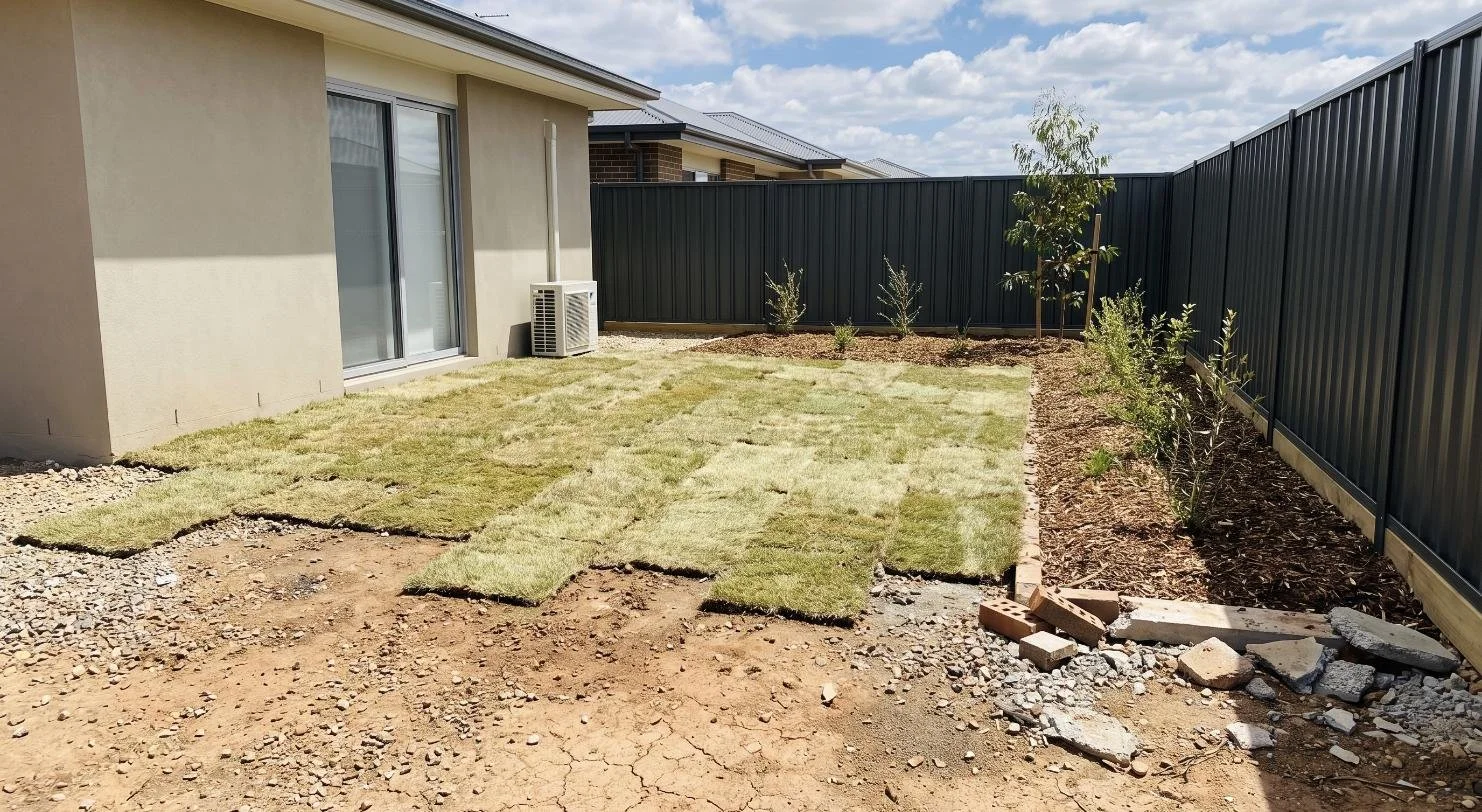
A test hole in a Molonglo Valley new build lawn showing thin imported topsoil sitting straight on compacted subsoil.
The quick answer:
Most new build lawns in Canberra struggle because turf is laid over compacted subsoil and buried builder's waste with as little as 50mm of imported topsoil over the top. Roots cannot get past that layer, so the lawn dries out within days of watering, lifts at the seams and goes patchy in hard spots. The fix is to read the actual soil profile with a test hole, soil test, then decompact and build soil depth with coring, organic matter and thin top dressing across several seasons. It is a multi-year project, not a single visit.
Why new build lawns start on the back foot
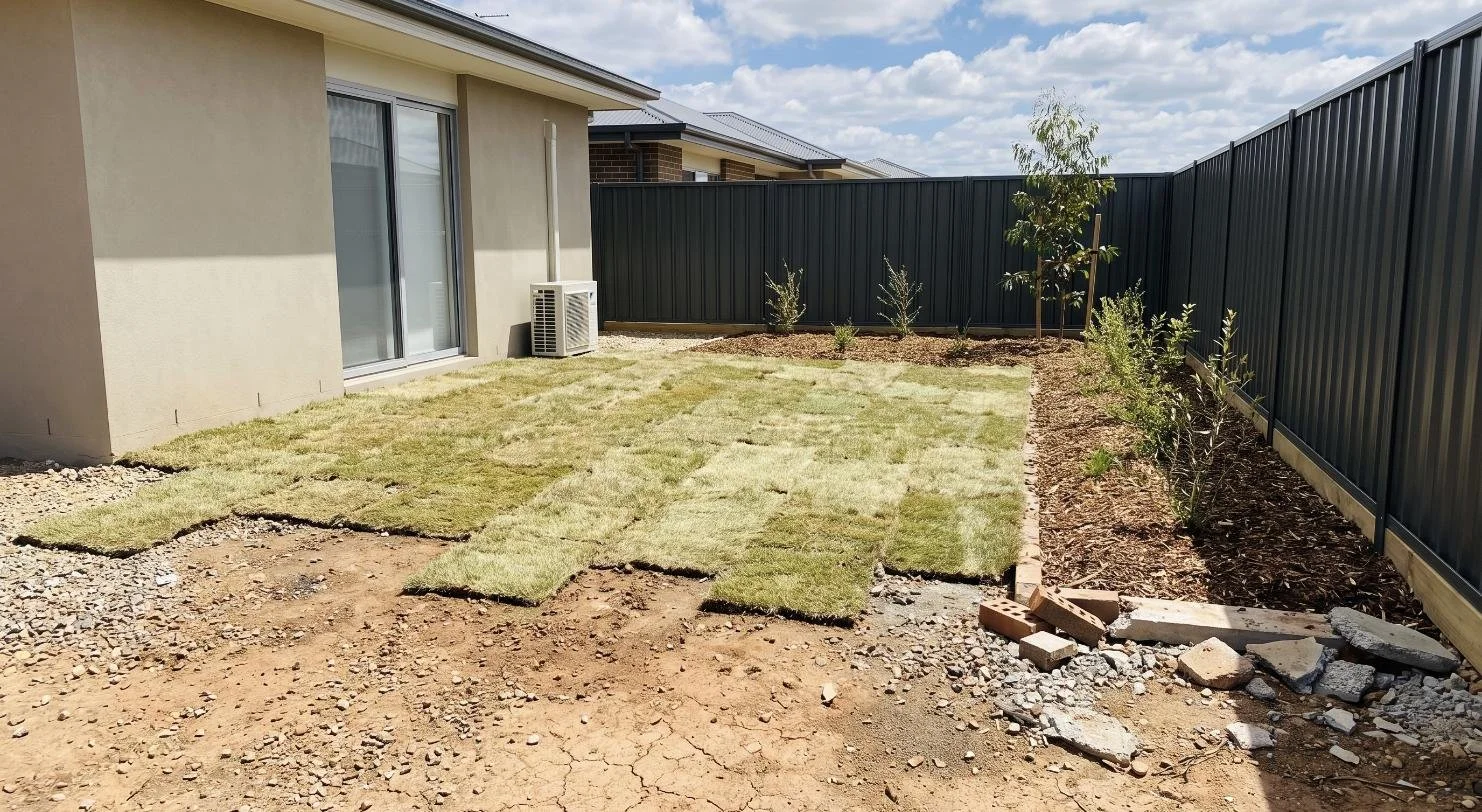
Think about what crosses your block before the turf arrives. Excavators, concrete trucks, bobcats and brickies' barrows, tracking the same ground for months, often in the wet. Canberra clay compacts hard under that, so by the time the landscaping crew turns up the subsoil has the structure of a driveway.
Then the site gets tidied. Render offcuts, mortar droppings, brick fragments, bedding sand, road base and the odd length of conduit get raked flat or buried rather than carted away. Imported topsoil goes over the top, sometimes a genuine 100mm, often much less, and the turf goes down the same day so the place looks finished. A lawn with 50mm of root zone has nothing in reserve when February arrives.
The signs you have a thin profile, not a watering problem
Owners usually ring convinced they are underwatering or that they got dud turf. Here is what I actually look for.
The lawn dries out two or three days after a decent water, even in mild weather, while deeper or shaded areas hold on fine.
Turf lifts or peels at the seams, with roots running sideways in a flat mat rather than down.
Hard spots you cannot push a screwdriver into, often in straight lines that follow where machinery or a site shed sat.
Uneven colour that stays in the same footprint year after year regardless of feeding.
Water puddling or sheeting off instead of soaking in.
Sunken lines where trenches were backfilled, and bumps where something solid sits just under the surface.
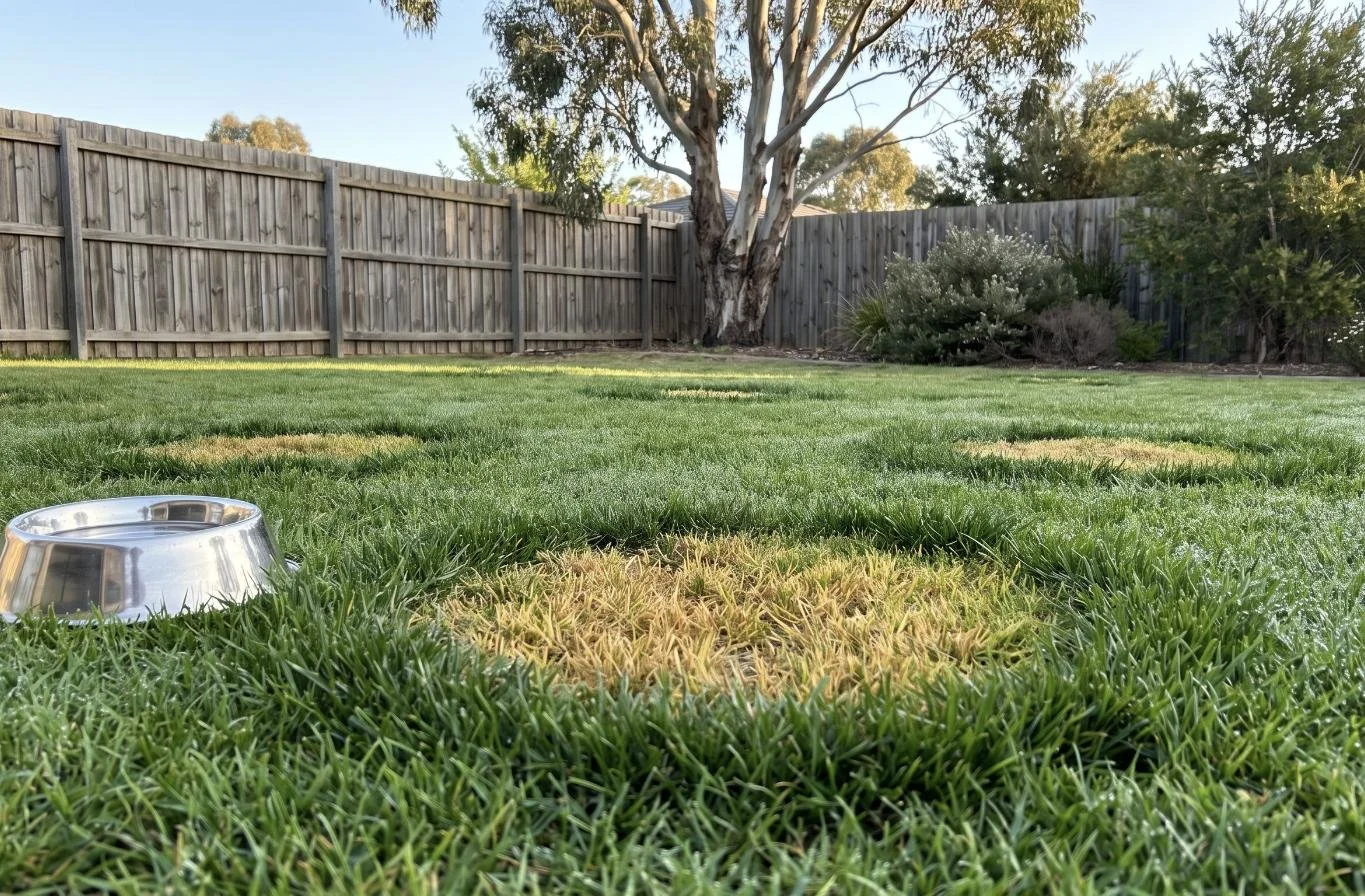
The pale patches are worth explaining. Render, mortar and concrete waste are alkaline, and buried under the lawn they lift pH in that one spot, often well above where our common turf varieties are comfortable. The grass there cannot take up iron and some other nutrients properly, so it goes pale while turf two metres away looks fine. You can fertilise it all year and it will not come good, because the problem is chemistry and physics, not hunger.
Step one: dig a hole and look
I do not guess at this. The most useful thing anyone can do on a new build lawn is cut a test hole and read the profile, and you can do it yourself with a spade in five minutes. Cut a square roughly 200mm across and 300mm deep, lift the block out intact, then read the cut face.
How deep is the dark, friable topsoil before it changes colour or texture? If it is 50mm, you have your answer.
Where do the roots stop? On a struggling new build they often stop dead at the topsoil line and turn sideways.
Is the boundary between layers a sharp line or a gradual blend? A knife edge means two materials were dumped on top of each other with no profile between them.
Can you push a screwdriver into the layer underneath, or does it stop at 60mm? Roots behave the same way.
Is there rubble, gravel, sand or render in the spoil?
Do this in three or four spots, including one good area and one bad one. The difference between two holes usually tells the whole story. I photograph every profile I cut so owners can see it for themselves.
Step two: soil test, because the rubble changes the numbers
Once I know the physical profile I want the chemistry. A soil test gives me pH, organic carbon and nutrient balance, and on new builds it often shows what the eye cannot. I have sampled a good patch and a pale patch three metres apart on the same lawn and seen pH differ by more than a full point, purely from buried building waste. The correction is completely different depending on that reading, and some corrections take a long time to move through clay. It is also why I will not sell a treatment plan off a photo, and why products and rates get decided on site rather than in an article. There is more detail in soil testing for Canberra lawns.
Step three: open the soil up
Compaction comes first, because nothing else matters much while roots have nowhere to go. Water will not infiltrate, air will not get in and fertiliser just sits in the top few centimetres.
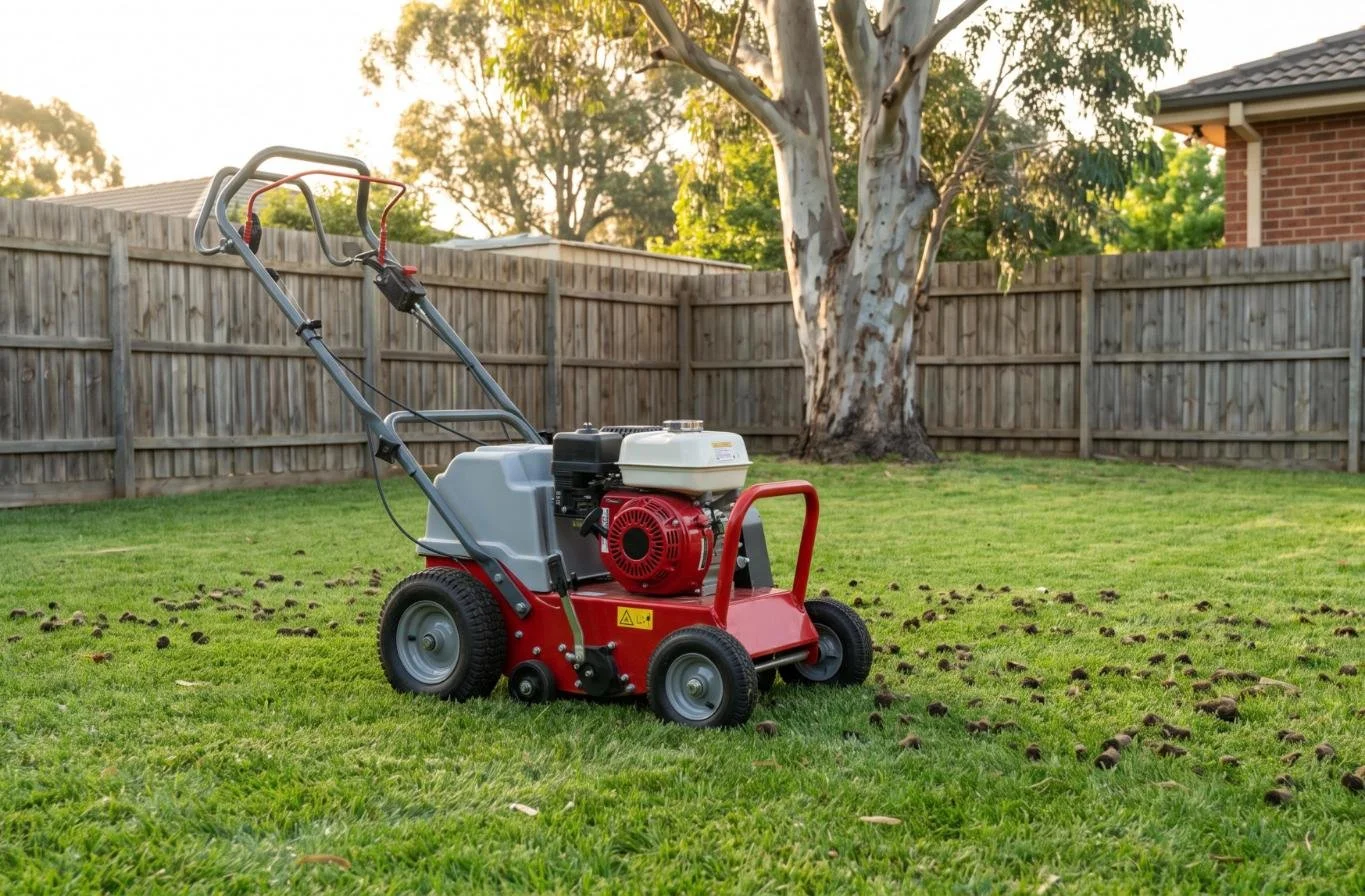
The main tool is core aeration, pulling plugs out rather than poking holes. Hollow tine coring physically removes soil, which gives the surrounding ground somewhere to move into and lets air, water and organic matter down into the profile. On a badly compacted new build I will often core more than once across a growing season instead of one heavy pass. There is more on how and when I do it in my guide to lawn aeration and coring in Canberra. Where surface levels or drainage are part of the picture, and on Canberra clay they usually are, that gets assessed at the same time.
Step four: build the soil you were never given
You cannot buy your way to a deep root zone in one afternoon. What you can do is add a bit of soil depth and organic matter each season and let the lawn grow into it. This is the slow part, and it is the part that works.
After coring I top dress with a quality sandy loam or blended soil, worked into the holes and across the surface in thin passes. Thin is the key word. A few millimetres at a time, repeated over seasons, lets the turf grow up through it. Dump 30mm on in one go and you will lose the lawn. The method matters, so read how to top dress your lawn in Canberra before you start.
Organic matter does the heavy lifting over time. It improves structure in clay, holds moisture in sandy blends, feeds soil biology and helps roots push deeper. Feeding sits alongside it, and on a thin profile I would rather fertilise lightly and more often than hit it hard occasionally, because there is very little soil to hold nutrients and anything excess simply leaches away.
Step five: fix the watering
Nine times out of ten the watering habit on a new build lawn is training roots to stay shallow. It is an honest mistake, inherited from the instructions the turf came with. New turf does need frequent light watering while it knits down, and that advice is right for the first few weeks, but nobody tells owners to change it. If you are still watering ten minutes every evening a year later, roots have no reason to go looking, because there is always moisture in the top 20mm.
Once established, I want fewer waterings that go deeper. Water until moisture has reached past the topsoil layer, then leave it until the lawn asks again. On a thin profile over compacted clay you often need two shorter bursts an hour apart, because the ground will not accept it all at once. Early morning beats evening. If you are still in your first couple of months, follow the establishment approach in caring for new turf in Canberra instead.
One more thing. Imported topsoil of unknown quality, particularly sandy blends, can turn water repellent in a Canberra summer. If water beads up and rolls off a dry patch rather than soaking in, that is hydrophobic soil, a different problem with a different fix, which I have covered in hydrophobic soil in Canberra lawns.
A realistic timeline, honestly
I am not going to tell you this is quick, because it is not.
Season one is diagnosis and first aid. Test holes, soil test, first coring and top dress, watering corrected, feeding sorted. The lawn holds moisture longer, but patches over rubble are still there.
Season two is where you tend to notice real change. Further coring, more organic matter, roots getting past the old boundary. Colour evens out and hard spots soften.
Season three onward is consolidation. Deeper root zone, better drought tolerance, less reliance on constant watering.
Where buried rubble is concentrated in a line or a patch, sometimes the honest answer is to excavate that section and rebuild the profile rather than coring around it forever. I will tell you if I think that is the case, or if the whole lawn is better started again.
Final word
A new build lawn in Canberra is not a failed lawn, it is an unfinished one. Someone handed you grass without handing you soil, and the grass has been doing its best ever since. Once you see the profile in a test hole, everything the lawn has been telling you makes sense and the plan becomes obvious rather than a guessing game.
My approach is to look before I treat, test before I correct, and be upfront that building a root zone takes seasons rather than visits. Plenty of owners in the growth suburbs are a few years in now and would not recognise the lawn they started with, and that came from doing the same unglamorous things in the right order, year after year, which is what a year round maintenance programme is built around.
Key points I get asked on a regular basis
How much topsoil should a new lawn actually have under it?
As a general rule I want to see a genuine 100mm or more of good quality topsoil, and more is better over compacted clay. What I commonly find on new builds around Canberra is 50mm or less. That is enough to get turf to knit down and look good for a couple of months, but not enough to carry a lawn through a dry February.
Can I just add more topsoil on top and be done with it?
Not in one go. A thick layer spread over an existing lawn smothers it, and it creates another sharp boundary that water struggles to cross. What works is thin repeated top dressing combined with coring, so new material gets worked into the existing profile instead of sitting on top as a separate pancake.
Do I need to dig out the builder's rubble?
Sometimes, sometimes not. Scattered small fragments are usually something we can work around and improve with coring and organic matter. A concentrated pocket of mortar, render or concrete waste that is lifting pH locally or blocking roots is different, and excavating that section can be faster than treating the symptom for five years. I would want to see what is down there first.
Why does one patch stay pale no matter how much I fertilise it?
That usually points to something under the surface rather than a feeding problem. Buried alkaline building waste raises pH in that spot, which locks up iron and some other nutrients so the grass cannot use them even when they are present. It can also simply be a hard spot where roots cannot get down. Either way more fertiliser will not touch it, which is why comparing a soil test from the bad patch against a good one is so useful.
Should I sort this before or after the rest of the landscaping?
Before, where you have the choice. Soil work is much easier with no retaining wall, irrigation line or garden bed in the way, and machinery access is the first thing you lose once a yard is finished. If the landscaping is already in we work with what we have, it just takes more hand work.
How do I book a new build lawn assessment in Canberra?
Easiest way is to get me out to have a look. I will cut test holes with you, read the profile, talk through what the soil test should cover and give you a straight assessment of what is realistic over the next few seasons. No obligation and no sales pitch, just a proper look at what you are working with.
Looking for the perfect gift for the lawn enthusiast in your life? The Lawn Firm Gift Cards are the ideal solution. Redeemable for any of our professional lawn care services, these gift cards make it easy to give the gift of a greener, healthier lawn. From fertilisation to weed control and pest management, there’s something for every lawn need.
Why Choose a Lawn Firm Gift Card?
Versatility: Can be used for any service offered by The Lawn Firm.
Thoughtful Giving: A practical gift for anyone who values a beautiful outdoor space.
Simple to Use: Purchase online and enjoy easy redemption.
Order your gift card today and let your loved ones experience the professional touch of The Lawn Firm. It’s the perfect way to show you care while helping someone achieve the lawn of their dreams.
This gift card never expires.