
G'day, Nikolai here from The Lawn Firm. One of the most common questions I get from Canberra homeowners standing in the fertiliser aisle is whether they should buy the granular bag or the liquid bottle. Both can work well. Neither is automatically better. The right choice depends on your grass, your soil, the weather and what you are trying to achieve, so let me walk you through how I think about it.
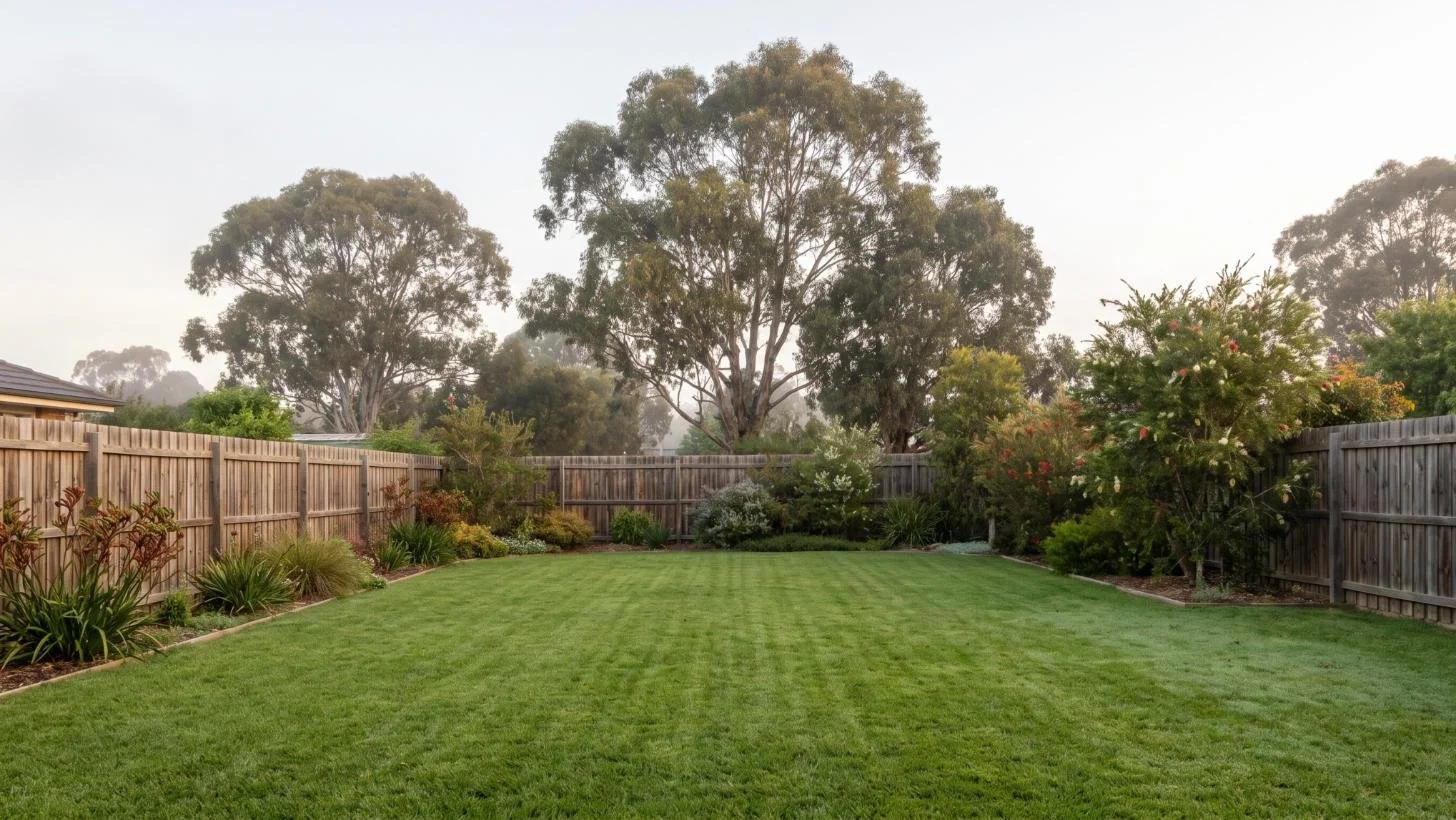
A lush, evenly green Canberra backyard lawn with a timber fence, native garden beds and gum trees in soft morning light
The quick answer: which one should you use?
For most Canberra lawns, a good slow release granular fertiliser is the backbone of a feeding program, because it feeds steadily over several weeks and is forgiving if applied evenly. Liquid fertiliser is better as a quick top up, for fast colour, for stressed lawns that need a gentle nudge, or for delivering trace elements such as iron. Many healthy lawns do best with a combination: granular as the base and liquid as a supplement when needed. The wrong product at the wrong time, or any product applied unevenly in hot weather, is what causes problems, not the format itself.
How granular fertiliser works
Granular fertiliser comes as small pellets or prills that you spread over the lawn, usually with a hand spreader or a wheeled spreader. Water then dissolves the nutrients gradually, and they move into the soil where the roots can take them up.
The big advantage is how long it lasts. Slow release and controlled release granules are coated or formulated so that nutrients arrive over weeks rather than days. That means steadier growth, fewer surges and a lower risk of burning the lawn.
Feeds for longer, often six to twelve weeks depending on the product and conditions.
Usually lower cost per square metre for the same amount of nitrogen.
Lower burn risk when the product is slow release and applied at the label rate.
Easy to buy in a wide range of blends, such as spring, autumn and winter formulas.
The downsides are practical. Granules need even spreading or you will see stripes and patches. They need water to activate. Quick release granules can burn a lawn if they are applied heavily or just before a hot spell, which I cover in my post on fertiliser burn.
How liquid fertiliser works
Liquid fertiliser is either a concentrate you dilute in a bucket or hose-end sprayer, or a ready to use product. The nutrients are already in solution, so the grass can take them up through the leaves and roots quickly.
Fast response, often visible in a week or so.
Even coverage when sprayed carefully, which suits irregular shaped lawns.
Useful for trace elements such as iron and magnesium, which can lift colour without pushing a lot of leaf growth.
Good for light, frequent feeding on stressed or cool season lawns.
The downsides are that liquids do not last as long, so you often need to reapply every few weeks. They can cost more per application. Over-concentrating a mix, spraying in the heat of the day or overlapping passes can burn leaves. Wind drift is also a factor if you have garden beds or a neighbour's plants nearby.
Side by side comparison
Speed: liquid is faster, granular is slower but longer lasting.
Longevity: granular generally wins, especially slow release blends.
Burn risk: lower with slow release granular, higher with concentrated liquids or quick release products used carelessly. Both can burn if misused.
Evenness: liquid is easier to get even, granular needs a calibrated spreader and a methodical pattern.
Cost: granular is usually cheaper over a season.
Convenience: liquid is quicker to apply on small lawns, granular is easier for big areas.
Best use: granular as a base feed, liquid as a supplement or a gentle top up.
What Canberra conditions mean for your choice
Canberra has cold winters, hot dry summers and soils that often lean towards clay with variable pH. Those conditions shape what works.
In spring, as the lawn wakes up, a slow release granular gives steady growth without a sudden flush. If your lawn has been slow to start, my post on slow spring green up explains what to check first.
In the heat of summer, I am more cautious with any fertiliser. A light liquid feed in the cooler part of the day, watered in well, is often safer than a heavy granular application. Warm season grasses such as buffalo, kikuyu and couch use summer feeding differently to cool season grasses such as tall fescue, so know what you have. My guide to identifying your grass type can help.
In autumn, a granular feed helps the lawn build reserves before the cold. Winter feeding is lighter and more targeted.
On clay soils that shed water, granular products can sit on the surface until it rains. On sandy or very free draining soils, liquids can wash through quickly, so small, regular doses suit better.
Do not skip the soil
Before you choose a product, it is worth knowing what the soil actually needs. A feed will not fix a soil that has the wrong pH, compaction or poor water penetration. A soil test takes the guesswork out, and aeration helps nutrients and water reach the roots. If the water simply runs off the surface, you may be dealing with hydrophobic soil, in which case no fertiliser format will perform well until that is addressed.
How to apply either type safely
Good technique matters more than the format. These are the habits I recommend.
Read the label and apply at or below the stated rate. More is not better.
Apply to a lawn that is actively growing, not one that is dormant or heat stressed.
Avoid applying before a heatwave or when the forecast is for very hot, dry days.
Water in well after granular products, unless the label says otherwise, so the nutrients move off the leaves and into the soil.
For liquids, spray in the early morning or evening, use a calibrated sprayer and do not overlap passes.
Keep products off paths and garden beds, and sweep stray granules back onto the lawn.
Check the weather. Heavy rain right after application can wash product away.
If you are unsure what your lawn needs, a general program is a good starting point. My complete guide to lawn fertilisation in Canberra covers timing and my lawn maintenance programme shows how feeding fits with the rest of the year.
When I use each one
I do not have a favourite format. I look at the lawn first. If I am setting up a program for a healthy lawn that needs steady feeding, I lean on slow release granular. If a lawn looks pale and the soil is fine, I might use a liquid with iron for a quick lift while the base feed does its work. If a lawn is stressed, I keep it gentle and focus on the cause before the feed. Chemical and nutrient choices should follow a diagnosis, not a guess, and some grasses, such as buffalo, are sensitive to certain products, so I always check the grass type before recommending anything.
If your lawn is yellow or patchy, feeding may not be the answer at all. My post on why a lawn turns yellow walks through the other common causes.
Final word
Liquid and granular fertilisers both have a place. Granular is the steady workhorse for most Canberra lawns, and liquid is the quick, flexible supplement. Match the product to the season, the grass and the soil, apply it evenly at the label rate, and water it in. If you would like me to look at your lawn and tell you what it actually needs, I am happy to help. Book a Free Assessment
Key points I get asked on a regular basis
Is liquid fertiliser better than granular?
Not necessarily. Liquid acts faster and is easy to apply evenly, but it does not last as long and usually needs reapplying. Granular, especially slow release, feeds for longer and often costs less over a season. Which is better depends on what the lawn needs right now.
Can I use liquid and granular fertiliser on the same lawn?
Yes, and many lawns do well with both. A slow release granular provides the base feed, and a liquid can be used as an occasional top up. Do not stack them close together without checking the rates, because the total nitrogen adds up and can burn the lawn.
Which one is less likely to burn my lawn?
A slow release granular applied at the label rate and watered in is generally the gentler option. Concentrated liquids, quick release granules and heavy overlaps are more likely to cause burn, especially in hot weather. Careful, even application is what protects the lawn.
How often should I fertilise my lawn in Canberra?
It depends on the grass, the season and the product. Slow release granulars are often applied a few times a year, while liquids are used more often at lighter rates. A tailored schedule works better than a fixed one, and my fertilisation guide covers the general timing.
Should I fertilise in summer?
Take care. Feeding in a heatwave or on a stressed lawn can do more harm than good. If you feed in summer, use a gentle product, water it in well and avoid the hottest days. Warm season and cool season grasses respond differently, so know your grass type first.
How do I book a lawn feeding assessment in Canberra?
Use the booking link and I will look at the lawn, the soil and your current routine, then tell you what to use and when. Book a Free Assessment

Looking for the perfect gift for the lawn enthusiast in your life? The Lawn Firm Gift Cards are the ideal solution. Redeemable for any of our professional lawn care services, these gift cards make it easy to give the gift of a greener, healthier lawn. From fertilisation to weed control and pest management, there’s something for every lawn need.
Why Choose a Lawn Firm Gift Card?
Versatility: Can be used for any service offered by The Lawn Firm.
Thoughtful Giving: A practical gift for anyone who values a beautiful outdoor space.
Simple to Use: Purchase online and enjoy easy redemption.
Order your gift card today and let your loved ones experience the professional touch of The Lawn Firm. It’s the perfect way to show you care while helping someone achieve the lawn of their dreams.
This gift card never expires.