
Bindii Weed: How to Identify, Treat and Prevent Bindi Prickles in Canberra Lawns
G'day, Nikolai here from The Lawn Firm.
If anyone in your house has ever hopped across the lawn yelping in summer, you have probably met bindii. It is the weed responsible for those sharp little prickles that make a barefoot lawn miserable, and it is one of the most asked-about weeds I deal with across Canberra.
The frustrating thing about bindii, or bindi-eye, is that by the time you feel the prickles, it is too late to treat it easily. The prickle is the dried seed pod, which means the plant has already done its job and set seed for next year. The secret to a prickle-free lawn is dealing with bindii earlier, while it is still a soft, ferny little weed in winter and early spring, before those seed pods ever form.
The good news is that bindii is very controllable when you treat it at the right time and keep the lawn thick enough to resist it.
If you want a lawn the family can actually walk on barefoot next summer, Book a Free Assessment and I'll sort out a plan to get on top of the bindii.
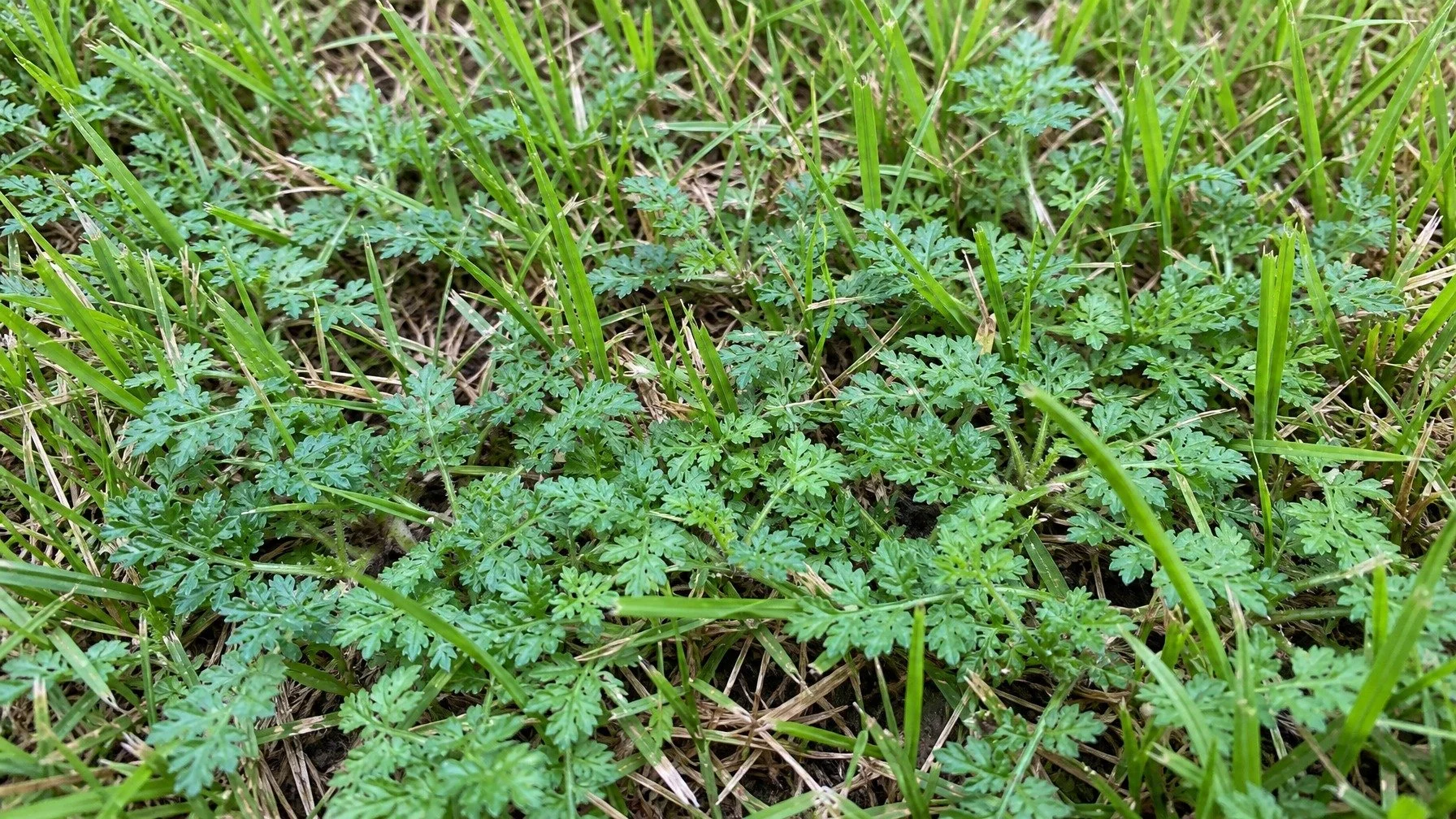
Low-growing bindii weed with ferny leaves spreading through a Canberra lawn
The quick answer: how to beat bindii
The key to beating bindii is to treat it in winter and early spring, before it forms the prickly seed pods.
Bindii is a low, ferny weed that germinates in autumn and winter, grows quietly through the cooler months, then flowers and sets its spiky seed pods as the weather warms into late spring and summer. If you wait until you can feel the prickles, the plant has already seeded and the damage for that season is done.
Catch it early, while it is soft and green, treat it before it flowers, and thicken the lawn so it has no room to establish, and you get a prickle-free lawn without fighting the same battle every summer.
What is bindii and why does it appear?
Bindii, sometimes called bindi-eye or jo-jo, is a low-growing broadleaf weed with soft, fern-like leaves. It germinates in autumn and winter, sits low and flat in the lawn through the cooler months, and then produces small flowers followed by hard, spiky seed pods as it matures in spring and summer. Those dried seed pods are the prickles that get you in bare feet.
It appears in lawns for the usual weed reasons, and in Canberra I often see more than one at play:
Thin or patchy turf. Bare and weak areas give bindii an easy place to germinate.
A lawn that slows over winter. Cool-season lawns ease off in the cold, giving winter-germinating weeds like bindii a clear run.
Compacted or poor soil. Hard, tired ground holds the lawn back but does not bother bindii much.
Mowing too low. Scalping weakens the grass and exposes the soil bindii needs.
Understanding why it is there matters, because lasting control means fixing the conditions that let it in, not just treating the plants you can see. It is one of the common lawn weeds across Canberra, and like winter grass, it exploits a thin lawn over the cooler months.
How to identify bindii in your lawn
Bindii is easiest to spot and treat in winter and early spring, before the prickles form. Look for:
Leaves. Soft, finely divided, fern-like or carrot-top leaves, growing low and flat against the soil.
Growth habit. It forms small, flat rosettes that hug the ground, so it often hides below mowing height.
Flowers. Small, greenish-yellow flowers appear as it matures in spring, sitting low in the lawn.
Seed pods. Later, those flowers become the hard, pointed seed pods, the prickles, which is the stage everyone recognises but the worst stage to be treating at.
The time to act is when you can see the soft ferny leaves and small flowers, not when you can feel the prickles. By the prickle stage, the seed is already set.
The most effective bindii control methods
How I treat bindii comes down to timing first, and method second.
The whole game is to treat it before it sets those spiky seed pods, which means acting in winter through early spring while the plant is still soft and growing. Treating a broadleaf weed like bindii at that stage, matched to your grass type and the season, is far more effective and far kinder to the lawn than waiting until summer when the prickles have already formed and the seed is down.
For a light, early infestation caught in time, improving lawn density and dealing with the young weeds can be enough. For an established bindii problem, targeted broadleaf control is usually needed, timed to the cooler months and chosen to suit your turf so the lawn is not stressed.
What I steer people away from is reaching for the strongest product on the shelf in the middle of summer once the prickles are already out. At that point you are too late for that season, and the wrong treatment on a heat-stressed lawn does more harm than good. Effective bindii control is about the right treatment, at the right time of year, followed by recovery so the lawn fills the space back in.
If bindii has taken hold and you want it treated at the right time, Book a Free Assessment and I'll match the approach to your lawn.
How to prevent bindii coming back
A prickle-free lawn next summer comes from getting ahead of bindii, not chasing it. This is what I focus on:
Feed and thicken the lawn. A dense, healthy, well-fed lawn leaves bindii no gaps to germinate into. Good fertilisation is one of the best long-term defences against any broadleaf weed.
Repair thin and bare patches. Overseeding and recovery work close the open ground bindii relies on.
Treat early, every year. Because bindii germinates in autumn and winter, a treatment in the cooler months, before it seeds, stops the cycle far more reliably than reacting in summer.
Mow at the right height. Letting the grass grow a little longer shades the soil and starves low weeds like bindii of light.
Relieve compaction. A lawn that roots deeply and grows thickly out-competes bindii for space.
Do these consistently and bindii has no foothold, which is a far easier and more pleasant outcome than discovering it again with your bare feet.
Final word
Bindii is the weed nobody notices until it is too late, because the prickle is the seed pod, and by then the plant has already done its work for the season.
Beating it is all about timing. Identify the soft, ferny leaves in winter and early spring, treat it before it flowers and sets its spiky seed, and keep the lawn thick and well-fed so it has nowhere to establish. Do that, and you get the prize: a lawn the kids and the dog can use barefoot all summer without a single ouch.
If you want next summer to be prickle-free, Book a Free Assessment and I'll identify the bindii, treat it at the right time, and build a lawn that keeps it out.
Key points I get asked on a regular basis
What does bindii look like before it forms prickles?
Before the prickles, bindii is a soft, low-growing weed with fine, fern-like or carrot-top leaves that form flat rosettes hugging the soil. Small greenish-yellow flowers appear as it matures in spring. This soft, green stage in winter and early spring is exactly when you want to treat it.
Is bindii treatment safe for pets and kids?
The aim is always a lawn that is safe for the family to use, and treatment is matched to your situation. The bigger safety win is timing: by treating bindii in the cooler months before the prickly seed pods form, you remove the prickles that hurt bare feet and paws in the first place. I can advise on safe re-entry for any treatment used.
When is the best time to spray bindii in Canberra?
Winter through early spring, while the plant is soft and growing and before it sets its spiky seed pods. Treating at this stage is effective and kind to the lawn. Waiting until you can feel the prickles in summer is too late for that season, because the seed is already down.
Why does bindii keep coming back every summer?
Because it seeds before most people treat it. The prickle is the seed pod, so by the time you notice it, next year's seed is already in the soil. Combined with thin patches in the lawn, that seed bank brings it back each year unless you treat it early, before seeding, and thicken the lawn.
Can I get rid of bindii once the prickles are already out?
Once the prickles have formed, the plant has already seeded for that year, so treatment then will not save the current season's lawn from prickles. The right move is to plan treatment for the following winter and early spring, before the seed pods form, and to thicken the lawn in the meantime.
How do I book bindii treatment in Canberra?
Book a Free Assessment and I'll confirm it is bindii, schedule treatment for the right time before it seeds, and put a plan in place to keep your lawn thick and prickle-free.

Looking for the perfect gift for the lawn enthusiast in your life? The Lawn Firm Gift Cards are the ideal solution. Redeemable for any of our professional lawn care services, these gift cards make it easy to give the gift of a greener, healthier lawn. From fertilisation to weed control and pest management, there’s something for every lawn need.
Why Choose a Lawn Firm Gift Card?
Versatility: Can be used for any service offered by The Lawn Firm.
Thoughtful Giving: A practical gift for anyone who values a beautiful outdoor space.
Simple to Use: Purchase online and enjoy easy redemption.
Order your gift card today and let your loved ones experience the professional touch of The Lawn Firm. It’s the perfect way to show you care while helping someone achieve the lawn of their dreams.
This gift card never expires.