
G'day, Nikolai here from The Lawn Firm. Every year from late spring into summer I get the same worried message: "My lawn has gone all stalky and white on top. Is it dying?" What people are seeing is seed heads. The lawn looks rough, feels prickly underfoot and loses that even green colour almost overnight. The good news is that it is rarely serious, and it usually tells you something useful about how the lawn is coping.
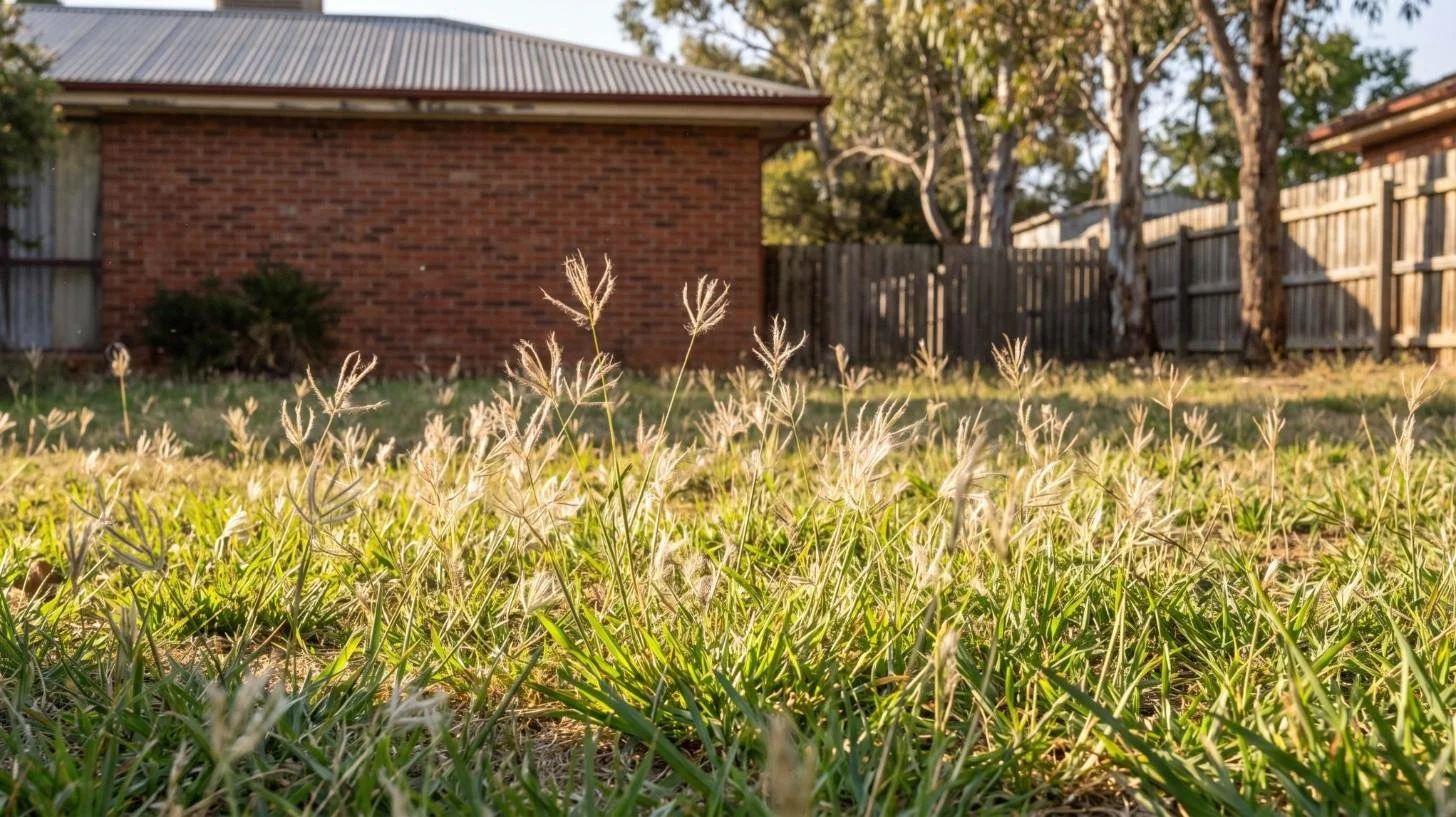
Pale grass seed heads standing above the leaf blades of a lawn in a Canberra suburban backyard in late spring.
The quick answer: why is my lawn going to seed?
Grass goes to seed for two main reasons. The first is the season, as most lawn grasses naturally flower at a set time of year. The second is stress, such as heat, dry soil, low nutrition or a sudden change in conditions, which pushes the plant to reproduce. Seed heads do not harm the lawn and most of that seed will not grow into new grass. Steady watering, sensible feeding and regular trimming at the right height usually settle it within a few weeks. If it keeps happening, something underneath needs a proper look.
What seed heads look like
Seed heads are the flowering stalks of the grass plant. They sit above the leaf and differ a little between grass types.
Kikuyu throws fine, white, thread-like filaments that give the lawn a silvery or frosted look, most obvious first thing in the morning.
Couch produces small, finger-like heads with several thin spikes spreading from one point, a bit like a tiny windmill.
Buffalo sends up thicker, stubby green to purple spikes that feel firm underfoot.
Zoysia produces short, slender, dark spikes.
Tall fescue and ryegrass send up taller, wiry stalks that often spring back up after cutting.
If you are not sure which grass you have, my grass type identification guide will help you sort it out.
Is it seasonal or is it stress?
This is the first thing I work out, because the answer changes what you do next.
A seasonal flush tends to arrive at roughly the same time each year, covers the lawn fairly evenly and passes in two to four weeks. Cool season grasses such as fescue and rye usually seed in mid to late spring. Warm season grasses such as kikuyu, couch and buffalo tend to seed from late spring through summer, and sometimes again in early autumn.
Stress seeding is patchier and less predictable. It often shows up worst in the hot, dry or compacted parts of the yard, along paths and driveways, or after a sudden swing in the weather. Canberra is very good at delivering those swings, with cool nights, hot afternoons and dry winds often landing in the same week.
The common stress triggers
Dry soil. Irregular or shallow watering is the trigger I see most often. My guide to efficient lawn watering covers how to water deeply and less often.
Heat. A run of hot days puts the plant into survival mode. See my guide to protecting your lawn in a heatwave.
Low nutrition. A hungry lawn seeds more readily than a well fed one.
Compaction. Hard soil limits roots, water and air.
Water repellent soil. If water runs off dry patches, the roots stay thirsty even when you irrigate. My article on hydrophobic soil explains the signs.
Cutting too low or too rarely. Scalping the lawn, or letting it get long and then taking a lot off at once, stresses the plant.
Soil imbalance. A pH or nutrient problem can keep a lawn permanently on edge.
Are seed heads bad for the lawn?
Not directly. Seed heads are a normal part of the grass life cycle. The downsides are mostly cosmetic and practical.
The lawn looks pale, uneven and untidy.
Stalks are tough, so the cut can look ragged and the tips may brown off.
The plant puts energy into flowering instead of leaf and root growth, so the lawn can thin a little if seeding drags on.
Some people find grass pollen sets off hay fever.
Treat it as information. A short seasonal flush is nothing to worry about. Heavy or repeated seeding is the lawn telling you it is under pressure.
Will the seed thicken my lawn?
Usually not. Many modern turf varieties, including most soft-leaf buffalo and several hybrid couch types, produce seed that is sterile or simply not viable. Common kikuyu and common couch can set viable seed, but a home lawn is rarely left long enough for that seed to mature and establish.
Letting the lawn grow long in the hope it will reseed itself tends to backfire. You end up with a stalky, thin lawn that needs a hard cut to bring back into shape. If your lawn needs thickening, overseeding with the right variety at the right time is a far more reliable approach.
Make sure it is not a weed
Before you put it down to your lawn seeding, check that the seed heads actually belong to your grass. Several grassy weeds give themselves away by their seed heads.
Winter grass has pale, creamy white, feathery heads on soft, bright green clumps, mostly from winter through spring. See my guide to winter grass identification and removal.
Paspalum has tall stalks with sticky seeds strung along several arms, growing from a coarse clump.
Summer grass and crowsfoot send out finger-like heads from low, spreading clumps in the warmer months. My guide to paspalum, summer grass and crowsfoot has the detail.
The clue is the pattern. If the seed heads come from distinct clumps of a different colour or leaf width to the rest of the lawn, you are probably looking at a weed. If they are spread evenly through grass that otherwise looks the same, it is the lawn itself.
Weed control is a diagnostic job, and the right product depends on both the weed and your grass type. Buffalo lawns in particular are sensitive to a number of common herbicides, so please check any product is labelled safe for buffalo before you use it, or ask me first. My overview of common lawn weeds is a good starting point.
What I do when a lawn goes to seed
Identify the grass and confirm the seed heads are not from a weed.
Check soil moisture a few centimetres down, not just at the surface.
Look at how the lawn is being watered and adjust to deeper, less frequent watering within local water rules.
Review feeding. If the lawn is hungry, a balanced feed helps it switch back to leaf growth. My complete guide to lawn fertilisation covers timing.
Check for compaction and water repellence, and plan aeration and coring or a wetting agent if needed.
Where the problem keeps coming back, arrange a soil test to look at pH and nutrient levels.
On that last point, soil chemistry is a common hidden cause of a lawn that never quite settles. My guide to lime or gypsum for your lawn explains when those products help and when they do not.
Cutting a lawn that is seeding
I do not offer a mowing service, but how the lawn is cut makes a real difference during a seeding flush, so here is the guidance I give my clients.
Keep to your normal height for the grass type. Dropping the height to chase the seed heads stresses the lawn and often brings on more.
Cut a little more often for a few weeks. Frequent light cuts remove the stalks before they mature.
Never remove more than about one third of the leaf in a single cut.
Use sharp blades. Seed stalks are tough and dull blades tear them, leaving a frayed, brown finish.
Catch the clippings during the flush if you are concerned about spreading weed seed or you want a cleaner look.
Feeding and watering through a seeding flush
A steady, moderate approach works best. I avoid heavy doses of nitrogen in hot weather, as pushing soft growth on a stressed lawn can cause its own problems, including fertiliser burn. A balanced feed suited to the season, watered in well, is usually enough to tip the plant back towards leaf growth.
Water early in the morning and aim to wet the soil to a good depth, then let the surface dry before the next watering. Short daily sprinkles keep roots shallow and make the lawn more likely to stress and seed again. My summer lawn care guide sets out a routine for the warmer months.
When to get it checked
Seed heads on their own are not an emergency. I would get the lawn looked at if:
Seeding has gone on for more than about four to six weeks.
The lawn is thinning, yellowing or developing bare patches at the same time.
The seed heads are in clumps that look different to the rest of the lawn.
It happens several times a year regardless of the weather.
You have already adjusted watering and feeding and nothing has changed.
A regular lawn maintenance programme keeps nutrition, soil condition and moisture steady through the year, and in my experience lawns on a consistent programme tend to seed less heavily and recover faster.
Final word
A lawn going to seed looks worse than it is. Most of the time it is a short seasonal phase, and the rest of the time it is a prompt to look at water, food, soil and cutting habits. Work out which one you are dealing with, make steady adjustments, and give the lawn a few weeks to respond.
Key points I get asked on a regular basis
Why is my lawn going to seed all of a sudden?
Either it is the natural seeding season for your grass type, or the lawn is stressed by heat, dry soil, low nutrition or a change in conditions. A sudden swing in Canberra weather is a very common trigger.
Should I cut off the seed heads?
Yes, as part of your normal routine. Keep to your usual height and cut a little more often for a few weeks with sharp blades. Avoid cutting lower to remove them, as scalping adds stress and can make seeding worse.
Will the seed heads grow into new grass?
Usually not. Many turf varieties produce sterile or non-viable seed, and a home lawn is rarely left long enough for seed to mature. Overseeding with a suitable variety is a more reliable way to thicken a lawn.
How long does a lawn stay in seed?
A seasonal flush generally lasts two to four weeks. Stress-related seeding can continue until the underlying cause is addressed. If it lasts longer than about six weeks, it is worth having the lawn assessed.
Does going to seed mean my lawn is unhealthy?
Not necessarily. A short, even flush at the usual time of year is normal. Heavy, patchy or repeated seeding suggests the lawn is under pressure from water, nutrition, compaction or soil issues.
How do I book a lawn assessment for a seeding lawn in Canberra?
Easy. Book a Free Assessment and I will identify your grass, confirm whether you are seeing seed heads or a weed, and give you a clear plan to settle the lawn down.
Looking for the perfect gift for the lawn enthusiast in your life? The Lawn Firm Gift Cards are the ideal solution. Redeemable for any of our professional lawn care services, these gift cards make it easy to give the gift of a greener, healthier lawn. From fertilisation to weed control and pest management, there’s something for every lawn need.
Why Choose a Lawn Firm Gift Card?
Versatility: Can be used for any service offered by The Lawn Firm.
Thoughtful Giving: A practical gift for anyone who values a beautiful outdoor space.
Simple to Use: Purchase online and enjoy easy redemption.
Order your gift card today and let your loved ones experience the professional touch of The Lawn Firm. It’s the perfect way to show you care while helping someone achieve the lawn of their dreams.
This gift card never expires.