
Summer Lawn Care in Canberra: My Hot Season Plan
G'day, Nikolai here from The Lawn Firm. Canberra summer separates the lawns that were prepared from the lawns that were not. We get long stretches in the thirties, very low humidity, hot dry westerlies, and soil that can go from damp to bone dry in under a week. A lawn that looked perfect in October can be thin, straw coloured and full of summer weeds by late January if the plan is wrong.
The good news is that summer is mostly a season of protection rather than intervention. Almost everything that saves a Canberra lawn in January is decided in September and October. So this is both a summer guide and a nudge to get the groundwork done now, while there is time.
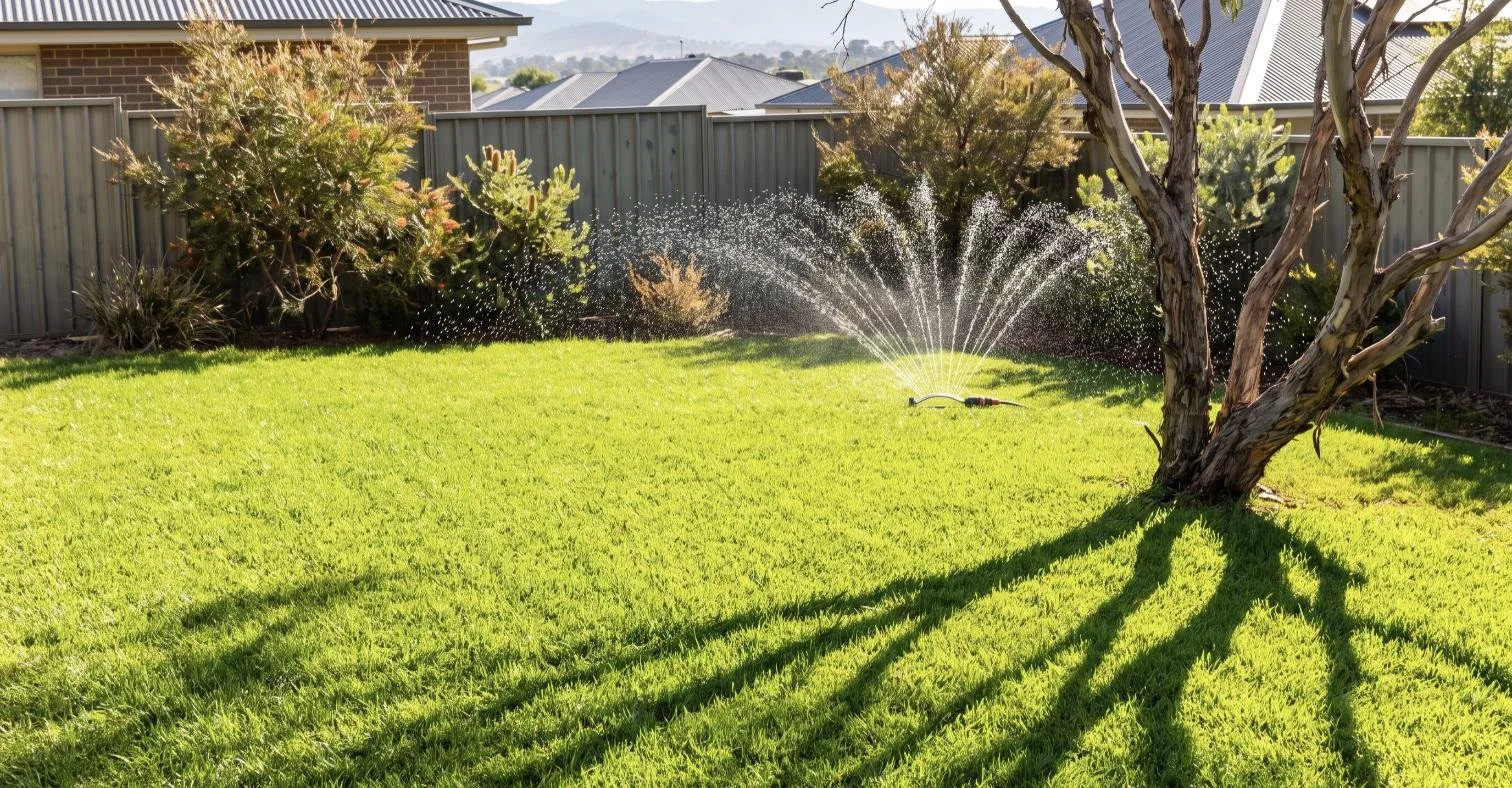
A sprinkler running over a dense green lawn on a hot Canberra summer afternoon, watering early and deeply before the heat builds
The quick answer: how to look after a Canberra lawn in summer
Water deeply and infrequently. Two or three soakings a week that wet the top 100 to 150mm beat daily sprinkles every time. Shallow watering trains roots to stay near the surface, which is exactly what you do not want in a heatwave.
Raise your cutting height and cut more often. Longer leaf shades the soil, holds moisture and protects the crown. Never remove more than a third of the leaf in one cut.
Feed lightly, not heavily. Warm season grasses are actively growing, so they want food, but a heavy nitrogen hit going into a heatwave pushes soft growth that burns. Small and regular beats big and occasional.
Leave the clippings on. They return moisture and nutrients and they shade the soil surface.
Do not renovate. Coring, scarifying, top dressing and seeding all belong in the shoulder seasons here. Doing them in January is asking a stressed lawn to recover in the worst possible conditions.
Watch for grubs and dry patch. These are the two problems that do the most damage in a Canberra summer, and both are far cheaper to catch early.
Watering: the part that matters most
If you only change one thing this summer, change how you water.
Go deep. The aim is to wet the root zone properly, which for most Canberra lawns means the top 100 to 150mm of soil. Put an empty tuna tin on the lawn while the sprinkler runs and see how long it takes to collect 10 to 15mm. That is your run time, and most people are surprised how long it is.
Go infrequent. Two or three deep waterings a week for an established lawn, not a daily light spray. Deep and infrequent watering drives roots downward, and deeper roots are the best insurance against a run of forty degree days.
Go early. Early morning watering gives the water time to move into the profile before evaporation takes it, and lets the leaf dry through the day, which reduces disease pressure. Evening watering leaves the leaf wet overnight and invites fungal problems.
Check that the water is actually going in. This is the one people miss. If water beads on the surface, runs off, or pools and then vanishes without wetting the soil underneath, you probably have hydrophobic soil rather than a watering shortfall. Dig a small plug with a trowel and look. Dry, dusty soil under a wet surface is the giveaway. I cover the fix in detail in my guide to hydrophobic soil and dry patch.
Know the rules that apply to you. Canberra water restrictions change with storage levels and they set the practical limits on your watering schedule. I have written up how I work within them in my guide to lawn watering under Canberra's water restrictions.
If your lawn is drinking constantly and still looking stressed, something structural is usually wrong underneath. Book a Free Assessment and I will find out what.
Cutting height: raise it and keep it there
Summer is the wrong time for a tight, low cut.
Longer leaf does three things at once. It shades the soil so less moisture evaporates, it supports a deeper root system, and it protects the crown from direct heat. Drop the height in December and you expose soil, spike surface temperatures, and hand an opening to summer weeds.
Raise the height a notch or two from your spring setting. On buffalo especially, keep it high, because buffalo repairs from surface runners and scalping cuts those runners off.
Cut more often, not shorter. Removing more than a third of the leaf in one cut shocks the plant and it responds by shedding root mass, which is the opposite of what you want in January.
Keep the blade sharp. A blunt blade tears rather than cuts, and torn leaf tips brown off and lose more water.
Never cut a heat stressed or wilted lawn. If footprints stay visible, or the leaf has folded and gone blue grey, water it and leave it alone.
Leave the clippings down unless they are clumping badly. They are free mulch and free nitrogen.
Worth noting: The Lawn Firm does not offer mowing. This is care guidance for whoever is doing your cutting, because the height it is cut at directly changes how well the treatments I apply will work.
Feeding through the heat
Warm season grasses such as buffalo, kikuyu, couch and zoysia are in full growth over summer, so they do want feeding. The trap is feeding them the wrong way.
A heavy granular nitrogen application immediately before a heatwave pushes fast, soft, water hungry growth exactly when the plant cannot support it, and you risk burning the lawn outright. My approach through summer is lighter, more frequent feeding, with an eye on the forecast and always watered in properly.
Tall fescue is a different animal. It is a cool season grass and summer is its hardest season, not its best. Fescue over summer is about survival, so I ease right off the nitrogen and focus on water, height and root health instead.
If you are not sure which of those two situations you are in, start with my article on identifying your grass type. The whole feeding plan hangs off that answer. The broader timing logic lives in my complete guide to lawn fertilisation in Canberra.
The two problems that do the most damage
Lawn grubs
Canberra summer is peak season for armyworm, sod webworm and curl grubs. They are damaging precisely because their damage looks like heat stress, so people water harder and the lawn keeps declining.
Signs I look for:
Patches that brown off and keep expanding despite adequate water
Grass that lifts away easily with no root attachment underneath
Increased bird activity working over one section of lawn
Moths flying up out of the turf at dusk
Chewed, ragged leaf tips rather than evenly dried leaf
A brown patch is not automatically a grub problem, and that is the point. The right treatment depends on identifying the cause properly. My guide to lawn grubs, beetles and armyworms walks through the identification, and there is more in lawn pest control in Canberra.
Dry patch and hydrophobic soil
The second summer killer is soil that has stopped accepting water. It shows up as irregular patches that stay dry and crispy while the lawn around them is fine, and it worsens every year it is left. Sandy and heavily thatched soils are the most prone. Once the profile is water repellent, extra sprinkler time will not fix it, because the water is running off rather than in.
Summer weeds in Canberra
Warm weather brings its own weed set: summer grass, crowsfoot, paspalum, and broadleaf opportunists that move into any thin patch. The best summer weed control is a dense lawn, because bare soil is what they need to establish.
For identification, my guides to paspalum, summer grass and crowsfoot and common Canberra lawn weeds will get you to a name.
On treatment I will be straightforward with you: summer herbicide use needs care. High temperatures increase the risk of damage to the lawn itself, and buffalo in particular is sensitive to several common broadleaf actives. I do not give blanket spray recommendations for summer without seeing the lawn, because the downside of getting it wrong in forty degree heat is a damaged lawn on top of a weed problem. If weeds have taken hold, Book a Free Assessment and we will work out what is safe for your grass.
What not to do in a Canberra summer
This list is as important as everything above.
Do not core, scarify or dethatch. These are recovery jobs and summer offers no recovery window. Save them for autumn or spring. My guides to aeration and coring and thatch explain the timing.
Do not top dress or level. Burying leaf under soil in peak heat stresses an already stressed plant. See top dressing and levelling a bumpy lawn for when to do it instead.
Do not sow seed. Seedlings have no root reserve and cannot survive Canberra January conditions without constant water. Seeding and overseeding belongs in the shoulder seasons.
Do not scalp it before going on holiday. A very low cut before two weeks away is the single most common way people come home to a ruined lawn.
Do not panic feed a browning lawn. Diagnose first. Nitrogen on a lawn that is browning from grubs or dry patch makes it worse, not better.
My summer programme, in order
Late winter and spring preparation. Coring, thatch management and soil correction happen here so the lawn enters summer with depth and drainage. This is the highest leverage work in the year, and it is covered in my spring lawn care guide.
Early December. Set watering to deep and infrequent, raise the cutting height, check that water is actually infiltrating.
December and January. Light regular feeding for warm season grasses, weekly grub checks, spot checks for dry patch, no renovation work.
Heatwave response. Water ahead of the heat rather than during it, stop cutting, keep traffic off the lawn, accept a bit of colour loss rather than forcing growth.
Late January onwards. Reassess and decide what the autumn programme needs to fix, then repair and rebuild while conditions are kind.
If you would like that run as a managed programme rather than a checklist, my year round Canberra lawn maintenance programme sets out how it works.
Final word
Canberra summer does not reward heroics. It rewards deep roots, a decent cutting height, water that actually reaches the root zone, and an owner who checks for grubs before reaching for the fertiliser bag.
Get the September and October work right and summer looks after itself. Skip it, and January finds every weakness. If you are not sure which category your lawn falls into, Book a Free Assessment and I will tell you straight.
Key points I get asked on a regular basis
How often should I water my lawn in a Canberra summer?
Two to three deep waterings a week for an established lawn, rather than a daily light spray, and always in the early morning. The measure that matters is depth, not frequency: you want the top 100 to 150mm of the profile wet. Use a container on the lawn to work out how long your sprinkler takes to deliver 10 to 15mm and set your run time from that. Newly laid turf is the exception and needs far more frequent water while it establishes.
Should I let my lawn go brown over summer to save water?
For warm season grasses it is survivable. Buffalo, kikuyu, couch and zoysia go into a protective dormancy and green up when water returns. But there is a real cost: a dormant lawn is thin, and thin lawns fill with summer weeds you then deal with in autumn. Tall fescue is far less forgiving and can be lost outright rather than just going dormant. If water is limited, water less often but still deeply, rather than stopping altogether.
Can I fertilise my lawn in the middle of summer?
Warm season grasses, yes, but lightly and regularly rather than in one heavy hit, and always watered in well afterwards. Avoid applying immediately before a forecast run of very hot days. For tall fescue I ease right back over summer, because pushing growth in a cool season grass during its hardest season creates stress rather than relieving it.
Why is my lawn going brown even though I am watering it?
There are four usual culprits and they need different responses: grubs eating the roots, hydrophobic soil stopping water reaching those roots, shallow or too frequent watering that never wet the profile properly, or disease. The quickest home check is to dig a small plug with a trowel. Dry dusty soil under a wet surface points to dry patch. Turf that lifts with no roots attached points to grubs. If neither is obvious, that is exactly the point where an assessment saves you money.
When should I aerate or renovate, if not in summer?
Autumn and spring. Both give soil warm enough for recovery without the heat stress, and both give the lawn a run of milder weeks to knit back together. Coring, scarifying, top dressing and seeding belong in those windows. Attempting them in a Canberra January usually means paying for the work twice.
How do I book a summer lawn assessment in Canberra?
Head to my homepage and Book a Free Assessment. I will come out, check the soil profile and moisture, look for grubs and disease, identify your grass and weeds, and give you a plan that fits the season you are actually in. There is no obligation, and in summer the earlier you get me out, the more of the lawn there is left to save.
Looking for the perfect gift for the lawn enthusiast in your life? The Lawn Firm Gift Cards are the ideal solution. Redeemable for any of our professional lawn care services, these gift cards make it easy to give the gift of a greener, healthier lawn. From fertilisation to weed control and pest management, there’s something for every lawn need.
Why Choose a Lawn Firm Gift Card?
Versatility: Can be used for any service offered by The Lawn Firm.
Thoughtful Giving: A practical gift for anyone who values a beautiful outdoor space.
Simple to Use: Purchase online and enjoy easy redemption.
Order your gift card today and let your loved ones experience the professional touch of The Lawn Firm. It’s the perfect way to show you care while helping someone achieve the lawn of their dreams.
This gift card never expires.