
Do Dog Rocks Work? Stopping Dog Urine Burn on a Canberra Lawn
G'day, Nikolai here from The Lawn Firm. If you have a dog and a lawn, you know the pattern before I describe it. A ring of unusually dark, fast growing green grass, and inside it a yellow or brown circle of dead turf. Then another one. Then a dozen.
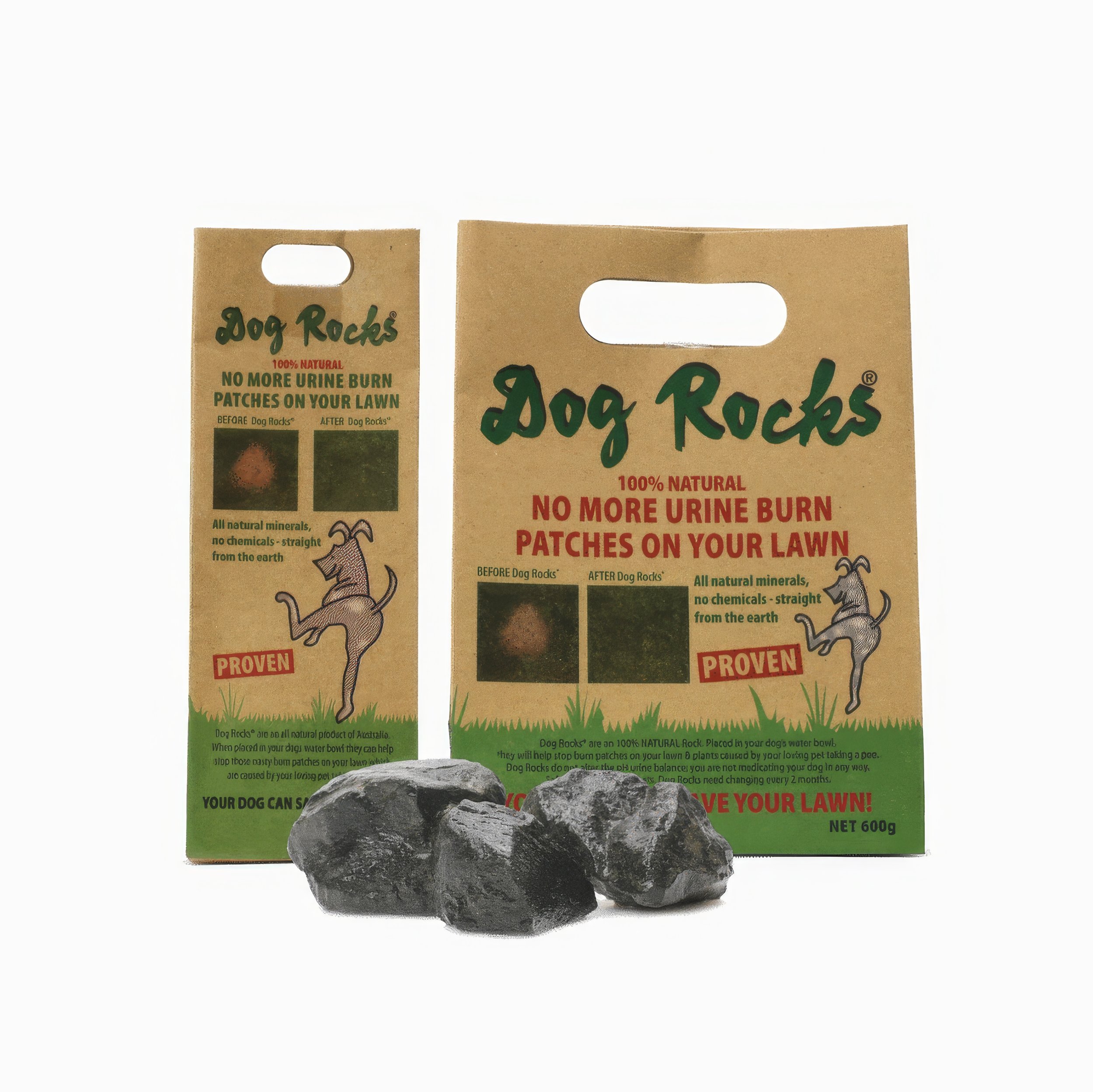
Sooner or later everyone with this problem finds Dog Rocks, the paramagnetic rocks you drop in the water bowl, and asks the obvious question: do they actually work? I stock them, I have seen them used across a lot of Canberra backyards, and I am going to give you a straight answer rather than a sales pitch. The honest version is more useful to you anyway.
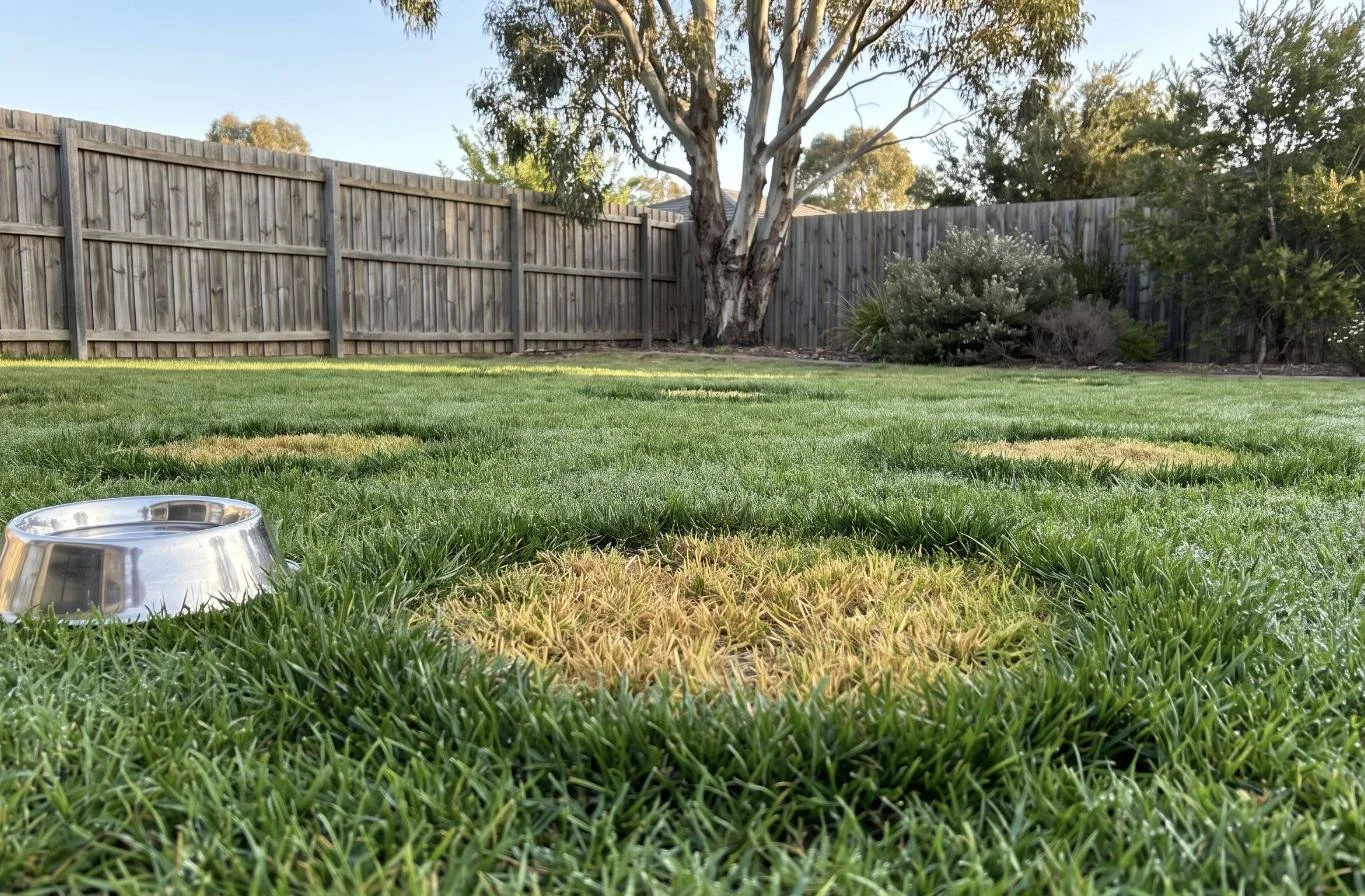
Dark green rings around yellow burnt patches from dog urine on a Canberra backyard lawn with a stainless steel dog water bowl nearby
The quick answer: do Dog Rocks work?
Sometimes, partially, and not for every dog. They are worth trying, they are cheap and low risk, and some owners report a real reduction in burn spots. But they are not a switch that turns the problem off, and if you rely on them alone you will probably be disappointed.
Here is the honest hierarchy of what actually reduces dog urine burn on a lawn, in order of how much difference each one makes:
Dilution. Watering the spot within a few hours, and encouraging your dog to drink more, does more than anything else on this list.
Lawn resilience. A deep rooted, well fed lawn on healthy soil recovers from a urine spot. A thin, shallow rooted one does not.
Location training. Teaching the dog to use one gravel or mulch area removes the problem rather than treating it.
Grass variety. Some grasses shrug this off far better than others.
Dog Rocks and similar water bowl or dietary products. A possible marginal gain, variable between dogs.
Notice where the product sits. It is on the list. It is at the bottom of it. Anyone telling you differently is selling harder than I am.
Why dog urine kills grass in the first place
This matters, because once you understand the mechanism you can immediately see what a water bowl product can and cannot influence.
Dog urine is high in nitrogen, delivered in a concentrated dose to a very small patch of turf. Nitrogen is fertiliser. In small amounts it makes grass grow greener and faster, which is exactly why you see that dark green halo around the outside of the spot where the urine was diluted by spreading through the soil. In the centre, where the dose landed undiluted, there is simply too much of it. The salt concentration in the soil solution rises sharply, water is drawn out of the grass roots rather than into them, and the plant dies of what is effectively drought in wet soil.
That is the key point. It is a concentration problem, not an acidity problem. The idea that dog urine burns the lawn because it is acidic is one of the most persistent myths in lawn care, and it sends people down the wrong path buying products to correct soil pH that was never the issue.
A few things follow from this:
Female dogs are not chemically different. They tend to squat and empty the bladder in one place, which delivers a bigger dose to a smaller area. Male dogs marking in small amounts across a fence line spread the load. That is behaviour, not biology.
Big dogs cause bigger spots for the same reason. More volume, more nitrogen, one location.
Spots are worse on a fertilised lawn in some cases, because the soil already has plenty of nitrogen and the urine tips it over the edge.
Spots are worse in summer because the lawn is already water stressed and has no capacity to absorb another hit.
So what are Dog Rocks actually doing?
Dog Rocks are a naturally occurring paramagnetic igneous rock, sourced in Australia, that sits in the dog's water bowl and is replaced every couple of months. The manufacturer's claim is that they reduce the nitrates, ammonia and some trace elements in the water, which in turn lowers the nitrogen load in the dog's urine.
I want to be careful and accurate here rather than repeating packaging copy.
What is reasonable: if your water supply carries meaningful nitrates or trace minerals, reducing them slightly could reduce the nitrogen concentration arriving on the lawn. That is a plausible mechanism.
What is uncertain: the published, independent evidence base for the effect size is thin. Most of what exists is manufacturer testing and owner reports. That is not the same as saying it does nothing. It is saying that nobody should promise you a specific result, and I am not going to.
The practical implication: the majority of the nitrogen in your dog's urine comes from protein in its food, not from its water. That is why results vary so much between households. A dog on a very high protein diet drinking already clean water has little room for a water bowl product to move the needle. A different dog might see more benefit.
What they will not do: repair the spots you already have, or stop damage from a dog that is not drinking much.
My view after a lot of Canberra backyards: they are cheap, they are low risk, they are worth a two month trial, and you should judge them on your own lawn rather than on anyone's marketing. Just do not make them the whole plan.
The things that genuinely move the needle
If you want fewer yellow circles by Christmas, this is where I would put the effort.
Water the spot, not the lawn. This is the single most effective habit and it costs nothing. If you can get a watering can or a hose over the spot within a few hours of your dog using it, you dilute the nitrogen through a larger volume of soil before it can burn. Keep a full watering can by the back door. Owners who actually do this see the biggest change of anyone.
Get more water into the dog. More water in means more dilute urine out. Clean, fresh water, refilled often, in more than one location. Some dogs drink noticeably more from a wide, shallow bowl or a pet fountain. If your dog's water intake has changed suddenly, that is worth mentioning to your vet rather than treating as a lawn problem.
Check the food. Excess dietary protein is converted to nitrogen and excreted in urine. I am not a vet and I will not tell you to change your dog's diet, but it is a fair question to ask yours whether the protein level is appropriate for your dog's age, size and activity. That conversation belongs with a vet, not a lawn contractor.
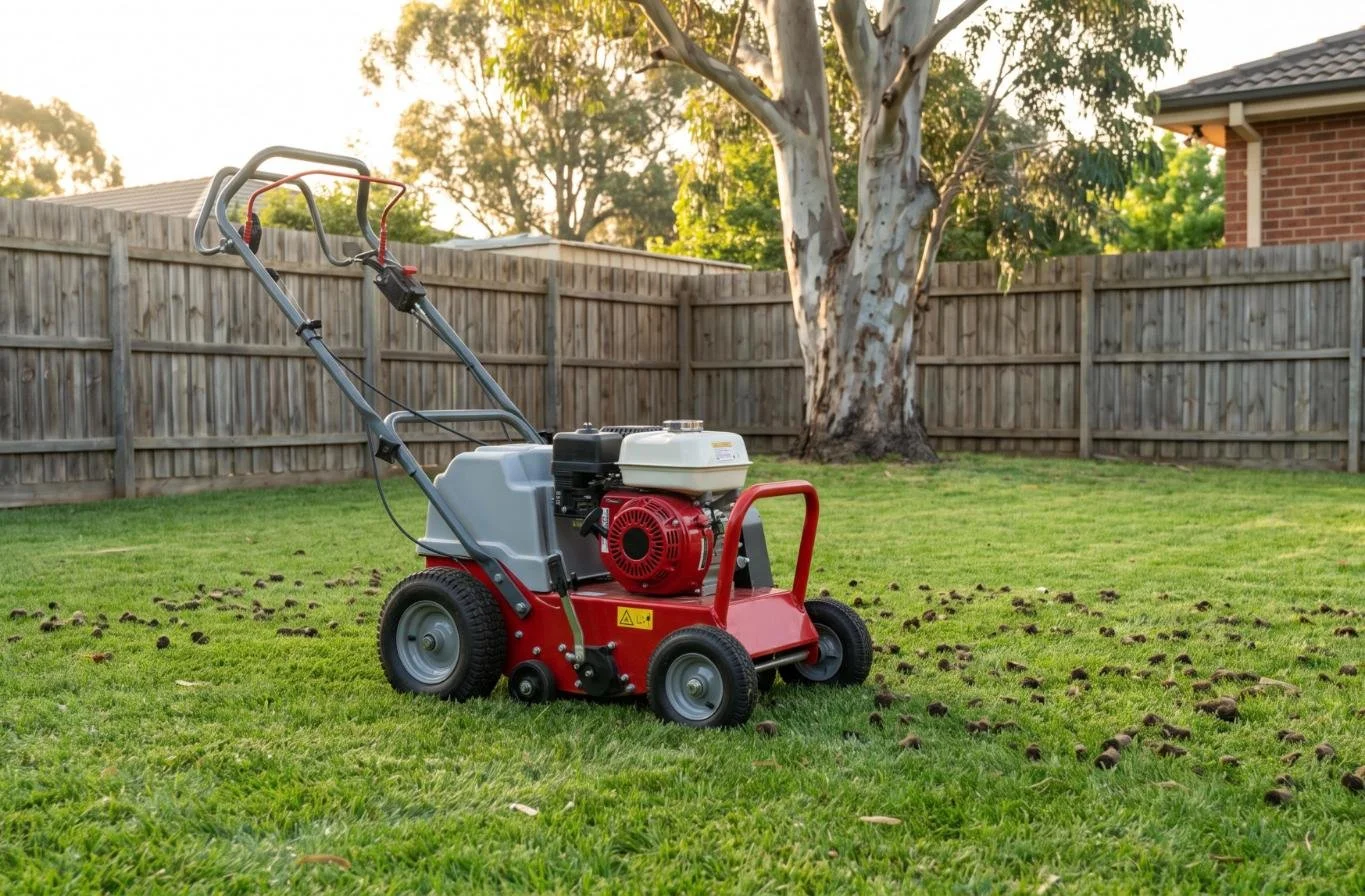
Build a lawn that can take it. This is my actual area, and it is underrated. A lawn with deep roots, good soil structure and steady nutrition recovers from urine spots quickly, often before you notice them. A thin, compacted, hungry lawn holds every scar for months. If your lawn is already struggling, urine damage is a symptom of that as much as a cause. Compaction is a common culprit in Canberra backyards, and if the ground is hard, aeration is often the first useful step. A soil test will tell you what the ground is short of rather than leaving you guessing.
Train a toilet zone. It sounds like a big ask and it is genuinely achievable with a young dog. A gravel, bark or artificial turf corner, used consistently and rewarded, removes the problem instead of managing it. It is harder with an older dog, but not impossible.
Give up on the myths. Adding bicarb, tomato juice, apple cider vinegar or supplements to acidify or alkalise the urine does not address a concentration problem, and some of it is not good for the dog. Please do not.
What about grass type?
Some varieties handle this better than others, and if you are laying a new lawn with a dog in the household it is worth factoring in.
Buffalo is generally the most forgiving of the warm season grasses here. It has a dense, spreading habit and repairs by growing runners across the damaged area. Soft leaf buffalo varieties are a common recommendation for dog households in Canberra. Worth noting that buffalo is sensitive to some herbicides, so weed control on a buffalo lawn needs the right product rather than whatever is on the shelf.
Kikuyu and couch both spread aggressively by runners, which means they self repair well. Kikuyu in particular fills a spot quickly. The trade off is that both go dormant and brown off in a Canberra winter, when repair effectively stops until spring.
Tall fescue is a bunch grass. It does not spread sideways, so a dead spot stays a dead spot until you seed it. Fescue lawns with dogs need regular overseeding to stay looking right.
No grass is urine proof. The difference is in how fast it repairs itself.
Repairing the spots you already have
Dog Rocks do nothing for existing damage, so this is a separate job.
Flush the spot heavily with water to leach the salts down and out of the root zone. A good soaking, repeated over a few days.
Rake out the dead material so you are down to soil rather than a mat of dead thatch.
Add a little quality topsoil or a soil conditioner to the low point if the spot has sunk.
Seed or plug it with the same variety as the surrounding lawn, in the growing season. Out of season, the spot will simply sit there.
Keep it damp while it establishes, and keep the dog off it if you possibly can.
I have written this up in more detail in my guide to pet urine spots on Canberra lawns, and if the lawn has gone beyond spots into general patchiness, how to fix a patchy lawn is the better starting point.
If you would rather have someone work out whether you have a dog problem or a lawn health problem, Book a Free Assessment and I will take a look.
Final word
Do Dog Rocks work? They might help a bit, for some dogs, and they are cheap enough to test properly over a couple of months. What they are not is a solution on their own, and I would rather tell you that up front than have you buy them, see no change, and conclude that nothing works.
The households with dogs and good lawns in Canberra are not the ones with the best product in the water bowl. They are the ones with a watering can by the back door, a dog that drinks plenty, and a lawn that is fed and aerated well enough to grow through the damage. Get those three right and the spots stop being the thing you notice about your backyard.
That is the difference between guessing and diagnosing.
Want a straight assessment of whether your lawn can be made resilient enough to live with a dog? Book a Free Assessment.
Key points I get asked on a regular basis
Do Dog Rocks actually stop lawn burn?
They may reduce it for some dogs, but they do not stop it. The mechanism is a reduction in nitrates and trace elements in the drinking water, and most of the nitrogen in dog urine comes from dietary protein rather than water. Independent evidence on the effect size is limited, so treat them as a cheap, low risk thing to trial for a couple of months and judge on your own lawn. Dilution, lawn health and toilet training all do more.
Are Dog Rocks safe for dogs?
They are a natural rock that sits in the bowl rather than something the dog ingests, and they are widely sold for this purpose. That said, I am a lawn care operator and not a vet. If your dog has kidney, urinary or other health concerns, or if you are worried about anything you are adding to its water, ask your vet before you use them. Any sudden change in your dog's drinking or urination is a vet question, not a lawn one.
Why does dog urine leave a dark green ring around a dead patch?
Because it is a fertiliser dose. Around the edge of the spot the urine is diluted through the soil to a concentration that acts like a light feed, so the grass there grows greener and faster than the rest of the lawn. In the centre, the dose is too concentrated, the soil salt level spikes, and water is drawn out of the roots instead of into them. It is a concentration problem, not an acidity problem.
Does watering the spot afterwards really help?
Yes, and it is the most effective free thing you can do. Getting water onto the spot within a few hours dilutes the nitrogen through a much larger volume of soil, below the concentration that kills the grass. Keep a full watering can near the back door so it is easy enough that you actually do it. Owners who make this a habit see the biggest improvement of anything on this list.
What is the best grass for a Canberra lawn with dogs?
Grasses that spread by runners repair themselves, so buffalo, kikuyu and couch all handle dog traffic and urine spots better than a bunch grass like tall fescue, which has to be reseeded. Soft leaf buffalo is a common choice for dog households here because it is dense and tough. Keep in mind that buffalo is sensitive to some herbicides, so weed control needs a buffalo safe product rather than a general one.
How do I book a lawn assessment for dog damage in Canberra?
Book a Free Assessment and I will come out and look at the whole picture: the spots themselves, the soil underneath, how compacted the ground is, what grass you have and whether it is being fed properly. In a lot of dog households the urine is only half the story and the lawn was already struggling. You will get a straight answer about what is worth doing, with no obligation.

Looking for the perfect gift for the lawn enthusiast in your life? The Lawn Firm Gift Cards are the ideal solution. Redeemable for any of our professional lawn care services, these gift cards make it easy to give the gift of a greener, healthier lawn. From fertilisation to weed control and pest management, there’s something for every lawn need.
Why Choose a Lawn Firm Gift Card?
Versatility: Can be used for any service offered by The Lawn Firm.
Thoughtful Giving: A practical gift for anyone who values a beautiful outdoor space.
Simple to Use: Purchase online and enjoy easy redemption.
Order your gift card today and let your loved ones experience the professional touch of The Lawn Firm. It’s the perfect way to show you care while helping someone achieve the lawn of their dreams.
This gift card never expires.