
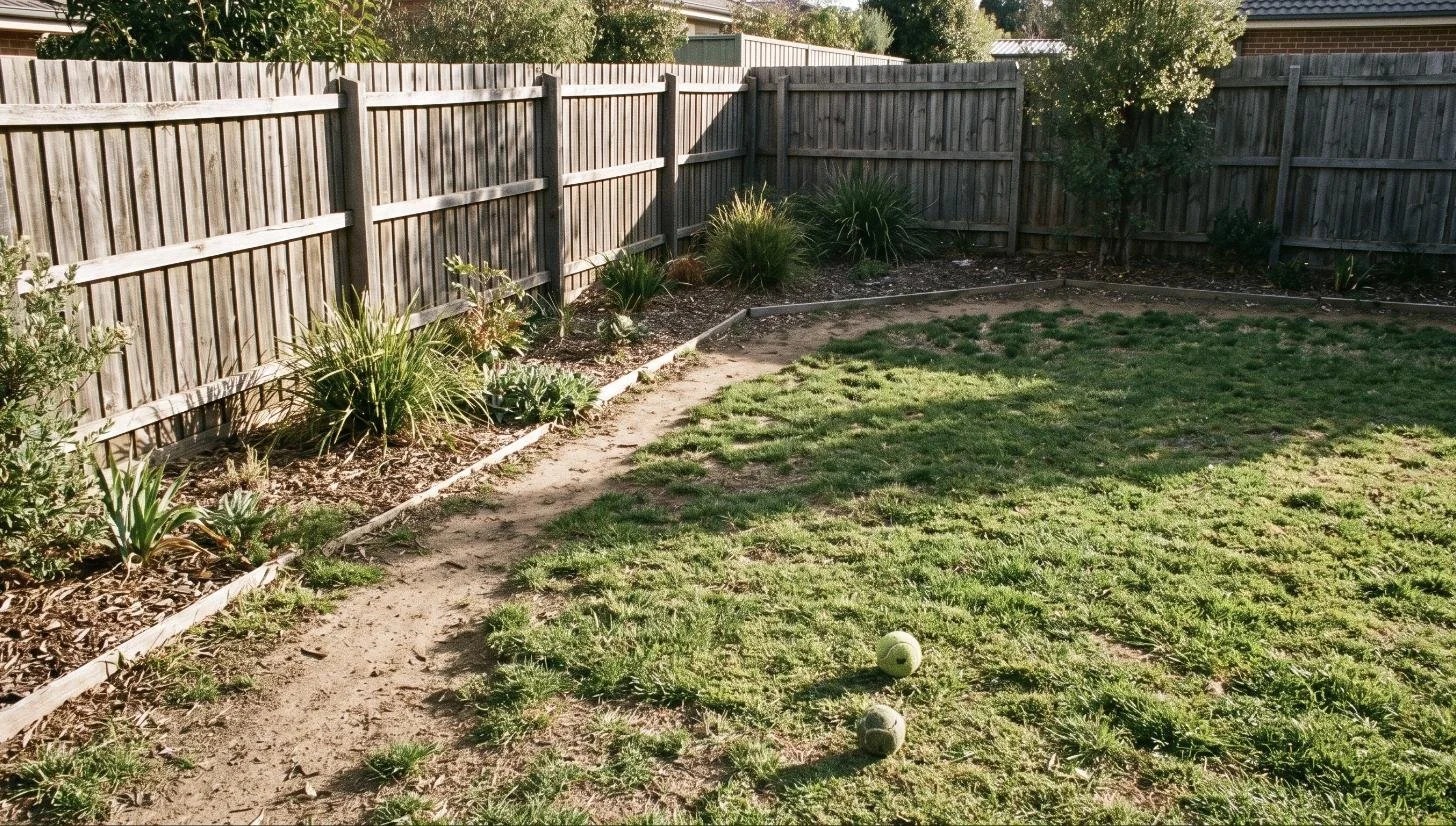
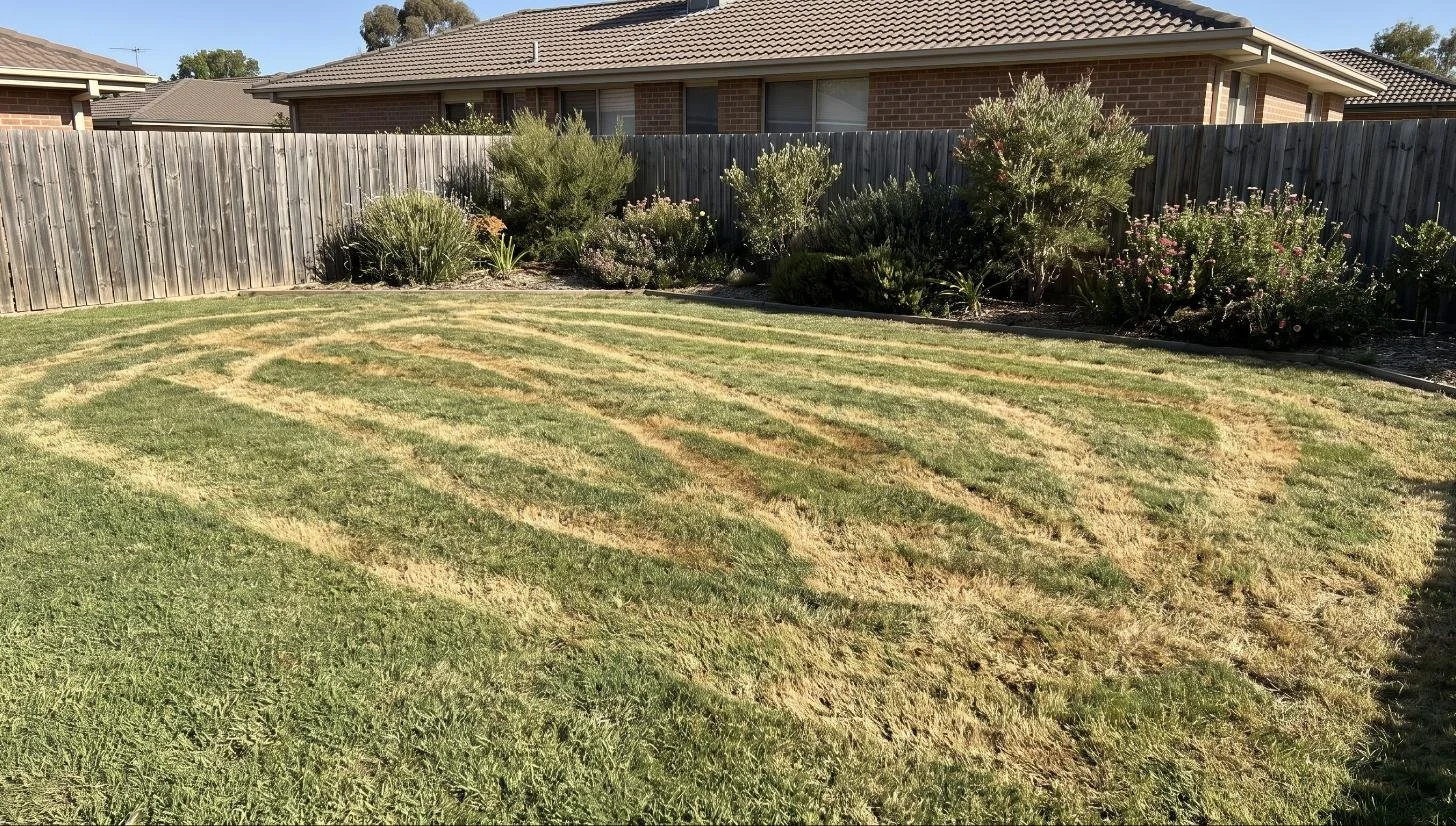
G’day, Nikolai here from The Lawn Firm. If your lawn looks thin, bare, uneven, or full of dead spots, you are not dealing with a random problem. A patchy lawn is usually your grass telling you that something underneath is off, whether that is compacted clay, dry patch, frost stress, poor drainage, pests, shade, pet damage, or a combination of a few issues at once.

In Canberra, patchy lawns are especially common because our conditions are tough on turf. Heavy clay soils can stay hard and water-repellent, warm-season lawns like buffalo, couch and kikuyu slow right down in winter, and frosty periods can stress already weak areas. Canberra’s climate also swings between dry spells and cold snaps, which is why one small weak patch can turn into a much bigger repair job if it is ignored.
The good news is that most patchy lawns can be improved. The key is working out the cause first, then choosing the right repair method instead of throwing seed, fertiliser, or extra water at it and hoping for the best.
The quick answer
If you want to fix a patchy lawn in Canberra properly, follow this order:
Work out why the lawn went patchy.
Remove dead material and loosen the soil.
Fix the underlying issue, such as dry patch, drainage, pests, weeds, shade, or urine burn.
Repair the area with top dressing, overseeding, or fresh turf, depending on the lawn type and extent of damage.
Water and mow correctly while it recovers.
That order matters. If you skip the diagnosis step, the patch usually comes back.
Why patchy lawns are so common in Canberra
A lot of Canberra lawns sit on clay-heavy ground. Clay can be dense, slow-draining, hard to wet evenly, and prone to cracking as conditions dry out. That makes it harder for roots to breathe, harder for water to penetrate properly, and easier for certain areas to fail before others. The ACT’s seasonal pattern also creates a lawn stress cycle, with warm dry periods, unreliable autumn rainfall, and frost-prone months that can drag weak turf backwards.
On top of that, many Canberra homes have a mix of conditions in one yard. Full sun in one section, heavy shade in another, compacted traffic zones near paths or play areas, and dog spots in the same few places. That is exactly how lawns end up looking uneven and patchy instead of dense and consistent.
The most common causes of a patchy lawn in Canberra
1. Dry patch or hydrophobic soil
This is one of the biggest ones I see. The surface looks dry, water runs off, and even when you water, the problem area does not seem to improve. The soil has become water-repellent, so moisture is not getting where the roots need it.
Common signs:
water beads on the surface
one section dries out much faster than the rest
the patch feels hard and dusty underneath
growth stays weak even after watering
2. Compacted soil and poor drainage
Patchy lawns often start below ground. If the soil is compacted, roots cannot expand properly, oxygen levels drop, and water either sits too long or fails to move through evenly. In Canberra’s clay soils, that can quickly lead to weak, yellowing or thinning turf.
Common signs:
hard ground underfoot
water pooling after rain or irrigation
shallow roots
patchy growth in high-traffic areas
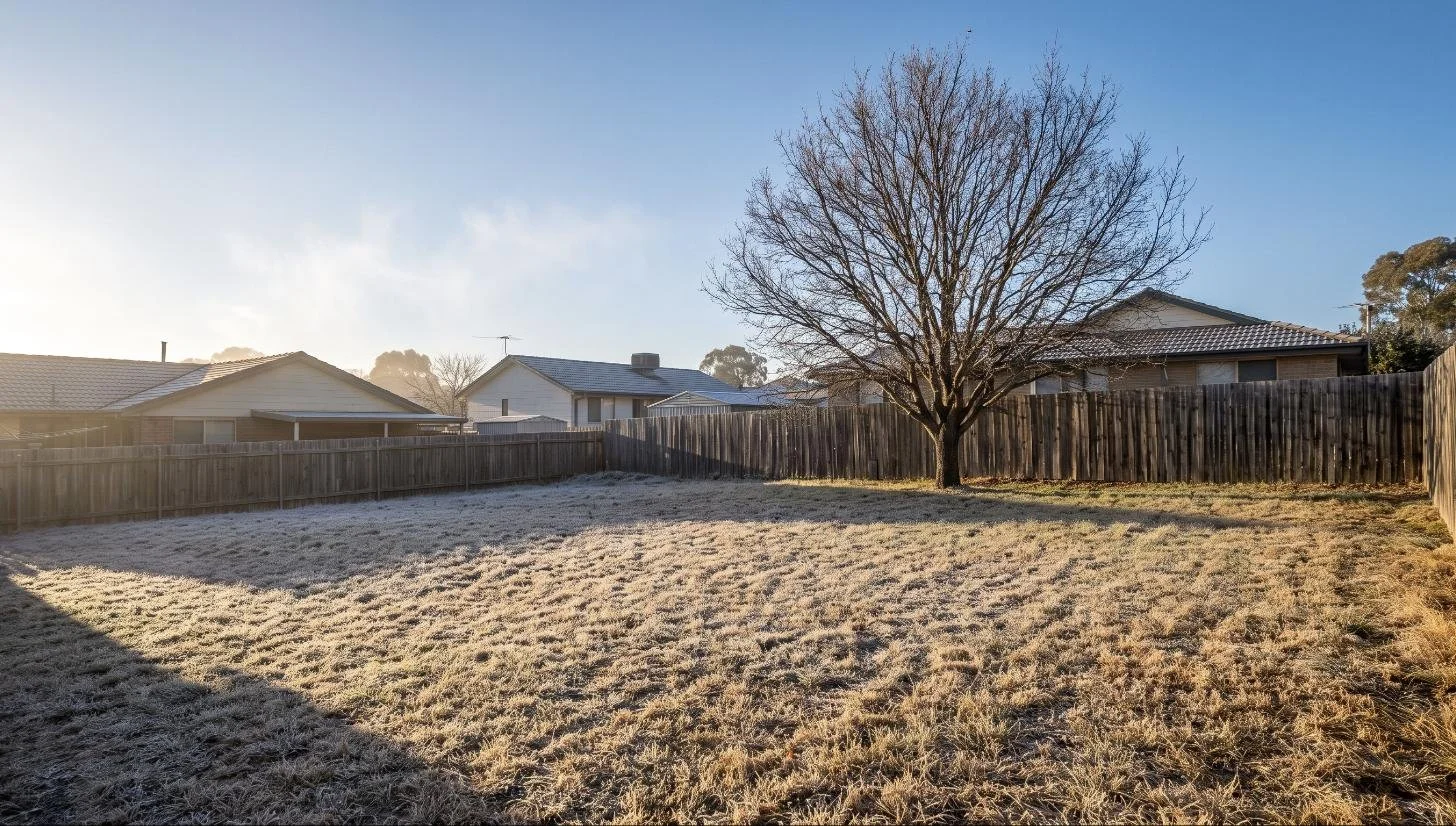
3. Frost stress and winter slowdown
Most Canberra home lawns are warm-season grasses such as buffalo, couch, and kikuyu. These grasses slow down or go dormant through winter, and weak areas often stand out more during frosty periods. Canberra’s frost risk can extend to late October, so a lawn that already has drainage, compaction, or shade problems often looks far worse by the end of winter.
4. Scalping and mowing too low
Cutting too low reduces the leaf area the lawn needs to recover and thicken. It also exposes the soil, increases moisture loss, and gives weeds room to move in. Once that happens, small thin areas can quickly turn into bare patches.
5. Shade
Some patchy lawns are not failing because of fertiliser or water. They are failing because the grass type does not suit the light levels. Buffalo generally handles shade better than kikuyu, while couch wants more sun and finer maintenance. Canberra properties with fences, trees and winter sun angles can create low-light zones that need a different plan.
6. Pests and grubs
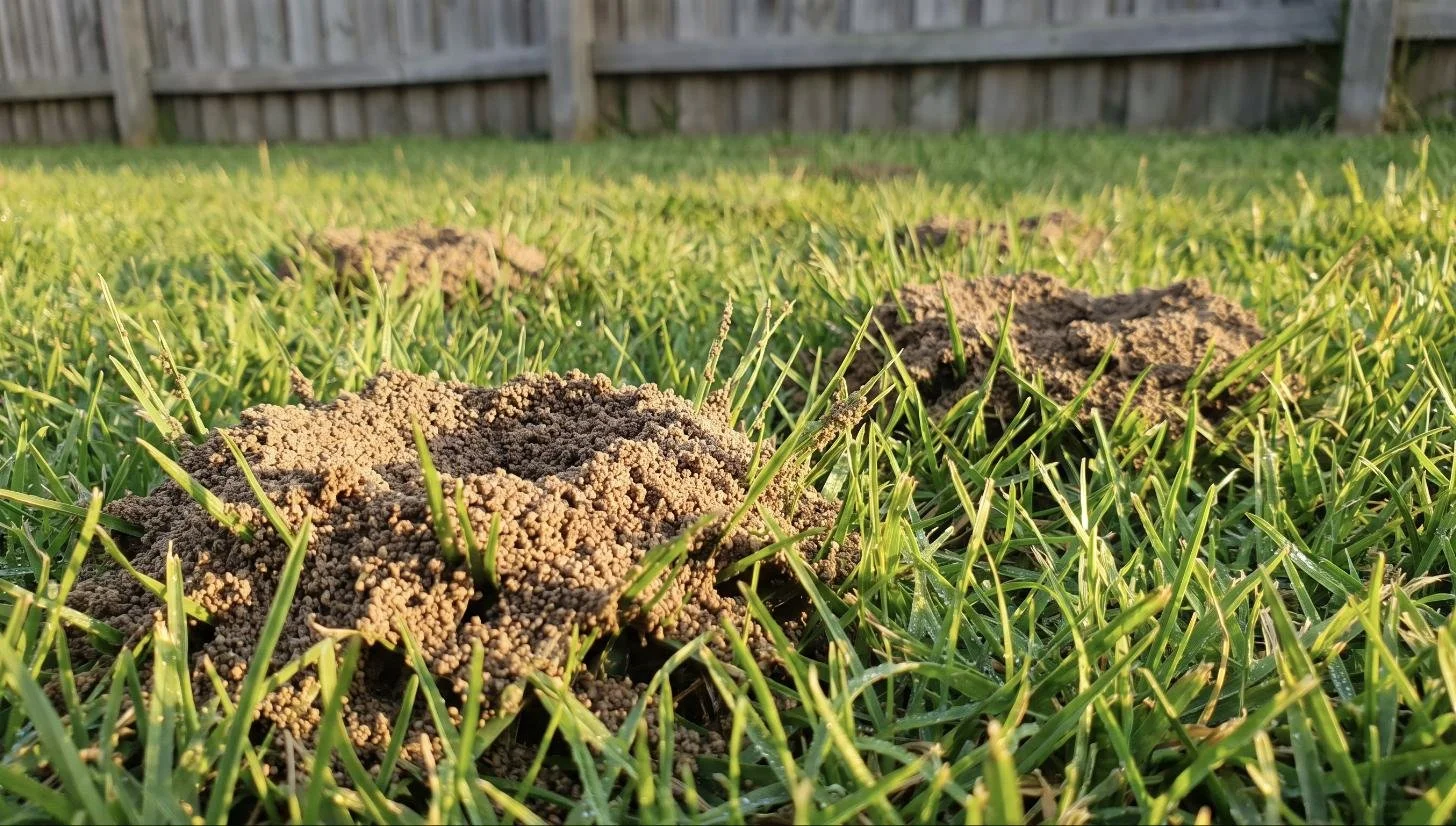
If patches seem to expand quickly in warmer weather, or the turf lifts too easily from the soil, pests may be involved. Sod webworm, lawn grubs and other lawn pests can thin turf from below and create irregular dead areas that are often mistaken for watering problems.
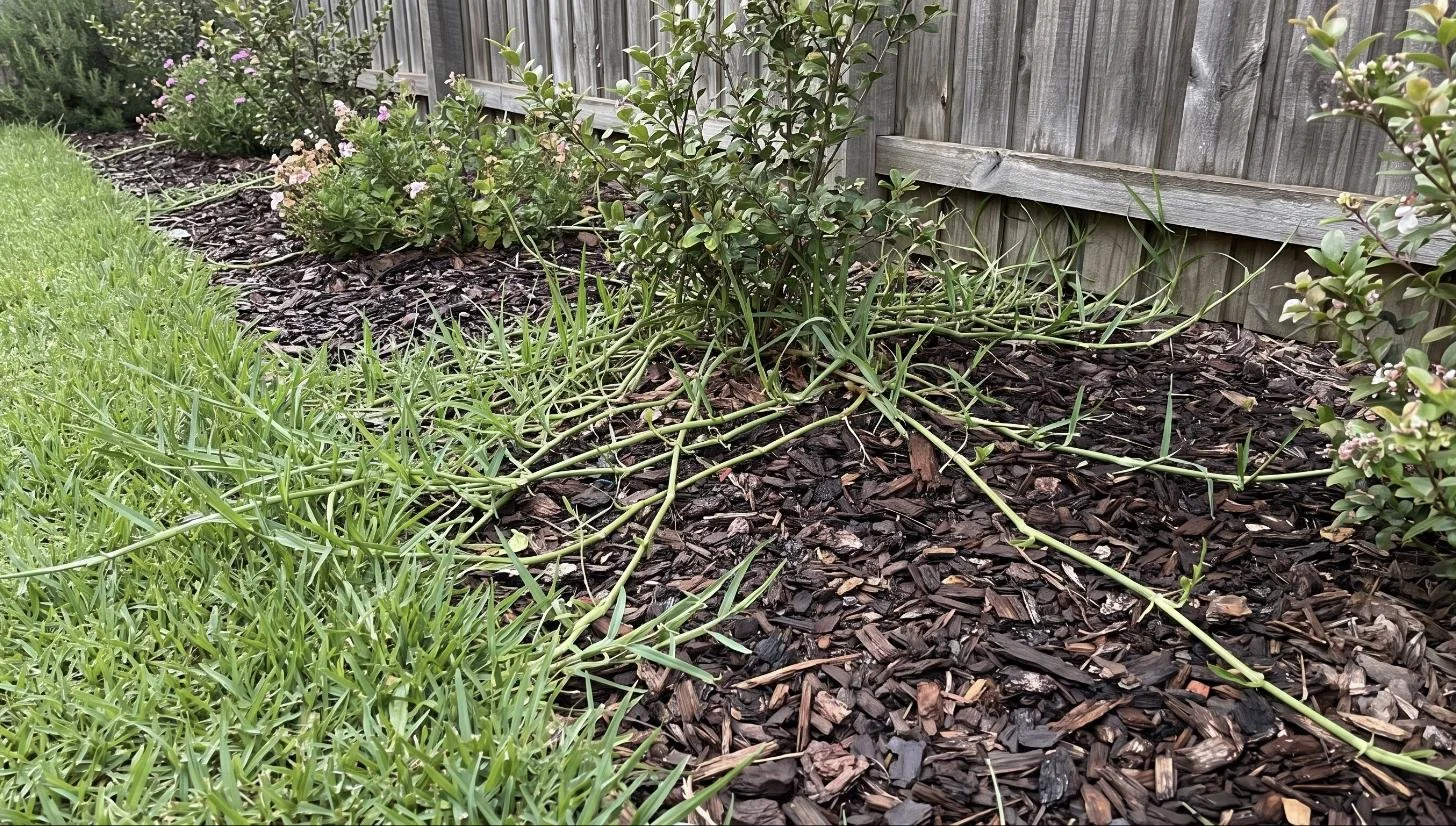
7. Weeds taking over weak turf
Patchiness and weeds feed off each other. Thin turf gives weeds space, and weeds then compete for light, nutrients and moisture. Once that cycle starts, the lawn loses density even faster.
8. Pet urine spots
Dog urine can create repeat dead spots, especially in the same few toilet areas. These patches often show up as yellow or brown centres with darker green growth around the edge. Read our dedicated guide on this topic…
9. New build or poor establishment issues
On newer properties, I often find patchiness is tied to poor soil preparation, buried rubble, shallow topsoil, uneven grading, or turf laid onto a weak base. In those cases, surface-level treatments only go so far. The base profile has to be corrected.
How I diagnose a patchy lawn
Before repairing anything, I check four things:
1. Is it dry, soft, or compacted?
A hard patch points to compaction or hydrophobic soil. A soggy patch points to drainage trouble.
2. Is the problem tied to season or weather?
If it worsens through winter, frost and dormancy may be exposing an underlying weakness. If it worsens through hot, dry weather, it may be water penetration or shallow rooting.
3. Is it in sun or shade?
If the patch sits under trees, near fences, or where sunlight is limited, turf selection or mowing height may be the real issue.
4. Is the lawn being attacked?
I look for pest activity, weed pressure, pet spots, and signs that the turf is being scalped or stressed by poor mowing.
That is why broad advice online often misses the mark. Two lawns can look equally patchy, but need completely different repair plans.
How to repair a patchy lawn in Canberra
Step 1: Rake out the dead material
Remove the dead grass, thatch and loose debris so light, water and air can reach the soil surface. This also helps you see how big the damaged area really is.
Step 2: Loosen and improve the soil
If the area is compacted, aeration is usually the next move. If it is dry patch, you need to improve water penetration. If it is drainage-related, the repair may include aeration, soil amendments and top dressing to rebuild a healthier root zone.
In Canberra, this step matters more than people think. Clay-rich areas often need more than just seed. They need the soil profile improved so the same patch does not fail again.
Step 3: Deal with weeds, pests, or urine burn first
Do not overseed straight into an active weed or pest problem. And do not try to repair repeated dog spots without changing the cause. Fix the source first, then repair the turf.
Step 4: Top dress and level
A light top dressing helps create seed-to-soil contact, smooth small depressions, and improve early establishment. It is also one of the best ways to help repaired patches blend back into the rest of the lawn.
Step 5: Overseed or returf
For thin areas, overseeding is often enough. For larger dead sections, fresh turf may be the better option.
As a general guide:
Buffalo, couch and kikuyu can often recover or fill back in with the right repair work.
Shadier areas may need a more shade-tolerant approach.
Cooler-climate blends, including Canberra Blend, can be useful where frost tolerance matters more. Canberra Blend includes Kentucky bluegrass and is marketed locally as frost tolerant and suited to Canberra’s climate.
Step 6: Water correctly
Watering needs to be even and deep enough to support recovery, but not so heavy that it causes runoff. Under Icon Water’s permanent conservation measures, residential sprinklers and irrigation can be used before 9am and after 6pm from 1 September to 31 May, while a hand-held hose with a trigger nozzle, bucket, or watering can can be used at any time. Icon Water also warns against watering so heavily that it causes pooling or runoff.
Step 7: Feed and mow for recovery
Once the lawn is actively growing again, a gentle feed and correct mowing height help it thicken and compete. The goal is not just green colour. It is density, root strength, and even coverage.
When is the best time to fix a patchy lawn in Canberra?
For many Canberra lawns, early autumn is one of the best windows because the soil still holds warmth, summer stress is visible, and you have time to strengthen the lawn before the coldest months. Read our Canberra renovation and overseeding guidance, which also points to autumn as a strong timing window for recovery work.
Spring can also work well, especially for lawns coming out of winter, but timing depends on the grass type and the actual cause of the patchiness.
When to call a professional
You should get a professional assessment if:
the same patch keeps returning
water is pooling or running off
the lawn is patchy across a wide area, not just one spot
you suspect pests or grubs
the yard has heavy shade or new-build soil issues
you want the fastest path back to a dense, even lawn without trial and error
A patchy lawn is rarely about one single product. Most of the time, it is a sequence issue. Diagnosis first, soil correction second, repair third, then proper aftercare.
That is exactly where we help.
At The Lawn Firm, I look at the whole picture: grass type, shade, soil, drainage, pests, mowing, watering and seasonal timing. From there, I build the right repair plan, whether that means aeration, top dressing, overseeding, pest treatment, or a more complete lawn renovation.
Final word
If your lawn is patchy, do not just look at the grass. Look at the reason the grass failed. Once you solve that properly, the repair work holds, and the lawn becomes easier to maintain season after season.


Looking for the perfect gift for the lawn enthusiast in your life? The Lawn Firm Gift Cards are the ideal solution. Redeemable for any of our professional lawn care services, these gift cards make it easy to give the gift of a greener, healthier lawn. From fertilisation to weed control and pest management, there’s something for every lawn need.
Why Choose a Lawn Firm Gift Card?
Versatility: Can be used for any service offered by The Lawn Firm.
Thoughtful Giving: A practical gift for anyone who values a beautiful outdoor space.
Simple to Use: Purchase online and enjoy easy redemption.
Order your gift card today and let your loved ones experience the professional touch of The Lawn Firm. It’s the perfect way to show you care while helping someone achieve the lawn of their dreams.
This gift card never expires.